A home office desk is where feng shui becomes immediately testable. Unlike a bedroom or a living room, the desk has one clear purpose, and you can feel within a week whether the arrangement helps or hinders focus. The principles are simple: a supportive position, a clear surface, good light, and a small set of element cues. None of this requires moving walls or buying special objects, and most of it can be done in an afternoon.
The traditional vocabulary for this is the command position, the balance of the five elements, and the flow of qi, but the practical content is about attention and comfort. If you are new to the system, read What Is Feng Shui? and How the Bagua Map Applies to Your Home first.
Start With the Command Position
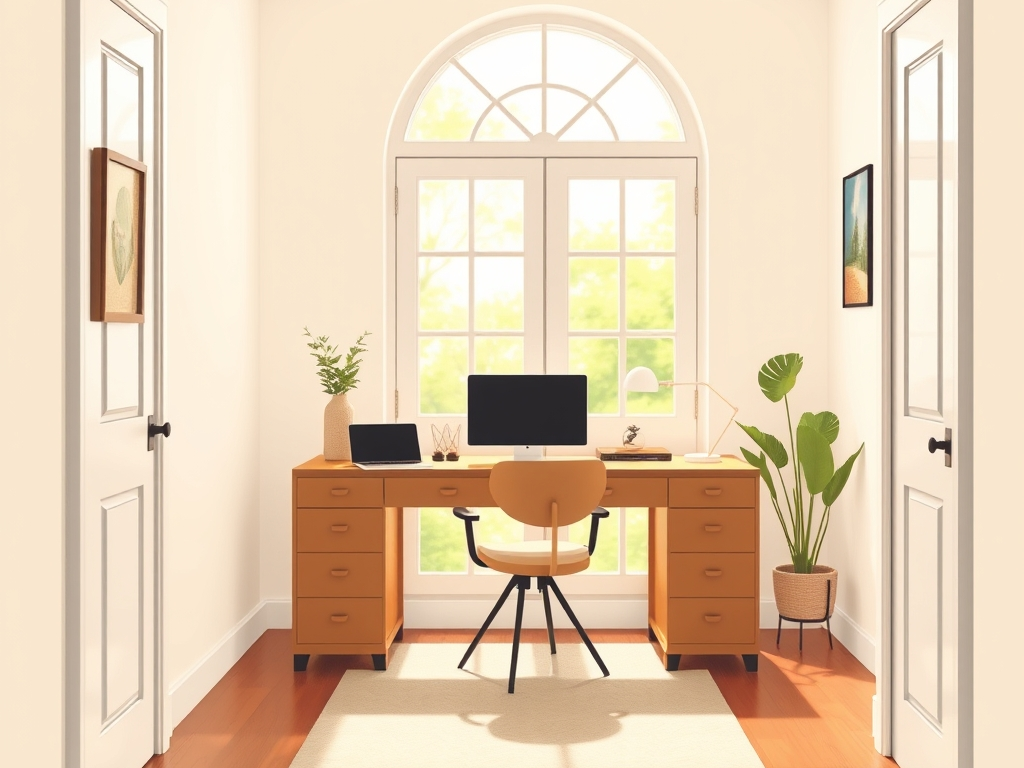
The command position is the arrangement where you can see the door without sitting directly in line with it. The idea is simple: when you can see who enters, your nervous system does not have to keep scanning, and attention stays available for work. In a home office this usually means the desk faces the door at an angle rather than with your back to it. If the room makes that impossible, a mirror that shows the door is the traditional workaround, though its placement matters more than its presence.
The command position is not superstition; it is a description of how people work. Facing the wall may suit deep concentration for some people, and if it does, keep it. Use the principle as a starting point, then test what actually helps you focus. For the deeper logic of positions, read The Command Position in a Room.
Clear the Surface, Then Add Intention
Clutter on a desk is not a moral failure, but it is a tax on attention. Every object on the surface competes for a small piece of your awareness, and the traditional remedy is to keep the surface clear enough that the task has room. Start with the working area: keyboard, mouse, monitor, notebook, and one item that supports the work. Everything else moves to shelves, drawers, or a tray.
Once the surface is clear, add intention through the elements. Wood supports growth and ideas, so a small plant or a wooden tray suits creative work. Metal supports clarity and precision, so a metal lamp or a simple metal object suits analytical work. Water supports flow and calm, but keep it away from electronics. The point is not to collect symbols; it is to make one deliberate choice that supports the work. For the element system, read The Five Elements in Feng Shui Placement.
Light and Air Come Before Objects
Before adding any feng shui object, fix the basics: light and air. Natural light is the single strongest predictor of a comfortable workspace, and a desk placed near a window with soft control of glare is better than any symbol. Air matters equally. A stuffy room dulls attention, and the traditional advice to keep qi moving translates into ventilation, a fan, or simply opening the window regularly.
If natural light is scarce, layer the light: a bright general light plus a focused task light reduces eye strain and gives the desk a clear working pool. The traditional language of yang energy and brightness points at the same thing. For more on light, read What Makes a Space Feel Balanced and Feng Shui for Lighting and Airflow.
A Desk Setup Checklist
Walk through the room and adjust these in order:
- Position the desk so you can see the door, or add a mirror that shows it.
- Clear the surface to the working minimum.
- Place one supportive element: plant, metal object, or water symbol, not all three.
- Fix the light: reduce glare, add a task light, and keep the monitor comfortable.
- Open the window or run ventilation during work hours.
- Keep the wall behind the monitor calm: no busy posters directly in view.
The order matters. Position and surface come first, because they change how the whole day feels; elements and decoration come last, because they are the polish on top of function. For the room-level logic, read The Center of the Home and Its Meaning.
Common Mistakes in Home Office Feng Shui
The first mistake is treating the desk as a display shelf. A row of symbolic objects becomes clutter, and clutter defeats the purpose. The second is ignoring the wall behind you. A busy background, a constantly ringing phone, or a distracting view keeps pulling attention even when the desk itself is clean. The third is putting the desk in a position that is symbolic but uncomfortable, such as facing a window with glare because "south is lucky."
The fourth mistake is confusing the bagua with a to-do list. You do not need to place something for every life area on the desk; you need the desk to support work. The bagua becomes useful when you want to nudge one area, such as adding a small career cue near the career corner, not when it turns the desk into an altar. For the bagua basics, read What Is the Bagua Map? and How the Bagua Relates to Different Areas of Life.
Adapting the Principles to Any Desk
The same principles adapt to small desks, shared desks, and unusual rooms. In a small space, choose the two changes with the biggest effect: position and surface. In a shared room, mark your zone with light and a small element rather than rearranging furniture. In an irregular room, use the command position idea loosely: the goal is a seat with a clear view of the entry and a calm background, not a perfect compass reading.
Remember that feng shui is a tool, not a test. If the setup helps you focus, it is working, regardless of whether every rule is followed. For the honest version of the practice, read Learn Feng Shui Without Superstition and Common Feng Shui Myths.
FAQ
Does the desk need to face a specific direction?
No. The command position and comfort matter more than the compass direction for a home office.
Can I put a water feature on my desk?
A small one can support calm, but keep it away from electronics and choose it only if it does not distract you.
What if my back has to face the door?
Use a mirror or a small reflective surface to see the entry, or reposition the chair within the same desk.
How often should I change the desk arrangement?
Only when focus drifts or the work changes. Stability helps attention, and constant rearranging is its own distraction.