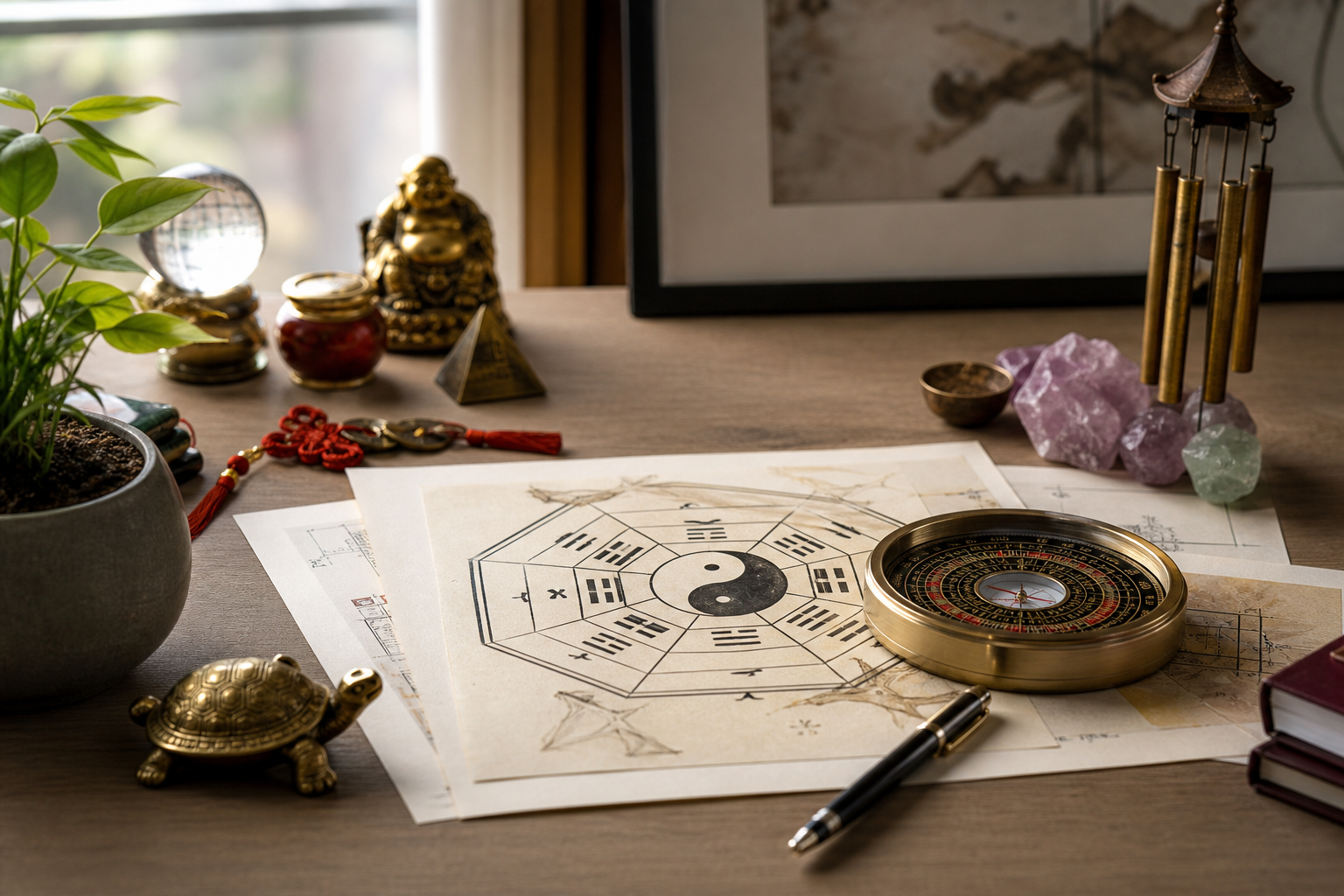
Many people meet Feng Shui through short, dramatic claims: put one object in one corner and money will appear, never let this item face that item, remove clutter or disaster will follow, place a cure here and everything changes. These messages spread because they are simple, emotional, and easy to market. They also create confusion. Beginners start to think Feng Shui is a pile of rigid rules rather than a thoughtful way of reading space.
Learning what to ignore is just as important as learning what to study. A grounded beginner approach protects you from fear, overspending, and disappointment.
Myths Common in English-Language Pop Content
One of the most common myths is the idea of the money corner as a guaranteed wealth switch. Some beginner articles present one area of a room as if it automatically governs money and can be activated through a fixed shopping list. In reality, Bagua symbolism is more nuanced, and no corner replaces budgeting, work, planning, or opportunity.
Another myth is fear-based clutter language. Clutter can absolutely affect mood, movement, and usability, but that is very different from saying every untidy shelf invites catastrophe. A third myth is object absolutism: the claim that one crystal, mirror, fountain, or charm always produces the same result regardless of context. Feng Shui is not strongest when it becomes a product catalog.
Why These Myths Spread
Myths spread because they are easy to share. It is simpler to sell a dramatic shortcut than to teach people how to observe layout, symbolism, proportion, and use. Social media also rewards rules that sound surprising and decisive. "This one corner means everything" is easier to post than a careful explanation of method differences and room context.
There is also a translation problem. Traditional concepts often get flattened into catchy English labels. Over time, those labels detach from the larger system and become standalone commandments. Once that happens, people repeat them without knowing what school they came from or whether they were simplified beyond recognition.
What a Grounded Beginner Approach Looks Like
A grounded approach starts with visible reality. Is the room working? Can people move through it? Does it support its purpose? What mood does it create? What symbolism is being reinforced again and again? These are useful questions because they connect Feng Shui to lived experience.
Instead of asking, "What item will fix this?" ask, "What pattern is this room expressing?" A neglected entrance may call for cleaning, repair, lighting, and easier access before it needs symbolism. A harsh workspace may need better comfort and clearer zoning before it needs a decorative cure. This approach is slower, but it produces real understanding.
How to Protect Your Learning
When you read or watch Feng Shui content, look for signs of balance. Does the teacher explain context? Do they acknowledge different methods? Do they connect symbols with room function? Do they avoid certainty claims? If the content is built on panic, spending pressure, or instant results, it is probably not helping you learn.
It is also wise to build a practice of observation before buying anything. Rearranging, clearing, repairing, and noticing are core beginner skills. Those habits teach you how space behaves. Random objects rarely do.
FAQ
Is the money corner completely fake?
The issue is not that symbolic associations are meaningless. The issue is the oversimplified claim that one corner guarantees money if you place the right object there. Symbolism can be thoughtful, but the shortcut version is misleading.
Does clutter matter in Feng Shui?
Yes, because it affects movement, focus, maintenance, and mood. But clutter should be discussed practically, not as a threat generator that blames people for every hard event.
Are mirrors always good or always bad?
No. Their effect depends on placement, what they reflect, room function, and the method being used. Fixed mirror myths are one of the clearest signs of oversimplified teaching.
What is the best beginner filter?
If a rule sounds universal, dramatic, and product-driven, slow down. Good Feng Shui teaching usually includes context, function, and room-specific observation.
Where to Go Next
To rebuild from clearer foundations, go back to What Is Feng Shui? A Beginner's Guide to Space, Symbolism, and Flow. Then read How to Start Learning Feng Shui Without Superstition or Fear for a better study framework. The full category archive is available at all Feng Shui articles.