Every home has a center, even when the layout is irregular, and in feng shui that center carries a specific role. It is the hub through which the whole house is organized, the point from which the bagua map is measured, and a place whose condition affects how the rest of the home feels. The practical claim is simple: a cluttered, blocked, or forgotten center makes the whole home feel harder to move through, while a clear center makes everything else feel connected.
For the map that organizes the home, start with What Is the Bagua Map?.
Why the Center Is the Hub
In the bagua layout, the center is the point of balance and connection. It links the eight areas around it, and in traditional practice it is often left intentionally open, because a busy center crowds the circulation of the whole home. In practical terms, the center is where movement, light, and attention converge, so its condition affects every room that touches it.
The center also grounds the map: when you overlay the bagua on a floor plan, the center anchors the eight directions around it. If the center is blocked by storage or a heavy piece of furniture, the sense of openness diminishes even when the surrounding rooms are tidy. For the relationship between the map and daily life, read How the Bagua Relates to Different Areas of Life.
What a Balanced Center Looks Like
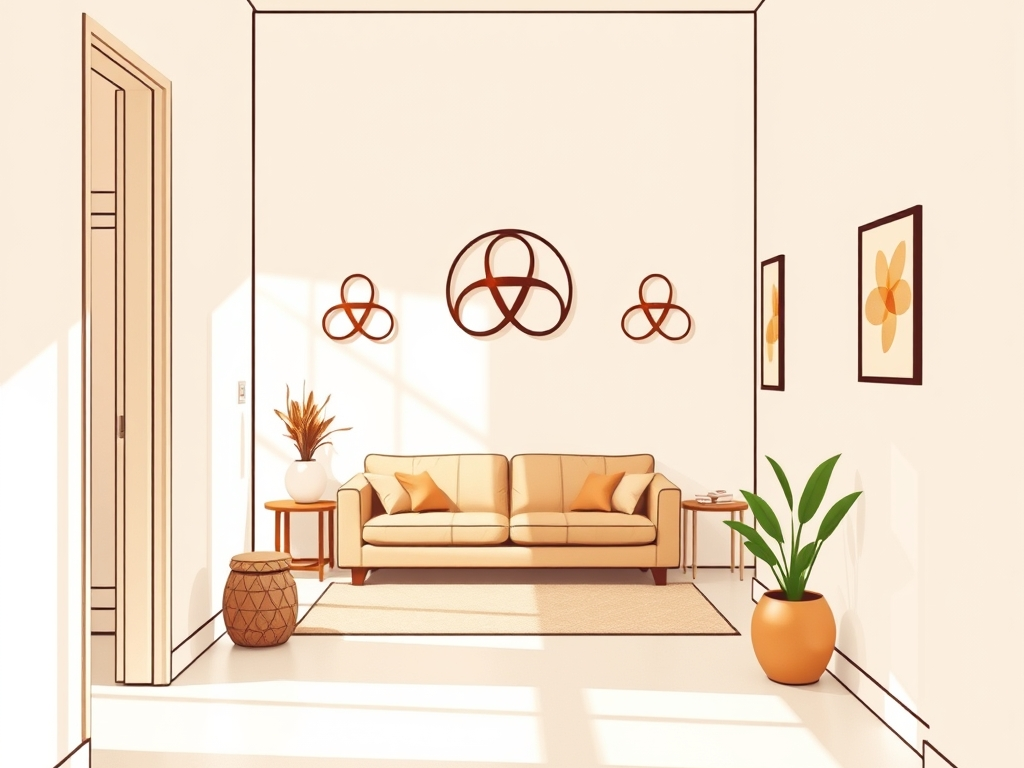
A balanced center is clear, light, and furnished lightly. It allows movement in every direction, receives natural light when possible, and does not accumulate objects. A small table, a rug, or a lamp can work well; a wall of storage or a stack of boxes works against the space. The goal is a room that feels like a crossroads rather than a storage closet.
This does not mean the center must be empty. It means the center should be deliberately arranged, with every object earning its place. For the elemental layer of arrangement, read The Five Elements in Feng Shui Placement.
A Center-of-Home Checklist
Use this checklist when reviewing the center of your home:
- Stand in the center and check that you can move in every direction without obstacles.
- Remove boxes, stacked items, and furniture that block circulation.
- Check the lighting and add a lamp or bulb if the area feels dark.
- Keep one clear surface or focal point, such as a table with a single object.
- Declutter the center at least once a month as part of routine upkeep.
The checklist takes minutes but resets the whole house's sense of flow. For the room-level practice, read What Makes a Space Feel Balanced.
Common Misconceptions About the Center
The first misconception is that the center must be completely empty at all times. The goal is clarity, not emptiness, and a furnished but ordered center is fine. The second is that the center is the "luckiest" spot and should be filled with symbols. Heavy symbolic decoration usually does the opposite, crowding the hub. The third is that the center only matters in large homes. In small homes the center matters more, because circulation is tighter.
For the general myths that surround this tradition, read Common Feng Shui Myths.
Making the Center Work in a Real Home
In an apartment where the center falls in a hallway or a living room, the principle still applies: keep the path clear, the light bright, and the furniture light. If the center falls on a wall, treat the wall as the anchor and keep the floor in front of it open. If it falls on a bathroom or a pillar, work with the condition by keeping the space orderly rather than fighting the layout.
The center is a practice of attention, not perfection. When you keep it clear, the rest of the home feels more connected, and the map becomes easier to work with. For the seasonal upkeep that supports this, read Seasonal Adjustments in Home Energy and The Living Room and Social Energy.
The One-Object Rule
If the center of your home tends to accumulate, apply the one-object rule: the center may contain one deliberate object and nothing else. The object can be a table, a plant, a lamp, or a rug, but everything else must have a home elsewhere. The rule sounds strict and is actually liberating, because it turns every decluttering decision into a yes-or-no question instead of a negotiation.
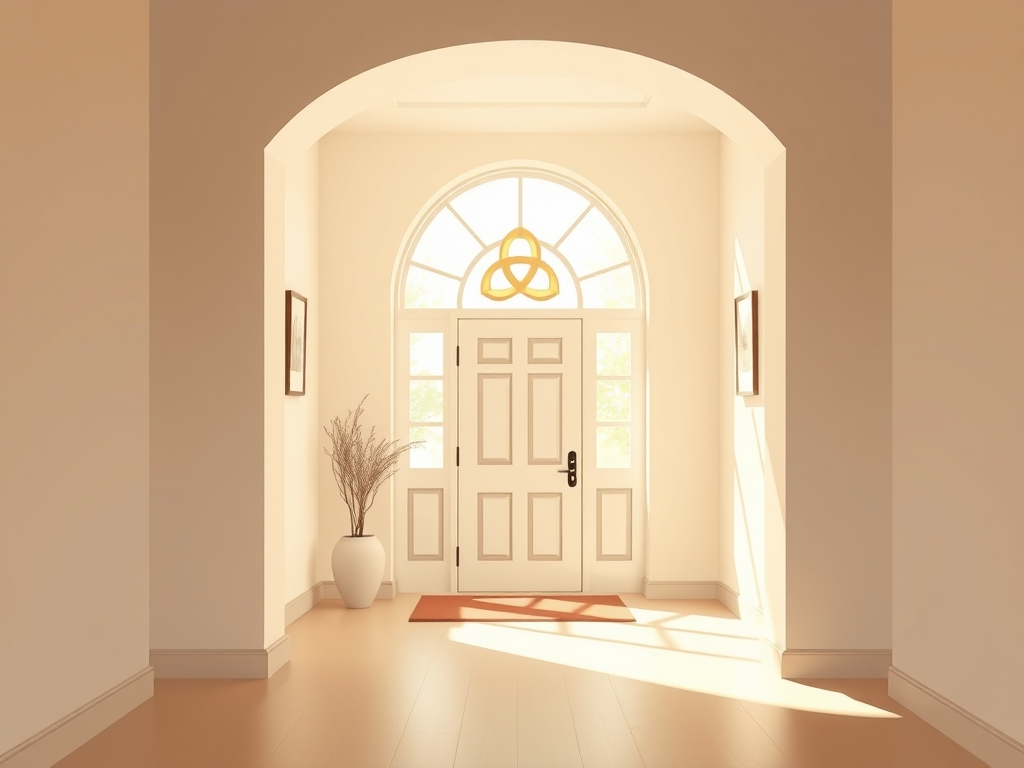
When the center is a hallway or a passage, the one-object rule still works: the object can be a single piece of furniture or a single wall element, and the floor stays clear. The point is not emptiness for its own sake but a center that can be crossed and read without friction, which is the practical meaning of balance.
Review the rule once a month, because the center is where unprocessed items naturally land. A monthly five-minute reset costs almost nothing and keeps the hub of the home clear.
If the center shares its space with daily activity, such as a living room or a dining area, the one-object rule applies to the core rather than the whole room: the central zone stays light, and activity gathers at the edges. That arrangement keeps the hub readable while the room remains fully usable, which is the balance most homes actually need.
The center also deserves attention during renovations and rearrangements, because it is the point from which everything else is measured. When you move furniture, check the center last and make sure the change left it clear. That single habit keeps the hub intact through every other change, and an intact hub keeps the whole home readable.
FAQ
Does the center of the home really affect the whole house?
Practically yes, because it controls circulation, light, and the sense of openness that connects the rooms.
What should I put in the center?
Keep it light and deliberate: a small table, a rug, a lamp, or nothing at all.
What if my center falls on a wall or a bathroom?
Work with the condition by keeping that area orderly and treating the nearest open space as the hub.
How often should I review the center?
A monthly check is enough once the space is initially cleared and arranged.