Feng Shui is a traditional Chinese way of reading space. At the most beginner-friendly level, it asks how a place feels, how it functions, how people move through it, and what symbolic messages it quietly sends. A room can feel welcoming or tense, settled or chaotic, supportive or distracting. Feng Shui gives language for noticing those differences. It is not a magic button, and it is not a promise that one object or one corner will change your life overnight. It is better understood as a cultural system of spatial interpretation that links environment, attention, symbolism, and daily habit.
What the Term Originally Points To
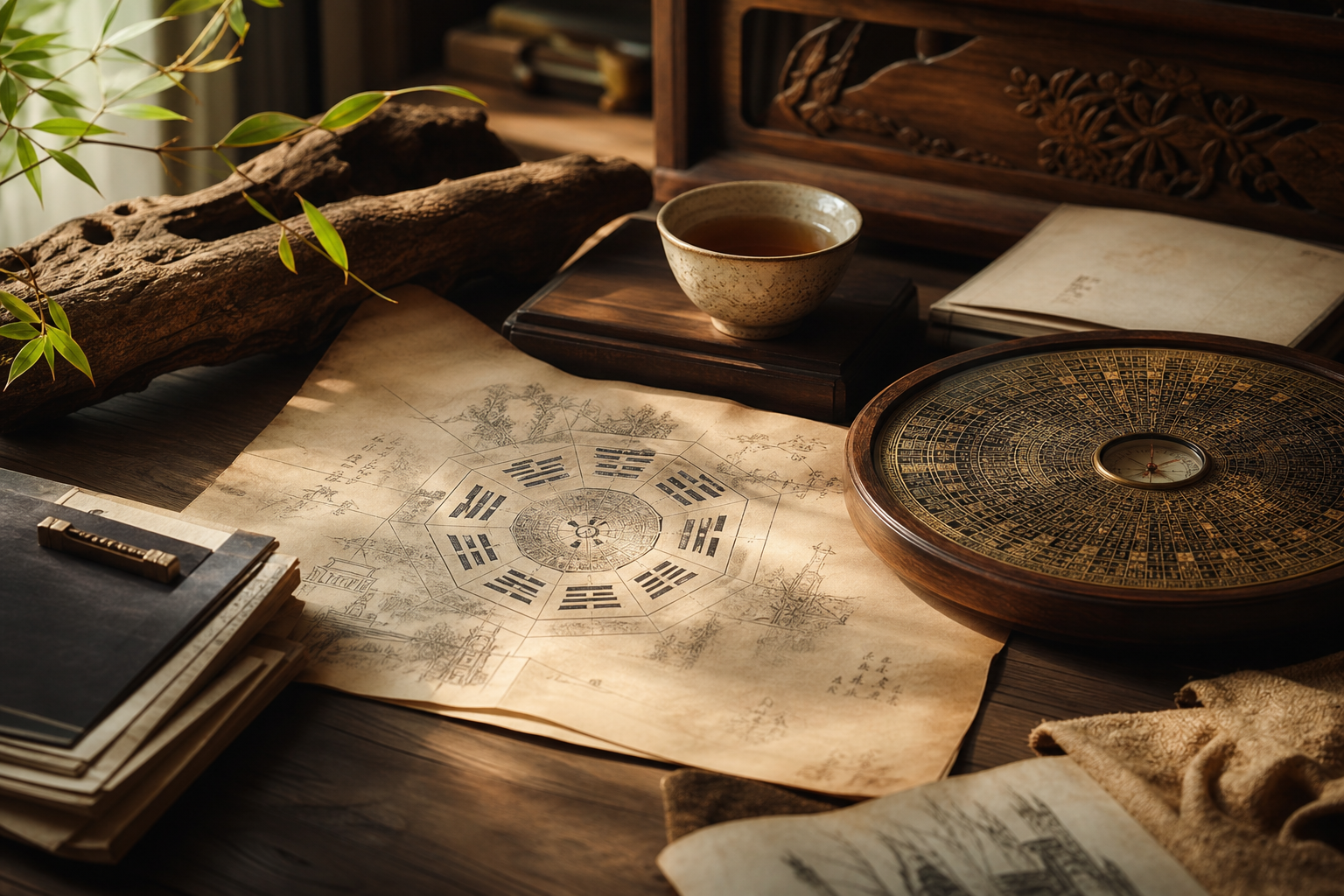
The words Feng Shui are often translated as "wind and water." That short translation is memorable, but it can also be misleading if it is treated like a complete definition. In Chinese cultural history, the phrase points toward the way surroundings, landforms, exposure, movement, and placement shape lived experience. Over time, the subject developed into a wider body of thought that includes landscape reading, directional systems, symbolic associations, and practical attention to how a place is used.
This is why overly short internet definitions often feel strange. Feng Shui is not only decoration, not only superstition, and not only interior design. It sits somewhere between cultural knowledge, observation practice, symbolic language, and environmental common sense. That mix is part of why people are drawn to it and part of why beginners can get confused by simplified rules.
How Feng Shui Thinks About Space, Symbolism, and Flow
One useful way to begin is to ask three questions about any space. First, how does the space work? Is it easy to enter, move through, sit in, clean, and use well? Second, how does the space feel? Does it seem calm, sharp, heavy, neglected, crowded, or unfinished? Third, what does the space signal? Objects, colors, placement, and maintenance can suggest care, strain, clarity, hospitality, or confusion.
Feng Shui uses ideas such as flow, balance, direction, and symbolism to study those questions. The important beginner point is that these ideas are interpretive. They help you notice patterns. They do not guarantee that the room will produce one fixed outcome. A clear desk may support focus, but it does not automatically create success. A cluttered hallway may make a home feel pressured, but it is not proof that misfortune is on the way. Feng Shui is most helpful when it stays connected to real use and real observation.
A Grounded Room Example
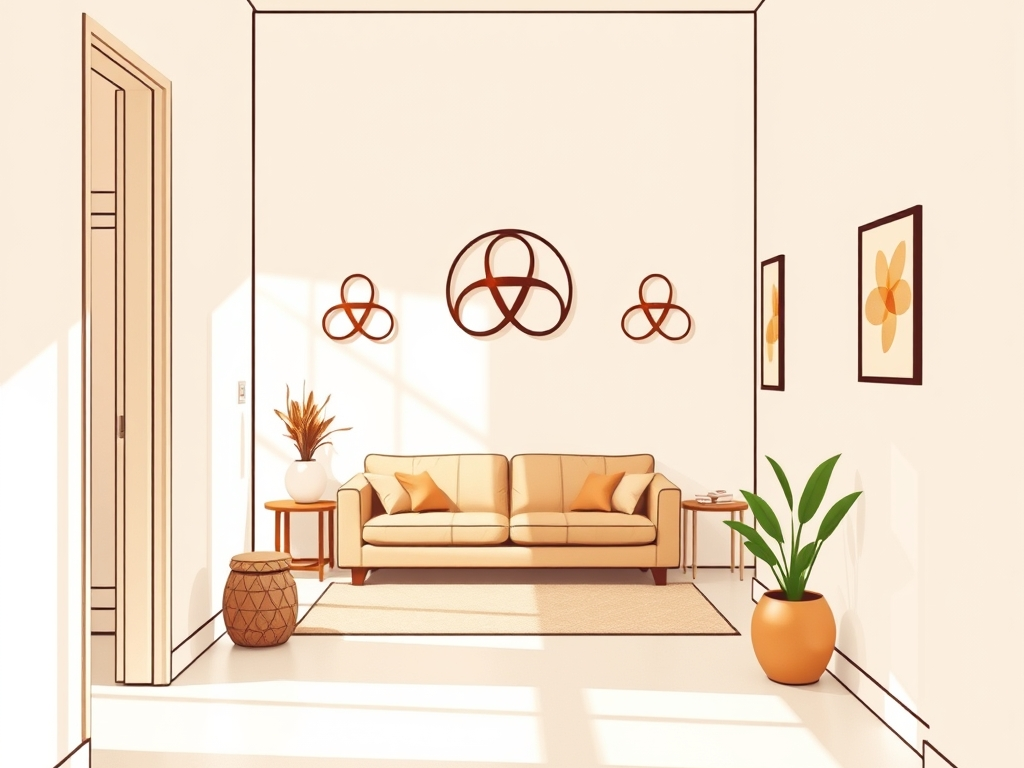
Imagine a small living room where the main path from the door to the sofa is blocked by stacked boxes, one lamp is broken, and the coffee table has become a storage pile. Nothing supernatural has to be claimed here. The room is simply harder to enter, harder to settle into, and harder to enjoy. A Feng Shui reading might say the space lacks ease of movement and visual clarity. In ordinary language, that means the room keeps asking the body and mind to work around friction.
A moderate beginner response would not be to buy ten symbolic cures. It would be to restore function first. Clear the walking path, repair the light, reduce surface overflow, and ask whether the room now feels easier to use. That is a grounded Feng Shui move because it respects the relationship between environment and experience. Symbolic choices can come later, after the basics of light, access, proportion, and maintenance are working.
What Feng Shui Can and Cannot Do
Feng Shui can help you read a home more carefully. It can encourage better attention to movement, comfort, arrangement, emphasis, and repetition. It can also help people think about how space reflects priorities. A neglected work area, for example, may reveal that a room no longer matches the way life is actually being lived.
What it cannot do is replace direct action, evidence, or professional judgment. It cannot stand in for mental health care, legal advice, financial planning, safety standards, or medical treatment. It also should not be used to frighten people into spending money or to blame a person for every hard event in life. If a space feels difficult, the explanation may involve noise, light, layout, stress, budget, health, or ordinary maintenance. Feng Shui should widen perception, not shut down common sense.
FAQ
Is Feng Shui a religion?
Not necessarily. Many people study Feng Shui as a traditional cultural and metaphysical system without treating it as a religion. People may connect it with personal beliefs in different ways, but beginner study does not require adopting a religious identity.
Do I need to believe in invisible energy for Feng Shui to be useful?
No. Many beginners start by observing layout, comfort, access, symbolism, and use. Even without making strong metaphysical claims, Feng Shui can still offer a thoughtful framework for reading space.
Is Feng Shui the same as interior design?
No. Interior design focuses on aesthetics, function, construction choices, and user needs. Feng Shui overlaps with function and atmosphere, but it also includes symbolic and traditional interpretive layers that go beyond design style.
What should I do first if I want to begin?
Start with one heavily used room. Notice how you enter it, move through it, sit in it, and maintain it. That one-room practice usually teaches more than memorizing twenty random rules.
Where to Go Next
The best next step is What Is the Bagua Map?, which introduces one of the most common beginner frameworks. After that, read The Five Elements in Feng Shui Explained Clearly to understand how symbolism is organized. You can also return to the Bagua & Feng Shui overview or browse all Feng Shui articles on the site.