Many beginners are curious about Feng Shui but feel uneasy about the way it is often presented. Some articles make it sound like every object predicts disaster. Others promise instant luck if you buy the right cure. Neither extreme creates good learning. A better path is to approach Feng Shui as cultural study, spatial observation, and symbolic reading grounded in daily life.
Learning without superstition does not mean stripping all meaning out of the subject. It means keeping your attention clear. You can respect symbolism without turning it into panic. You can study traditional ideas without giving up common sense. That balanced mindset is the strongest starting point for long-term learning.
Why Fear-Based Learning Is Common
Fear spreads quickly because it feels urgent. If someone says your bedroom layout is quietly ruining your life, you are more likely to click, share, and buy. Product-driven content also benefits from certainty. It is easier to sell a cure than to teach observation. Over time, this creates a distorted picture in which Feng Shui appears to be a system of threats and shopping lists.
But real learning is slower and calmer. It involves understanding how rooms work, how symbols are interpreted, how methods differ, and how to test what you notice against lived experience. That process is less dramatic, but it builds actual skill.
A Healthier Beginner Framework
A grounded framework has three parts. First, treat Feng Shui as a way of reading space. Look at movement, use, comfort, maintenance, and atmosphere. Second, treat it as a symbolic language. Notice how certain areas, objects, and patterns may reflect values, habits, or neglected themes. Third, treat it as cultural study. Learn that not every school uses the same method and that simplified English-language rules often leave out important context.
With this framework, you do not have to decide all at once whether every traditional claim matches your worldview. You can learn responsibly by observing, comparing, and asking better questions. The goal is not blind belief. The goal is better understanding.
How to Build a First Reading Habit
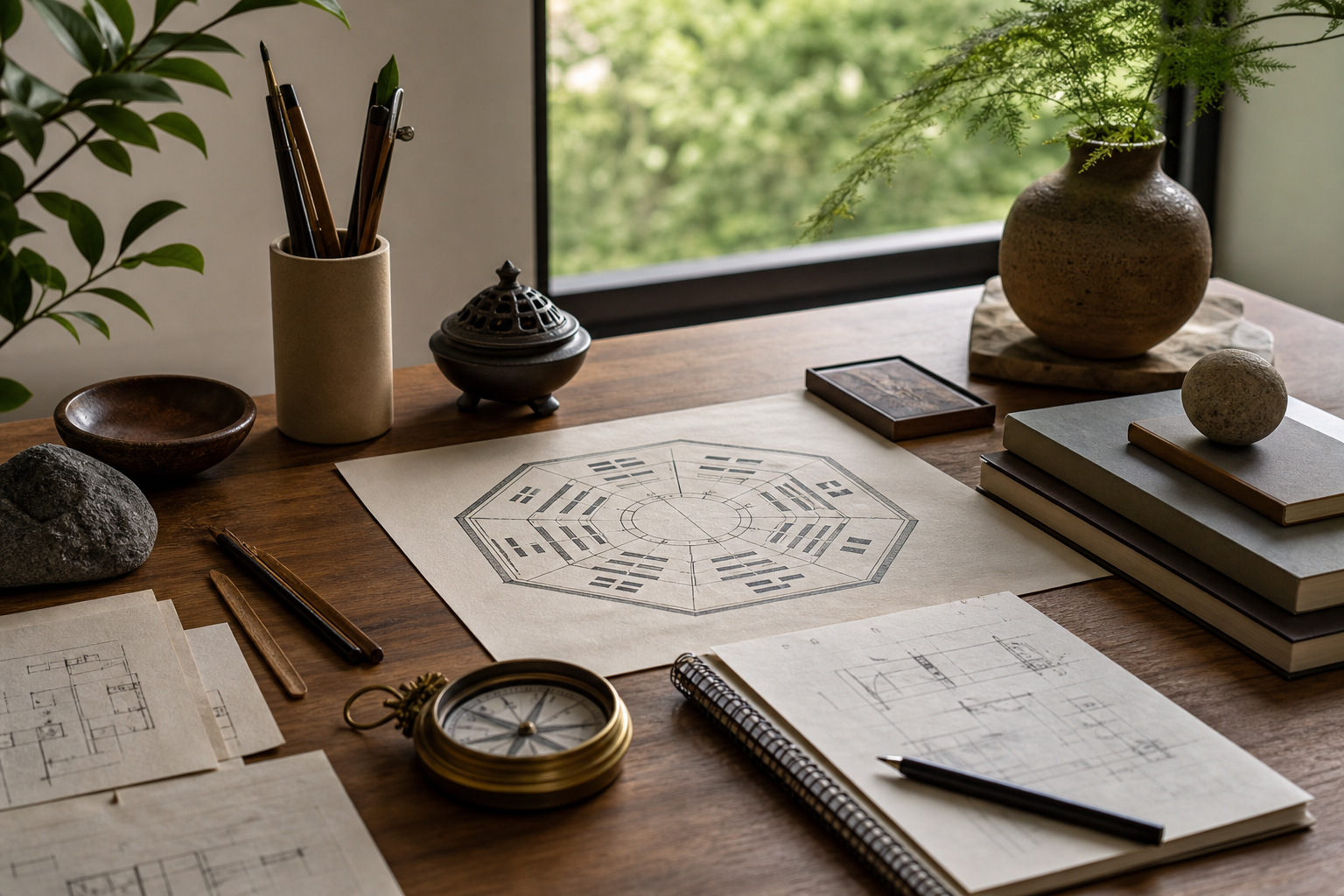
Choose one room and one lens. For example, you might begin with entryway flow, desk balance, or Bagua reflection in a study area. Write down what the room is for, what interrupts that purpose, and what symbolism seems strongest. Then make one practical adjustment and observe what changes.
After that, study one concept at a time. Learn the Bagua map without mixing it immediately with ten unrelated rules. Learn the Five Elements as descriptive language before using them as prescriptions. Learn Qi through direct observation of movement and atmosphere. This step-by-step habit protects you from overwhelm and gives the subject room to become intelligible.
What to Avoid While Learning
Avoid dramatic certainty. Avoid rule collections with no named method. Avoid fear-based language that tells you every untidy surface is a moral failure. Avoid spending money before understanding what a room actually needs. Most of all, avoid using Feng Shui to replace practical action. A room that needs repair, cleaning, storage, or better lighting still needs those basics first.
Beginners often gain confidence when they realize they are allowed to move slowly. You do not need to master the whole subject in one week. In fact, slower learning usually leads to better judgment.
FAQ
Can I learn Feng Shui even if I am skeptical?
Yes. Many people begin by focusing on space, symbolism, use, and atmosphere. Thoughtful study does not require dramatic certainty from day one.
What should I read first?
Start with broad beginner concepts: what Feng Shui is, what the Bagua map is, what Qi means in practical terms, and how the Five Elements describe balance.
Do I need to buy traditional cures right away?
No. Observation, clearing, repair, and rearrangement are often better beginner teachers than purchasing symbolic objects too early.
How do I know if a source is trustworthy?
Look for calm explanations, named methods, attention to context, and respect for practical reality. Be cautious with sources built on panic or guaranteed results.
Where to Go Next
The best place to continue is What Is Feng Shui? A Beginner's Guide to Space, Symbolism, and Flow. Then move to What Is the Bagua Map? and Common Feng Shui Myths Beginners Should Ignore. If you want the full set in one place, browse all Bagua & Feng Shui articles in the editorial library.