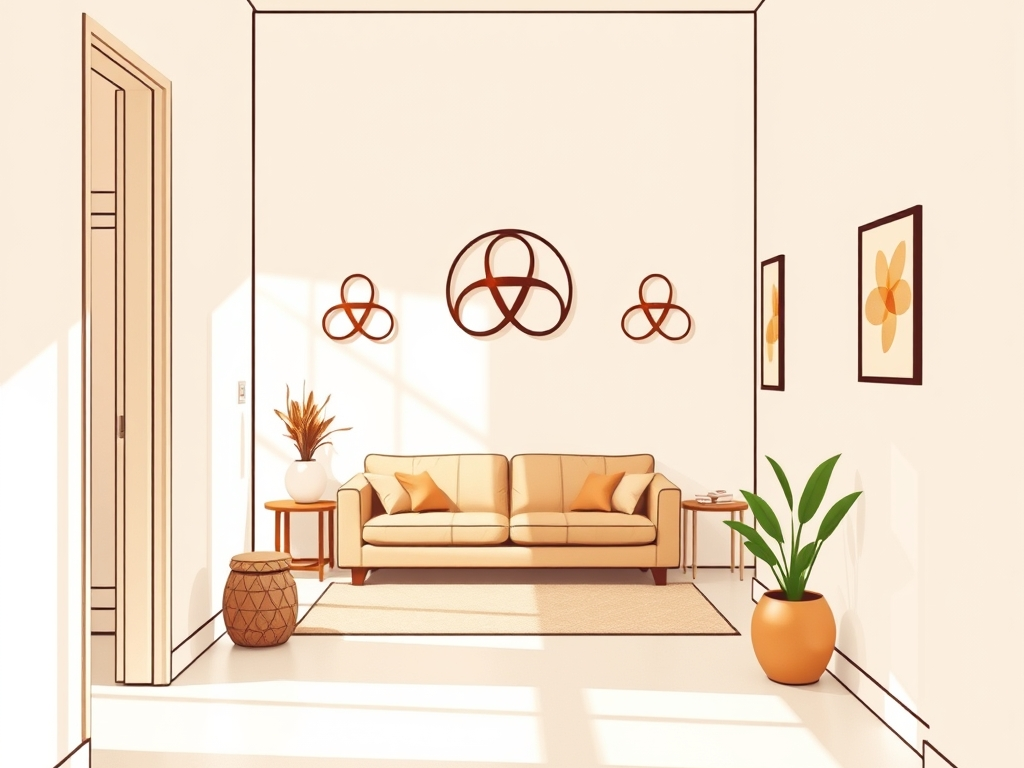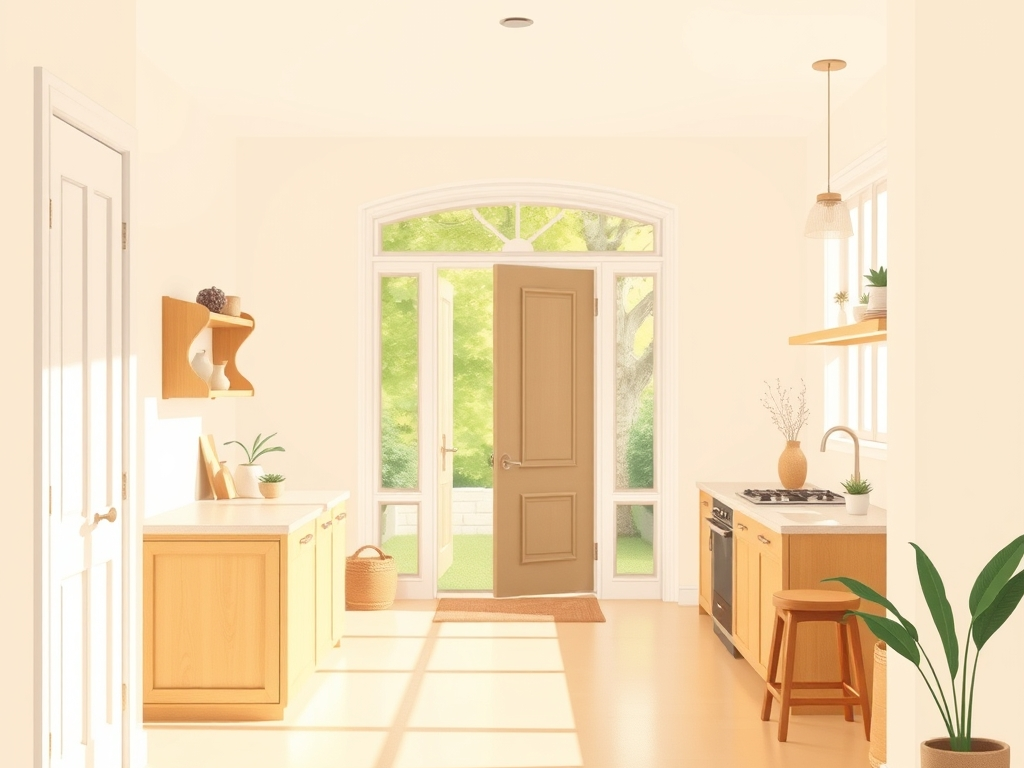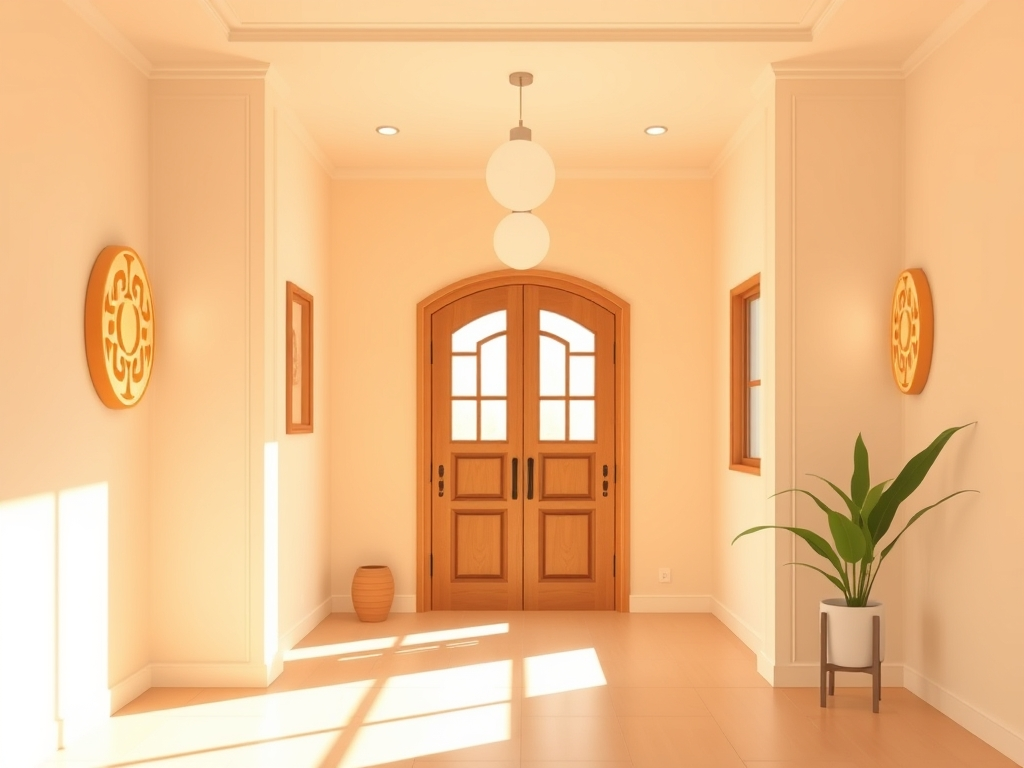
Light and air are the two qualities of a room that people notice before anything else, even when they cannot say why. A room can be beautifully furnished and still feel heavy, and the cause is usually not the furniture. Feng shui practice pays close attention to lighting and airflow because they are the cheapest, fastest ways to change how a space feels.
The traditional language describes this as keeping the space alive: light that can reach every corner, air that can move through the room, and no dark or stagnant pockets where energy collects. The modern translation is simple: bright enough, fresh enough, and open enough to support the room's purpose.
Lighting Layers That Work
A room functions best with three layers of light: general light for the whole space, task light for specific activities, and accent light for warmth and focus. A single harsh ceiling light usually creates glare and flatness, while a combination of a soft main light, a reading lamp, and a warm accent near a favorite corner gives the room depth and flexibility.
The direction of light matters too. Light that comes from behind you while you work creates shadows; light from the side or front reduces strain. Evening light should be warmer and lower, signaling the body to wind down. For the daily rhythm side of lighting, read The Midday Pause: A Traditional Timing Note.
Airflow and the Feeling of Stagnation
Airflow is the second pillar. A room that smells stale or feels heavy is usually a room where air cannot move. The practical fixes are opening windows daily, using an exhaust fan in kitchens and bathrooms, and making sure furniture does not block vents or windows. A small fan or air purifier helps in rooms with no cross breeze.
Stagnation in feng shui is not a spirit; it is a real condition of stale air, trapped dust, and unused corners. The traditional advice to let energy circulate translates into keeping air moving and surfaces from collecting dead weight. For the concept behind this, read What Does Qi Mean in Feng Shui?.
A Lighting and Airflow Checklist
Run this checklist in any room that feels heavy or dull:
- Open the windows for at least five minutes a day, in every season.
- Add a second light source to the darkest corner of the room.
- Switch the main bulb to a warmer, softer option.
- Check that no furniture blocks a vent, radiator, or window path.
- Remove anything that collects dust in corners you cannot easily reach.
The checklist takes an afternoon and costs almost nothing. In most cases, two of the five changes will visibly shift the room's atmosphere. For the role of natural light specifically, read What Makes a Space Feel Balanced.
Common Misconceptions About Light and Air
The first misconception is that feng shui lighting means buying special lamps or colors. Ordinary, well-placed light is the whole practice. The second misconception is that airflow advice is spiritual rather than practical. Stale air affects alertness, mood, and sleep, which is why the advice works whether or not you use the traditional language. The third misconception is that a dark corner is merely cosmetic.
A permanently dark corner tends to collect clutter because nothing draws attention to it, and clutter attracts more clutter. Lighting the corner solves the maintenance problem before any symbolism is needed. For the clutter side of the equation, read Feng Shui for Small Spaces.
Light and Air in Specific Rooms
Each room needs a different balance. The bedroom benefits from low, warm light and fresh night air, supporting rest. The home office needs bright task light and steady airflow to support focus. The kitchen needs strong general light for safety and good ventilation for cooking odors. The bathroom needs the most attention to airflow, because moisture accumulates quickly.
The principle is the same everywhere: support the room's purpose with the right quality of light and air. For room-specific guidance, read Bedroom Feng Shui Basics and Home Office Feng Shui for Focus.
A Worked Example
A study is rarely used because it feels heavy. The owner opens the window daily, replaces the single overhead bulb with a warm lamp plus a desk light, moves a bookcase that blocked the vent, and lights a corner shelf that had been perpetually dark. Within a week the room becomes the place the owner actually wants to work, without any new furniture.
That result is the normal outcome of light and air work: the room's function returns. For more practical feng shui, browse the feng shui library or start with What Is Feng Shui?.
A Five-Minute Refresh
Most rooms improve with a five-minute refresh that costs nothing. Open the window, turn off one harsh light, move one object that blocks a vent or a window path, and dust the darkest corner. The routine is small, but it keeps the two most important qualities, light and air, from degrading between seasonal sessions.
The refresh works best when it is attached to an existing rhythm, such as the weekly cleaning or the first day of the month. Attached to a habit, it survives busy weeks; left as an intention, it disappears. The room that gets a five-minute refresh twice a month stays noticeably lighter than the room that waits for a full cleanup.
It also builds the habit of noticing: people who do the refresh begin to see which corners go dark, which windows never open, and which lights are never used. That awareness is the beginning of all feng shui practice, because you cannot balance a room you have not learned to see.
FAQ
Is airflow really part of feng shui?
Yes. Moving air is a core part of the traditional practice, and modern rooms benefit from it for ordinary health and comfort.
How many light sources does a room need?
At least two, and ideally three layers: general, task, and accent, adjusted to the room's purpose.
Do I need special feng shui lighting products?
No. Ordinary bulbs, lamps, and window routines are the practice; products are optional decoration.
Can lighting and airflow really change a room's feeling?
Yes, quickly. Most people notice the difference within days, because the changes affect alertness, mood, and comfort directly.