Every work space has a threshold, even if it is only the edge of a desk in a shared room. The moment of crossing that threshold is a transition: the body arrives before the attention does, and the quality of the crossing sets the tone for the session. Feng shui has always paid close attention to doors and entrances, because it reads the threshold as the place where energy changes direction. A work space whose entrance is clear and deliberate supports focus; one whose entrance is blocked, cluttered, or invisible makes every session start from behind. If the basics are new to you, begin with Entryways, Doors, and First Impressions.
This article explains what to check at the door of your work space, how the entrance affects the work, and how small changes improve every session.
Why the Entrance Sets the Session
The first impression of a room is not only for visitors; it is also for you, every time you enter. When you step into a work space and the threshold is clear, the mind receives a quiet signal that work begins here. When the threshold is crowded with bags, boxes, or yesterday's mess, the signal is muddled, and the first minutes of work are spent negotiating the clutter instead of the task.
Traditional practice treats the entrance as the mouth of the room, where energy enters and direction is set. For how doorways shape the movement of a whole home, read Feng Shui for the Front Door and Entryway.
What to Check at the Threshold
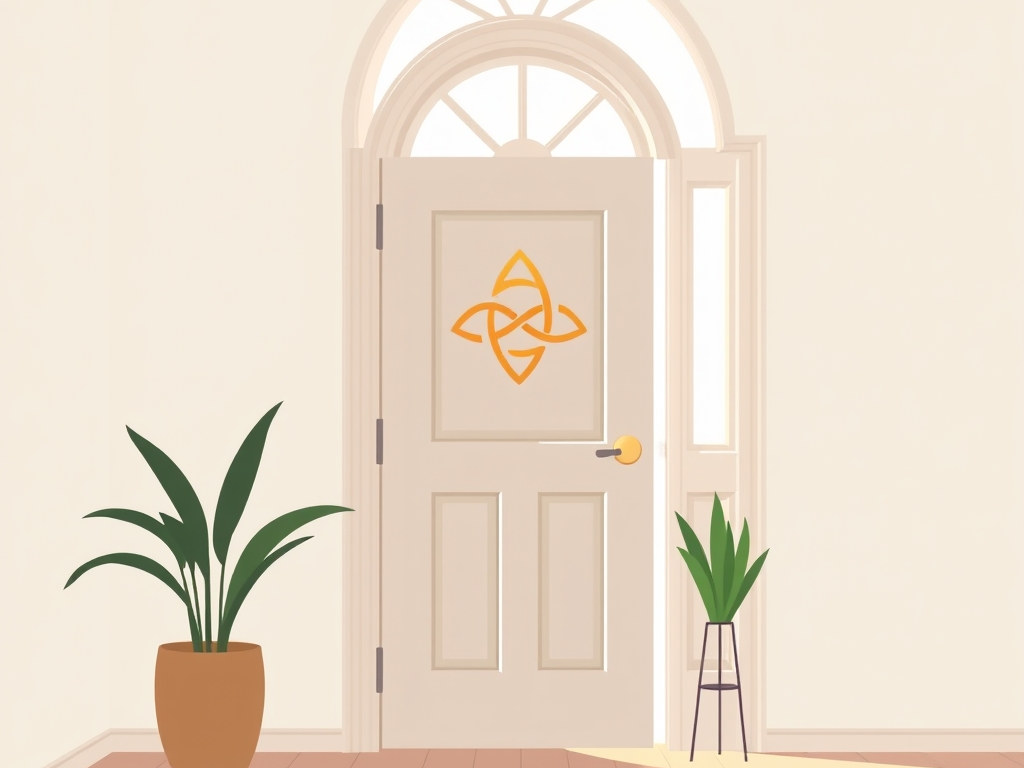
Stand at the door of your work space and look at it as if seeing it for the first time. Check three things: whether the path in is clear, whether the first thing you see supports the work, and whether the door itself works freely. A door that sticks, a path that weaves around furniture, or a first view of the laundry pile all cost a little attention before the work even starts.
The fixes are usually small: move the bag, clear the path, or change what the eye meets first so that it meets the desk or a calm surface. For how the entrance of a home shapes first impressions, read The Front Door and First Impressions.
The Command Position at the Desk
Inside the room, the desk's position matters as much as the door. The classic guidance is to sit so that the door is visible without being directly behind you: you can see who and what enters, and you are not startled from behind while concentrating. In a shared space where the desk cannot move, a mirror or a re-angled chair can restore the view.
This is practical, not mystical: visibility reduces startle and increases the sense of being in charge of the room. For the desk position in detail, read The Space Behind Your Desk.
A Five-Point Door Check
Run this short check at the start of the week, and repeat the physical parts whenever the space drifts.
- Clear the path from the door to the desk.
- Remove anything leaning against the door or blocking its full swing.
- Change the first view so it meets a calm or work-supporting surface.
- Check that the chair allows you to see the entrance while working.
- Create one small marker at the threshold, such as a mat or a plant, that says work begins here.
The check takes minutes and protects every session that follows. For a room-by-room approach to the whole home, read A Beginner's Room-by-Room Feng Shui Walkthrough.
Doors in Shared and Small Spaces
Not everyone has a door. A work corner in a living room has a threshold too, marked by the edge of the desk, a screen, or even a change in lighting. The practice is the same: make the entrance to the work zone deliberate, so crossing into it changes something visible. A plant, a rug, or a lamp that switches on with work all work as markers.
The marker matters most in shared spaces, because it tells both you and the household that the zone is active. For how to mark a workspace inside a shared room, read Feng Shui for a Home Office in a Shared Space.
Common Mistakes With Work Entrances
The first mistake is treating the door as decoration and ignoring the path, when the path is what the feet and eyes actually use. The second is placing the desk with a beautiful view but a vulnerable back, trading calm for constant startle. The third is expecting one rearrangement to fix focus, when the entrance works together with light, noise, and the state you bring to the room.
A related mistake is letting the work entrance become a dumping zone for things that belong elsewhere. A threshold that collects outgoing bags and returns is not a threshold; it is a shelf. For how clutter behaves in feng shui, read Clutter in the Career Area of the Bagua.
Entering With Intention
The physical fixes only carry a session so far; the crossing also needs a moment of intention. Before you sit down, pause at the threshold and name what this session is for. One sentence is enough: I am here to finish the proposal, or I am here to read without interruption. The naming turns the door from a piece of the room into the beginning of the work.
For the same idea applied to the whole day, see The Practice of a Slow Morning Start, and keep the crossing short enough to repeat without friction.
Two Work Spaces Compared
The first space is a desk against the far wall of a bedroom. The door opens onto a pile of laundry, the chair faces the wall with its back to the entrance, and the first minute of every session is spent moving a bag off the chair. The person wonders why focus is so hard; the room is answering with a threshold that never lets the work begin cleanly.
The second space is the same size, rearranged: the path is clear, the chair is angled so the door is visible, and a small plant marks the edge of the work zone. The session starts with the first view of a clear desk, and the crossing takes one second of intention. Nothing about the person changed; the threshold finally matched the work. That match, more than any single object, is what feng shui at the door is really about.
FAQ
Do I need a physical door for this to work?
No. A marked threshold, such as a rug, a screen, or a lamp, creates the crossing, and the intention at the threshold does the rest.
What if my desk must face the wall?
Face the wall works for many kinds of deep focus; the key is keeping the entrance visible or at least known, so people do not startle you from behind.
How often should I clear the work entrance?
Do the five-point check weekly and clear the path daily; the daily version takes seconds because the weekly version keeps the space from drifting.
Can the door's colour or material affect focus?
Colour and material contribute to the feel of the room, but they matter far less than the practical qualities of a clear path, working hardware, and a settled first view.