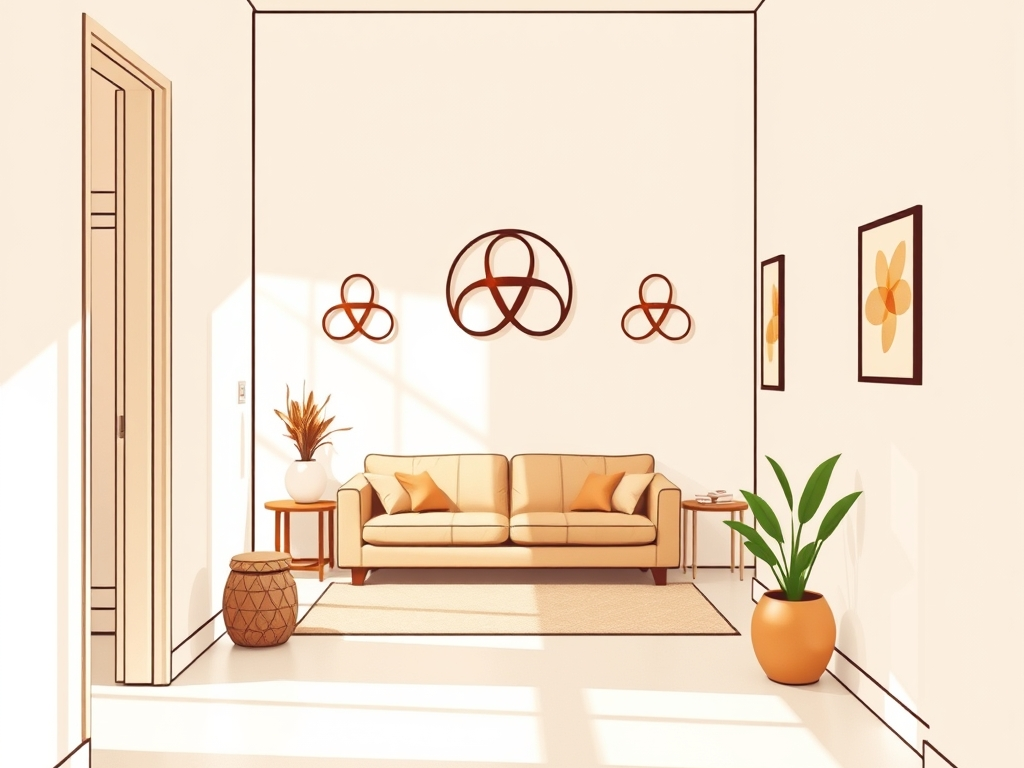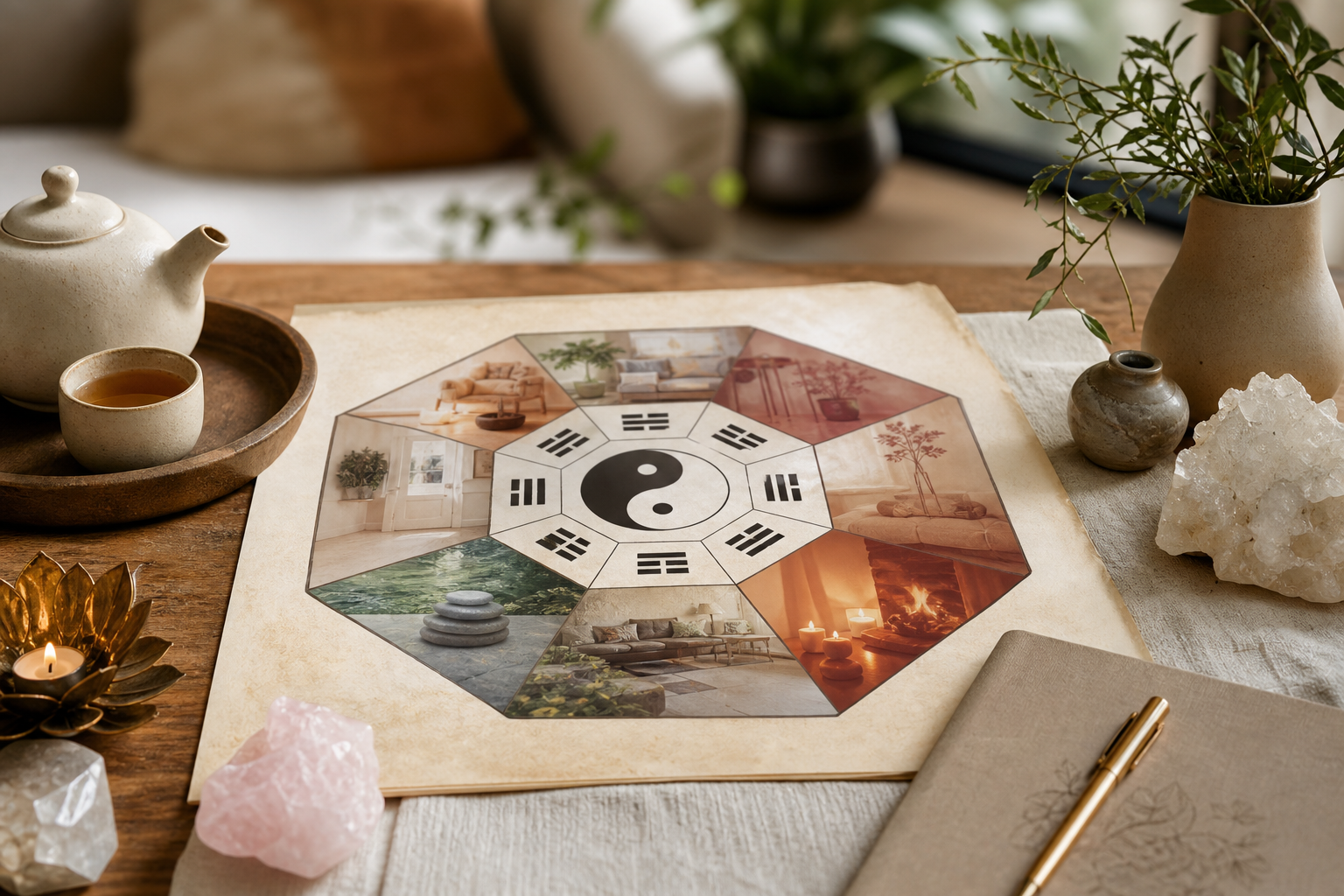
One reason the Bagua map becomes so popular is that it links parts of a home or room with recognizable life themes. Beginners quickly encounter labels such as career, relationships, family, knowledge, creativity, helpful people, reputation, abundance, and center. These categories make Feng Shui feel personal. Instead of asking only what a room looks like, you begin asking what part of life it seems to echo or support.
This can be genuinely useful, but only if the associations are handled carefully. The Bagua map gives symbolic structure. It does not turn a room into a guaranteed life-outcome machine.
How Those Links Are Commonly Framed
In many beginner teachings, each section of the Bagua is connected with a life area. A zone associated with learning may be read through study, reflection, or inner growth. A zone associated with helpful people may be read through support, guidance, and networks. A zone associated with abundance may point toward value, resources, or your relationship with growth and sufficiency.
These labels are best understood as themes rather than promises. They are invitations to reflect: does the way this part of the home is treated match the value of that life area? Is the symbolism accidental, neglected, overburdened, or supportive? In that sense, Bagua creates a bridge between spatial attention and personal reflection.
How Beginners Should Interpret These Associations
The most grounded way to use life-area associations is to treat them as a reading prompt. Suppose the zone linked with learning is always cluttered with unresolved storage. That does not prove you are doomed to confusion. It does suggest a symbolic mismatch worth noticing. If the home area associated with support feels cold, underused, or forgotten, you might ask whether support itself has become an afterthought in daily life.
What matters is interpretation with humility. Sometimes a mismatch is meaningful. Sometimes it is simply about convenience, budget, or a room layout that evolved without much thought. Feng Shui can help you notice the pattern, but it should not pressure you into dramatic conclusions. The best use of Bagua is reflective, not fearful.
A Room-Based Example
Imagine that in the method you are using, one corner of the bedroom corresponds to relationships. That corner currently holds an exercise bike covered in laundry and two broken picture frames waiting to be repaired. A beginner does not need to declare that this setup explains every dating challenge in life. But the symbolism is still worth reading. The area linked with relationship is functioning as storage for deferred care.
A thoughtful response could be modest: repair the frames, remove the laundry overflow, and decide whether the area should visually express rest, connection, and care rather than backlog. The value of the exercise is not in magical causation. It is in creating more coherence between the symbolism of the space and the way it is actually inhabited.
Why This Works Best as Reflection
Bagua life-area reading is strongest when it helps you ask better questions. What parts of life feel supported at home? Which parts are visually represented? Which parts seem forgotten? Spatial symbolism has power because people live inside patterns. A room can quietly reinforce distraction, avoidance, rest, clarity, or welcome.
But there is a difference between reflection and superstition. Reflection asks, "What does this pattern show me?" Superstition says, "This corner controls my life." One encourages awareness. The other takes away agency. Good Feng Shui learning should always leave you with more agency, not less.
FAQ
Does each Bagua area control that part of my life?
No. The associations are symbolic. They help you reflect on how a space expresses attention, neglect, support, or imbalance, but they do not mechanically control personal outcomes.
What if a life area seems missing from an awkward floor plan?
Many real homes are irregular. Beginners can still work with the available layout and use the symbolic associations thoughtfully rather than treating the map like an all-or-nothing test.
Should I decorate each area with matching symbols?
Only if those symbols genuinely fit the room and its use. Forced symbolism that makes the room less functional usually weakens the result instead of improving it.
What is the best first step?
Choose one Bagua area, describe its current condition honestly, and ask what it seems to communicate. That one exercise teaches more than chasing every sector at once.
Where to Go Next
Return to What Is the Bagua Map? if you want the layout framework behind these life-area labels. Then continue with How to Start Learning Feng Shui Without Superstition or Fear for a more grounded study approach. You can also browse all Bagua & Feng Shui articles.