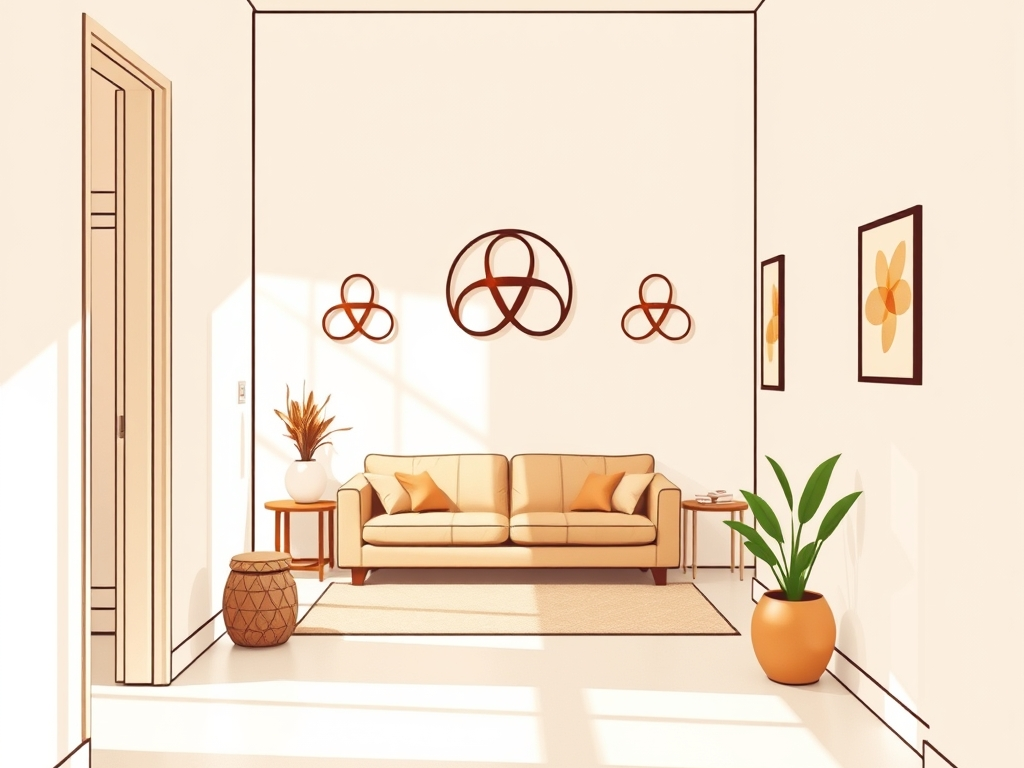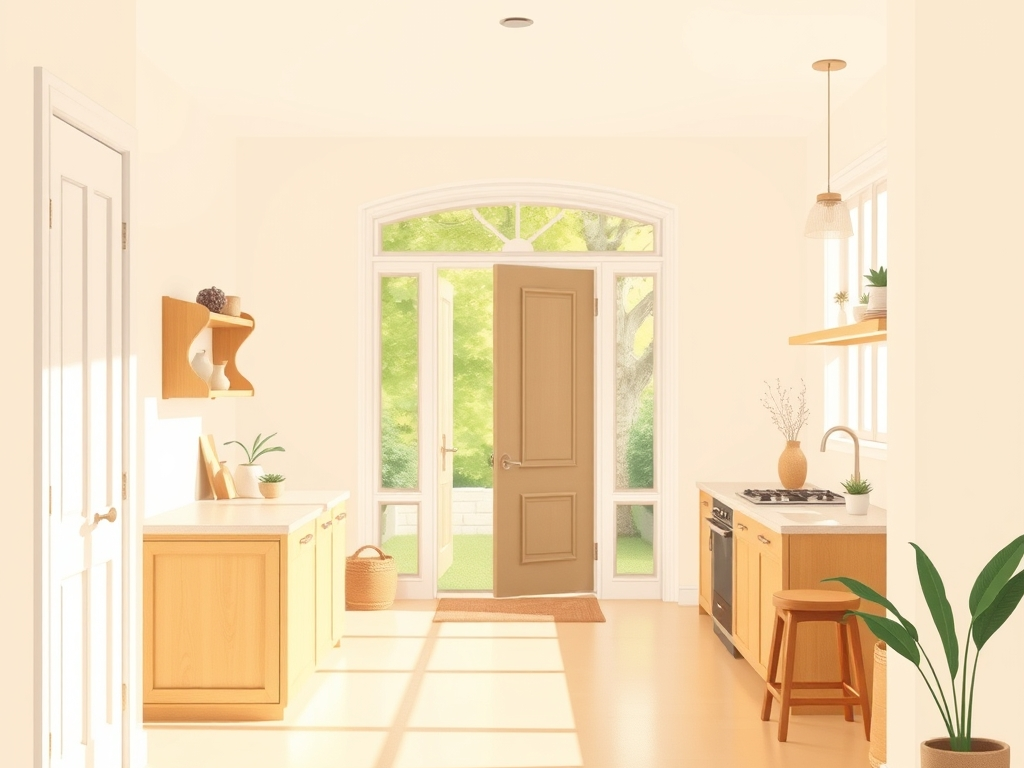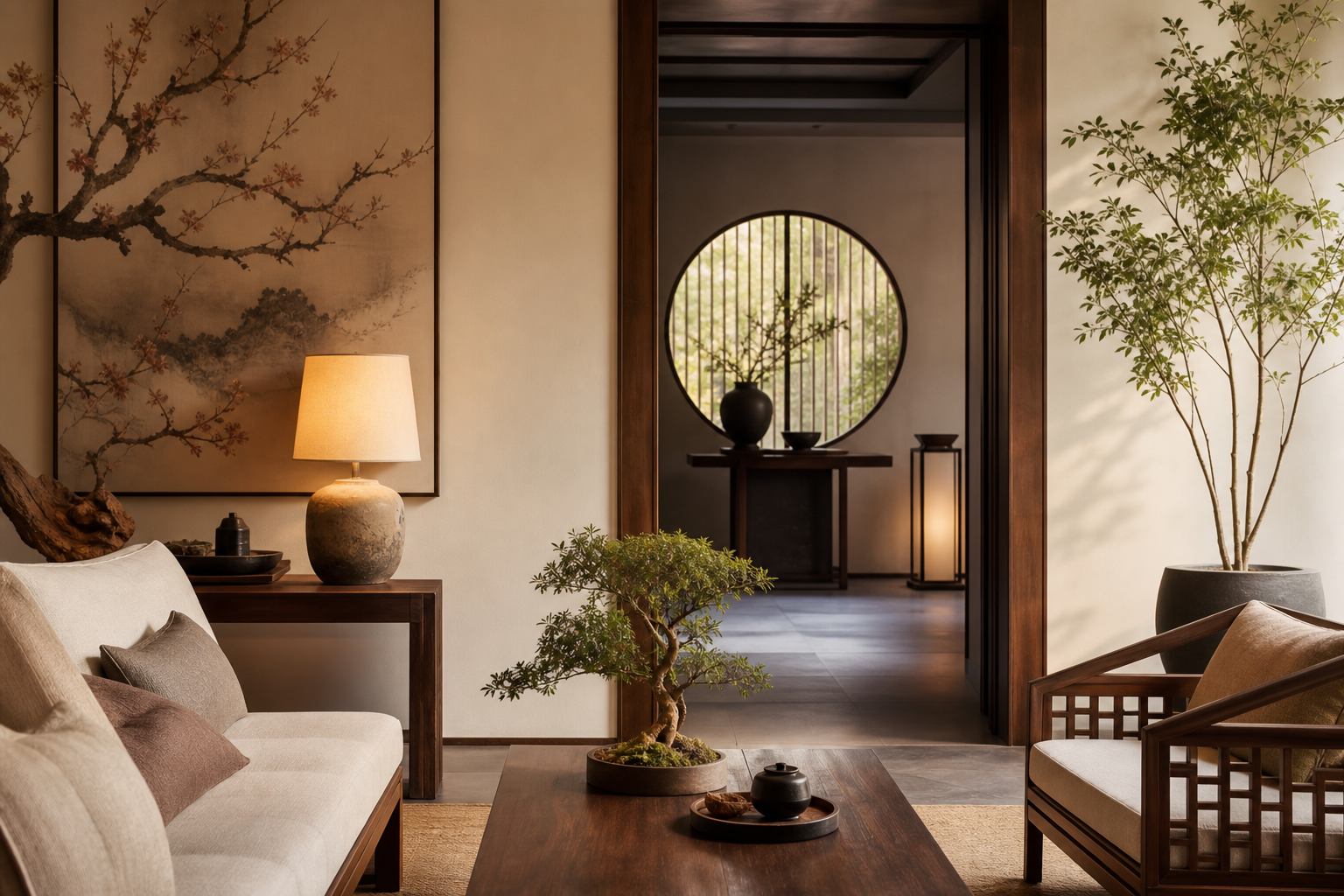
When people say a room feels "balanced," they are usually pointing to something real, even if they cannot explain it right away. The room feels usable, visually steady, emotionally readable, and easier to inhabit. In Feng Shui, balance is not a sterile idea of symmetry or perfection. It is a sense of fit. The room supports what it is meant to do without constantly creating friction.
Beginners often look for balance in objects first, but balance usually begins with relationships: enough space to move, enough light to function, enough order to feel settled, and enough warmth or softness to keep the room from feeling cold or over-controlled.
Signals of Imbalance Beginners Often Notice First
Some forms of imbalance are easy to feel. A room may be so crowded that every movement is awkward. Another may be so empty or underfurnished that it feels unfinished and uneasy. One room may be visually loud and overstimulating, while another feels dull, stale, or forgotten. These impressions are not trivial. They are the raw material of observation.
In Feng Shui language, imbalance can show up as blocked movement, disproportion, overexposure, lack of support, or a mismatch between the room's function and what it visually communicates. A bedroom that feels like a storage unit is imbalanced. A workspace that encourages distraction at every glance is imbalanced. The first job is to notice honestly, not to force positivity.
How Feng Shui Talks About Harmony and Fit
Harmony in Feng Shui is often less about decoration and more about relationships inside the room. Does the furniture arrangement support the activity? Is there a clear focal point? Are major paths easy to follow? Does the room ask for constant visual negotiation, or can the body relax into it? These are practical questions that align well with Feng Shui thinking.
Symbolism also matters, but only after function is respected. A room full of meaningful objects can still feel chaotic if it lacks spacing, order, and use. Likewise, a room can be visually clean but emotionally flat if everything feels overly rigid or disconnected from real life. Balance means the room is coherent.
A Simple Observation Exercise
Choose one high-use room and stand at the entrance. Without moving anything yet, answer four questions. Where does your eye land first? Where does movement feel easiest or hardest? What part of the room seems overloaded? What part feels neglected or underdefined? Write those answers down before making changes.
Then make one practical adjustment: clear a path, improve lighting, remove overflow, or create a more obvious use zone. Afterward, compare the room again. This is a strong beginner exercise because it turns Feng Shui balance into something testable. You are not trying to prove fate. You are testing whether the room becomes more coherent and supportive.
Balance Is Not the Same as Uniformity
Some beginners think balance means every room should be neutral, minimal, or symmetrical. That is too narrow. A creative studio can have lively energy and still feel balanced. A family room can be warm, busy, and layered without becoming overwhelming. The issue is not whether a room has personality. The issue is whether the room's qualities work together.
In this sense, balance is always specific. A calm reading room and an active kitchen will not feel balanced in the same way. The room's purpose tells you what kind of balance you are looking for.
FAQ
Does balance mean symmetry?
Not necessarily. Symmetry can help in some rooms, but Feng Shui balance is broader than that. It includes use, atmosphere, flow, proportion, and support.
Can a colorful room still be balanced?
Yes. Balance is not about being plain. It is about whether color, furniture, light, and movement work together without constant tension.
What causes the strongest sense of imbalance?
For beginners, the most common causes are blocked pathways, overloaded surfaces, poor lighting, and a mismatch between the room's purpose and how it is being used.
What should I change first?
Start with the most functional friction point. If you cannot move easily, see clearly, or use the room as intended, solve that before adding symbolic layers.
Where to Go Next
To connect balance with symbolism, read The Five Elements in Feng Shui Explained Clearly. For a doorway-focused application, continue with A Beginner's Guide to Entryways, Doors, and First Impressions. More related lessons live in the Bagua & Feng Shui archive.