The command position is one of the most useful ideas in feng shui, because it matches how people actually feel in a room. In its simplest form, it is the spot where you can see the door without sitting directly in line with it. Desks and beds placed in the command position tend to feel settled, while positions that face a wall or put the door directly behind you tend to feel restless.
The principle is easy to test. Sit at your desk with the door behind you for a day, then move to a position where the door is visible, and notice the difference in attention and comfort. The command position is not magic; it is good arrangement that the tradition happens to name.
Why It Feels Right
Humans are wired to notice the entrances and exits of a room. When the door is visible, the mind can relax into the task because the environment is legible; when it is not, part of the attention stays on watch. That is why the command position supports focus, sleep, and conversation: it removes a background tension that most people never name.
The same logic explains the classic cautions. A bed directly in line with the door puts the sleeper in the path of movement and light; a desk with the door behind keeps a blind spot in view. For the fundamentals of arrangement, read What Is Feng Shui?.
Finding the Command Position
Finding the position takes three steps:
- Stand at the door and note the room's main sightlines.
- Choose a spot where the door is visible without being directly in front of it.
- Place the bed or desk there, with a wall or solid support behind you.
The support behind the seat or bed is the second half of the rule. A wall behind feels grounding; a window behind feels exposed; a high-traffic path behind feels restless. For the desk version of this guidance, read Home Office Feng Shui for Focus.
Common Mistakes
The first mistake is treating the command position as a strict rule that overrides the room's actual function. If the only workable desk spot faces a wall, a mirror or a screen can restore a sense of space. The second mistake is placing the bed in line with the door because the room forces it, without adding a screen or a solid headboard for separation. The third mistake is obsessing over the position while ignoring clutter, light, and noise, which affect the room far more.
A related error is assuming the command position is the same for every seat. The important seat in a room, usually the desk chair or the bed, carries the rule; occasional chairs do not need the same treatment. For the room-by-room view, read Bedroom Feng Shui Basics.
When to Break the Rule
The command position is a tendency, not a law. Small rooms, shared layouts, and rented spaces often make it impossible, and the honest answer is to approximate: use a mirror to see the door, add a screen to buffer a path, or choose the least restless option available. A room that is clean, calm, and well used usually outweighs a perfectly placed desk.
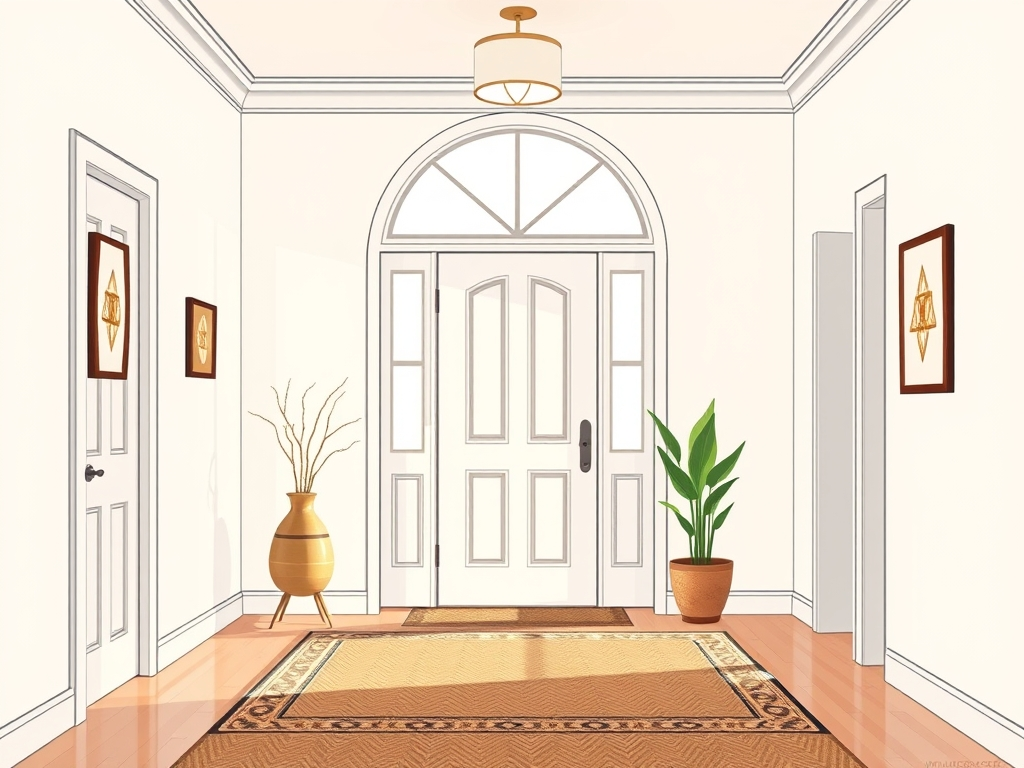
The same flexibility applies to the front door. If the layout places the entry in line with the sofa or the stove, a small screen or a plant can soften the line without a renovation. For entry logic, read Entryways, Doors, and First Impressions.
A Worked Example
Imagine a home office where the desk faces a wall and the door is behind the chair. The tenant moves the desk to the opposite wall, so the door is in view and the wall supports the back. Within days, focus improves and the urge to check who is entering fades. The change was a furniture move, and it cost nothing, yet it transformed the room's feel.
The example shows why the command position is the most practical idea in feng shui: it delivers a real, testable improvement through simple arrangement. For more grounded guidance, browse the Bagua and Feng Shui library and the Bagua and Feng Shui section.
Testing the Position for Yourself
The command position is easy to test, and the test is worth doing deliberately. Choose a work week and keep your current arrangement; the next week, move the desk or bed to the command position if possible. Keep a short note on focus, rest, and general comfort in each week, and compare the two records. Many people notice the difference within days, and the note turns the feeling into evidence.
If you cannot move the furniture, test a partial version: add a mirror that shows the door, or place a screen to block the path behind you. Partial adjustments still restore most of the benefit, because the mechanism is visibility and support, not the furniture itself. Test the partial version for the same two weeks, and keep whatever works.
The command position also applies to other long-use seats, such as the sofa and the dining chairs that face the room's main entrance. You do not need to move every chair, but it is worth checking the seat where you spend the most hours and asking whether its occupant can see the door without straining. Small moves to the best seats are cheap experiments, and the rooms that pass them tend to feel calmer for everyone who uses them.
FAQ
Is the command position a superstition?
It is better described as an ergonomic insight: visibility of entrances and support behind the back reduce background tension.
What if my room cannot accommodate the position?
Approximate it with mirrors, screens, or the least restless option, and let the room's other qualities carry the weight.
Does the rule apply to every chair?
It matters most for the seats you use for hours, such as the bed and the main desk chair.
How quickly will I notice a difference?
Many people feel the change within days, especially for desks; others notice it more slowly, which is why testing matters.