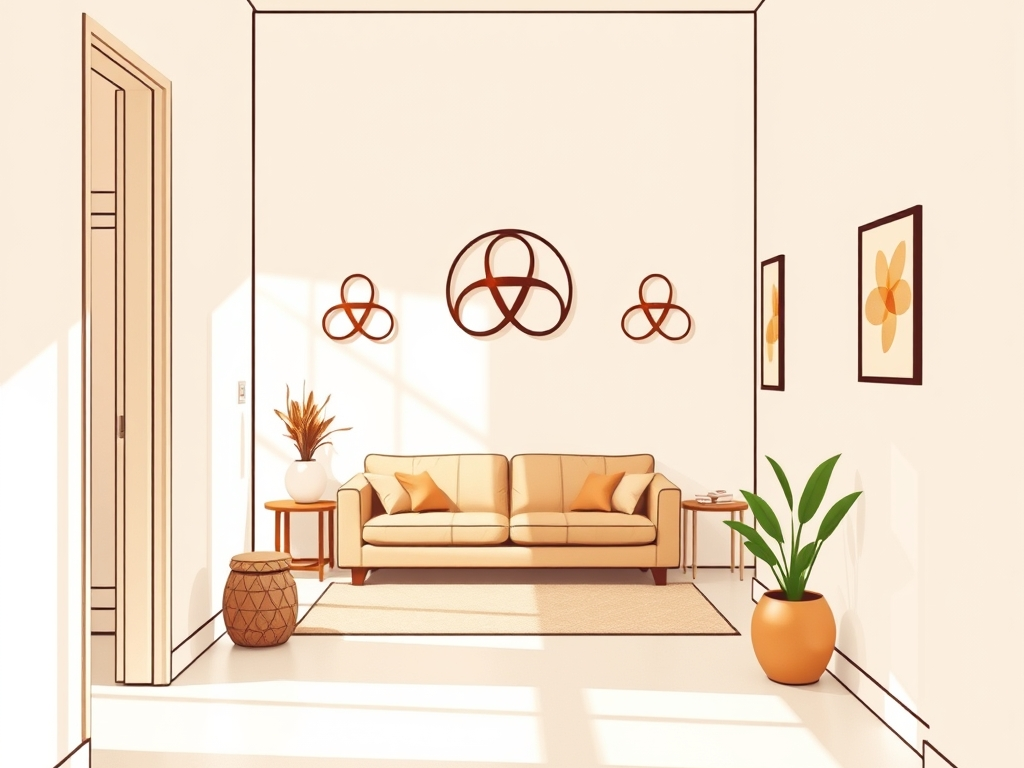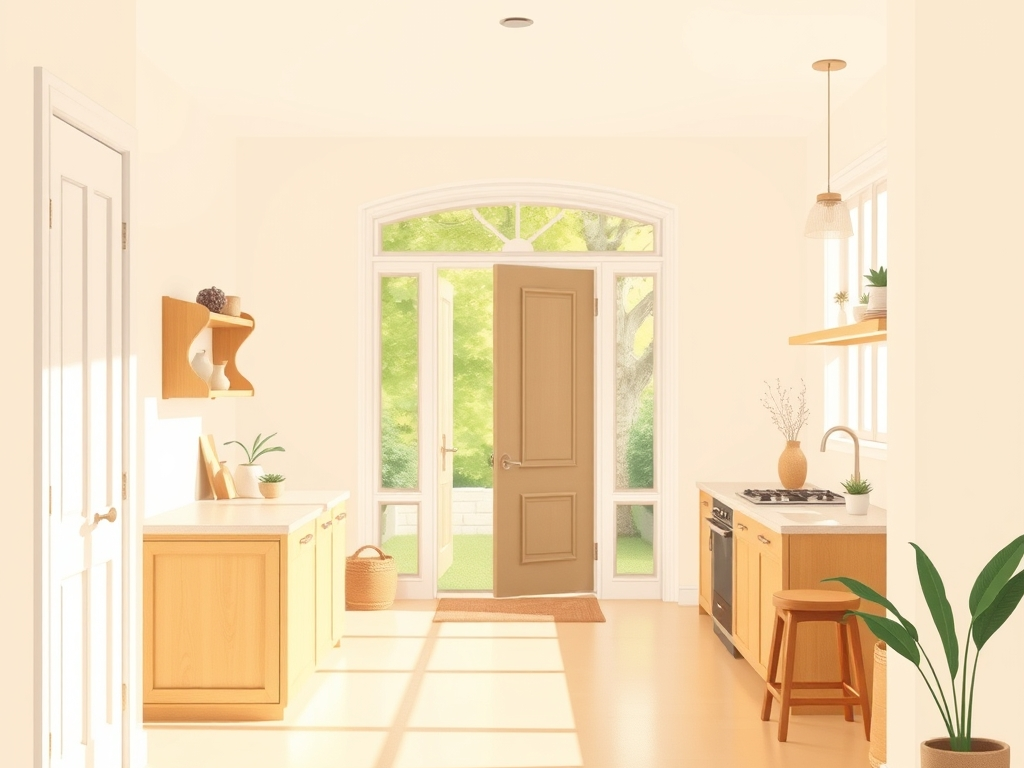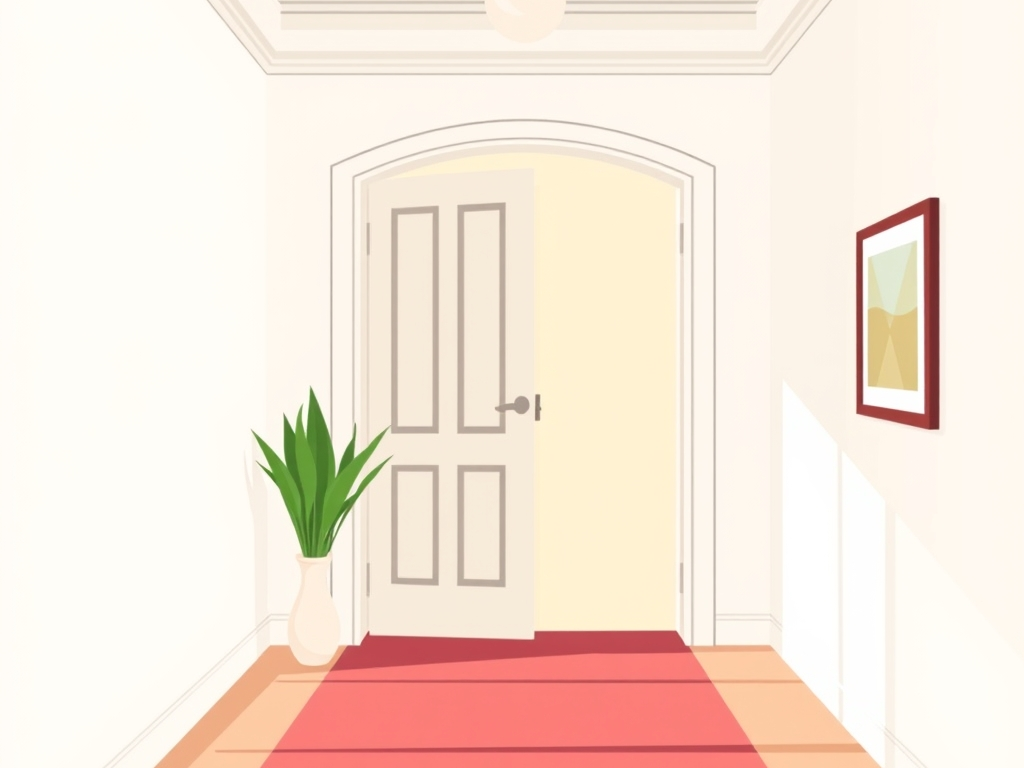
Feng shui talks a lot about the front door, and for good reason, but the same principle applies to every doorway in the home. Each entrance is a transition point, a place where one kind of space becomes another, and the quality of that transition shapes how the room feels before you even step inside. A doorway that opens onto clutter or a wall feels different from one that opens onto a clear view, and the difference is entirely adjustable. For the front-door version, start with Feng Shui for the Front Door and Entryway.
This article explains why every doorway matters, how to evaluate an entrance, and how to make each one feel deliberate.
The Doorway as a Pause
Every doorway creates a pause: the moment before you enter a room, your attention shifts from one activity to another. The tradition reads that pause as the first impression of the room, and first impressions are formed in the entrance, not the center. A doorway that frames something pleasant, a window, a clear path, a calm corner, prepares the room to be used well. A doorway that frames a wall, a pile, or a tangle prepares the room to feel cramped before you take a step.
The practical claim is easy to test. Walk through a doorway that opens onto a clear path and one that opens onto a clutter wall, and notice the difference in your own attention. For the psychology of that first impression, read The Power of the First Impression at the Door.
What Makes a Good Entrance
A good entrance has three qualities. It is clear, with nothing stacked immediately inside the frame. It is framed, so your eye lands on something intentional rather than random. And it is transitioned, meaning the room's purpose is visible from the threshold: a bedroom reads as rest, a kitchen as work, an office as focus. You can achieve all three with small moves: clear the first two feet, set one anchor object in the sightline, and let the room's main function be obvious from the door.
For the bedroom and office versions of the same rule, read The Bedroom and Restful Energy and Feng Shui for the Home Office Desk.
Entrances That Connect Rooms
Doorways between rooms are also transitions, and their quality depends on what they connect. A door that opens from a cluttered hallway into a calm room transfers some of the hallway's charge; a door that opens onto a mirror or a wall directly across can feel abrupt. The fixes are the same as anywhere else: keep both sides of the threshold clear, and make sure the line from the door into the room has somewhere to go. For the movement layer between rooms, read The Hallway and How Energy Moves.
Homes with many connecting doors benefit most from this practice, because each threshold multiplies the felt transitions of the day.
A Checklist for Every Entrance
Walk your home with this checklist and fix the worst threshold first.
- Clear the first two feet inside every doorway.
- Check what the eye lands on when the door opens.
- Place one intentional anchor in the sightline if it is blank.
- Make sure the room's purpose is visible from the threshold.
- Test each doorway by walking through it slowly and noticing the pause.
The checklist turns "the house feels off" into named thresholds, and named thresholds are fixable. For the room-by-room version of this walk, read A Beginner's Room-by-Room Feng Shui Walkthrough.
Why the Smallest Doorway Can Matter Most
The doorway you pass most often matters more than the one you pass rarely, whatever its size. For many people that is the bathroom or the office door, and a clear threshold there does more for the day than a rearranged living room. Pay attention to frequency, not prestige, and let the most-used entrances get the first repair. For the bathroom threshold specifically, read Feng Shui for the Bathroom.
This is the same logic as the front door, scaled to the rooms you actually live in, and it is where the practice becomes personal.
Keeping Entrances Honest
Doorway care drifts into superstition when it becomes a rule book of objects and symbols. The honest version is simpler: clear the threshold, frame the view, and let the room's purpose be visible. If those three are true, the doorway works, whatever the tradition's fancier recommendations say. For that grounded frame, read Feng Shui Without Superstition.
Used this way, every doorway becomes a small act of care, and a home of small cared-for thresholds feels different to live in, which is the entire point.
Thresholds in Shared Homes
Doorways are also agreements in shared homes. The threshold of a partner's office, a child's room, or a shared bathroom is a boundary between territories, and the felt quality of those thresholds depends on mutual care. A clear entrance to a shared room is a small promise that the room's user can start fresh; a cluttered one is a daily message of disregard, whether or not anyone intends it. The practice therefore has a social layer: agree with the people you live with which thresholds matter, and keep those clear together. For the relationship side of spaces, read The Relationship Area and Its Symbols.
Shared thresholds also teach the limit of the practice. You can arrange your own side of a threshold, and the rest is negotiation, not feng shui; pushing your own standard onto someone else's door is the fastest way to turn a calm practice into a household conflict. The honesty of that boundary is part of what keeps the whole tradition practical rather than controlling.
FAQ
Do all doorways need the same treatment?
No. Start with the thresholds you cross most often, and give each entrance the minimum care it needs.
What if a doorway opens directly onto a wall?
That is a common layout. Hang something intentional on the wall or angle a small anchor object so the eye has a place to land.
Is the front door more important than inner doors?
It is important, but the doors you pass daily often affect your felt quality more; frequency matters as much as prestige.
How long does a threshold fix take?
Usually minutes. Clearing the first two feet and setting one anchor is the whole repair.