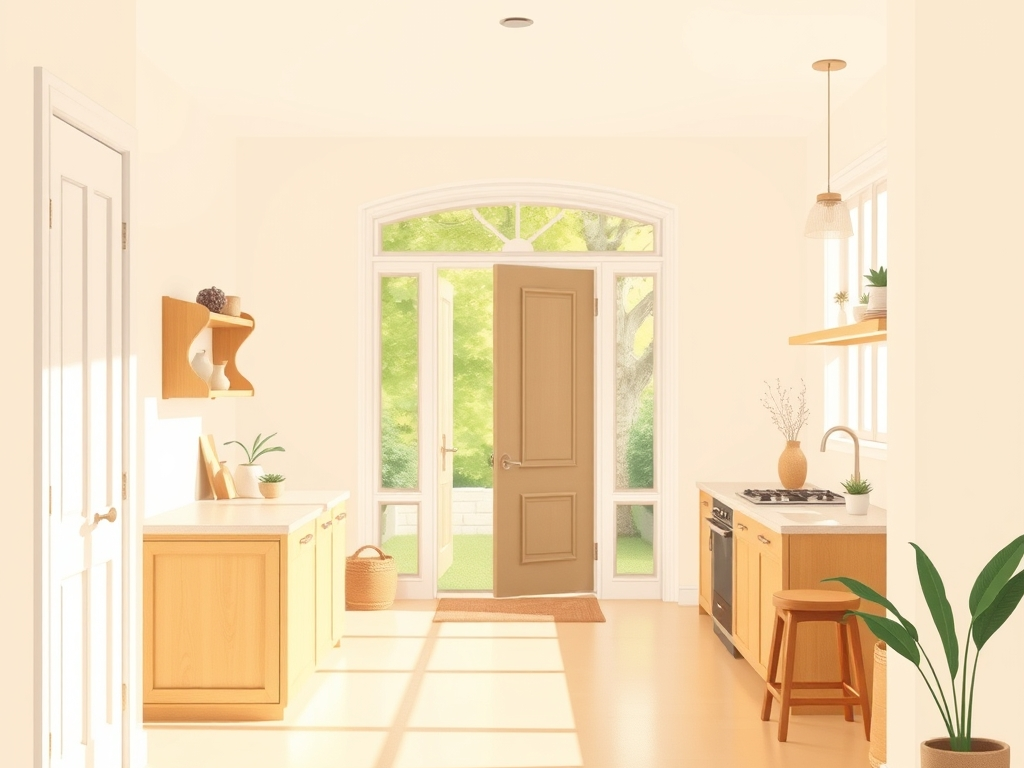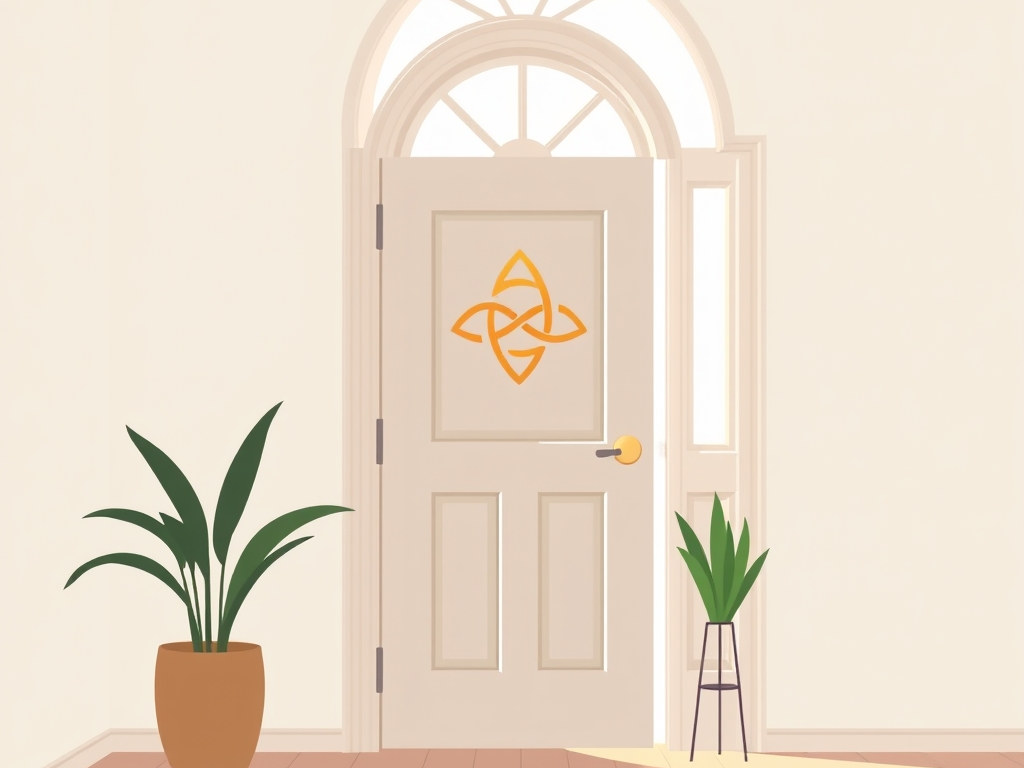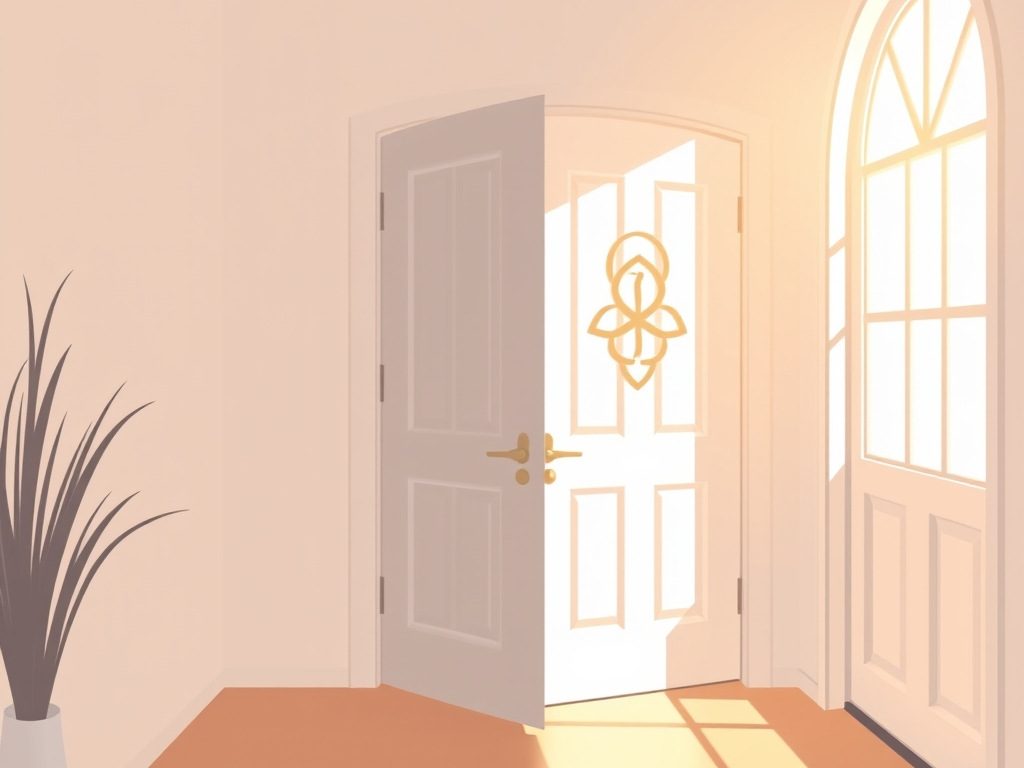
The front door is where feng shui and psychology agree completely. The first thing you see when you arrive sets the tone for the rest of the day, and the first thing a guest sees sets the tone for the visit. In feng shui, the door is called the mouth of qi, the place where energy enters the home, and it is given more weight than any other single feature. The practical version of this idea is simple: an entrance that is clear, welcoming, and well-lit changes how the whole home feels.
This article explains why the door matters so much and gives you a checklist for making the entrance work, whether you own the home or rent. For the basics, read What Is Feng Shui? and The Front Door and First Impressions.
Why the Door Carries So Much Weight
The door is the boundary between outside and inside, which makes it the first place where the home's character is defined. In traditional practice, the door determines how qi enters: whether it arrives smoothly or is blocked, whether it is greeted by openness or by clutter, and whether the home receives it or deflects it. Symbolically, the door is also the image of opportunity: the threshold you cross to begin something.
The psychology is the same. A dark, cluttered entrance produces a small spike of unease that lingers; a bright, clear one produces relief. That feeling is not magic; it is the brain reading the environment. Making the door work is therefore one of the highest-return changes in feng shui, because it affects every entry and exit. The threshold is also the first place a home's maintenance shows, since a door that sticks or a light that is out signals neglect before any other room does. For the entryway basics, read Entryways, Doors, and First Impressions.
What a Working Entrance Needs
A working entrance needs five things: clear access, light, a place to land, a sense of the home's character, and maintenance. Clear access means nothing stacks against the door or blocks the path inside. Light means the entrance is bright enough to feel safe and welcoming, ideally with a mix of daylight and a warm lamp for the evening. A place to land means somewhere to put keys, shoes, and bags, so arriving does not immediately create clutter. Character means one deliberate object or color that tells you who lives here. Maintenance means the door itself opens easily, the handle works, and the threshold is clean.
Each of these is concrete and fixable. You do not need to know a single trigram to improve an entrance; you need to walk through it with fresh eyes. If you cannot see the entrance freshly, photograph it and look at the photo, because the camera shows the clutter and the darkness that daily habit hides. For the element that colors the door, read The Five Elements in Feng Shui Placement.
An Entrance Checklist You Can Do Today
Spend an hour on the entrance and check each item:
- Clear the path: nothing touching the door, nothing stacked in the entry.
- Fix the light: replace dim bulbs, clean the fixture, add a warm lamp for evenings.
- Add a landing zone: a small table, tray, or hooks for keys, bags, and coats.
- Remove broken items: shoes, umbrellas, or decor that no longer works.
- Choose one welcome cue: a clean mat, a plant, or one piece of art.
- Test the door: it should open fully and quietly, without a catch.
Do the functional items first, then the decorative one. A plant is a pleasant addition, but a door that sticks open or a dark stairwell will undo its effect. For the symbolism of the threshold, read Feng Shui for the Front Door and Entryway.
Common Mistakes at the Entrance
The first mistake is treating the entrance as a storage zone. Shoes, mail, and sports gear collect where they are dropped, and the door becomes the least welcoming part of the home. The second is neglecting the outside. The approach to the door matters as much as the inside: a clean path, a working light, and a mat make the arrival feel intentional. The third is over-decorating. An entrance with too many objects creates the same clutter feeling as one with none.
The fourth mistake is ignoring the mirror. A mirror facing the door directly is debated in tradition because it can feel like the entrance bounces back; in practical terms, a mirror that reflects clutter doubles the clutter and a mirror that reflects light doubles the light. Choose its placement by what it reflects. For the mirror question, read Mirrors in Feng Shui: Practical Guidance.
Small-Space and Rental Adaptations
If the entrance is tiny or rented, the same principles compress. A tiny entry needs only a tray and a hook; that is the landing zone. A rented apartment can use removable hooks, a floor lamp, and a mat, all of which leave the walls untouched. An apartment with no real entrance can create one with a mat and a small divider or a rug that marks the transition zone.
For renters, the door is also one of the few places where personalization is cheap and reversible. Use it: a new mat, a wreath, a light upgrade, or a clean doorknob changes the first impression without violating a lease. For more rental-friendly practice, read Feng Shui for Renters: Portable Adjustments and Feng Shui for Apartments.
FAQ
Does the front door direction matter?
Traditionally yes, but the practical condition of the entrance matters more than its compass direction for daily life.
What color should the door be?
Choose a color that fits the home's character and the element logic if you use it. Function and maintenance come first.
Can a mirror face the front door?
It is debatable in tradition. Use the practical test: if the mirror reflects something you want to double, keep it; if it reflects clutter, move it.
How often should I refresh the entrance?
Review it with the seasons and after any period when the home has felt heavy. Small refreshes keep the threshold alive.