Hallways are the rooms people forget to evaluate, because nobody stays in them. In Feng Shui, however, the hallway is where movement happens: it connects the entry to the rest of the home, and its condition shapes how the whole house feels. A narrow, dark, cluttered hallway makes every trip through the home feel like an obstacle course, while a clear, well-lit hallway makes the house feel larger and calmer. This article explains how to apply practical Feng Shui to hallways and corridors, starting from the framework in What Is Feng Shui?.
Why the Hallway Matters
In traditional thinking, the hallway carries the movement of the household. People pass through it constantly, and each pass is a small repeated action that shapes how the home feels. If the hallway is blocked by shoes, boxes, or furniture, every pass becomes a negotiation, and the tension accumulates even when nobody notices it. If the hallway is clear, movement feels effortless, and the rooms beyond it feel more open.
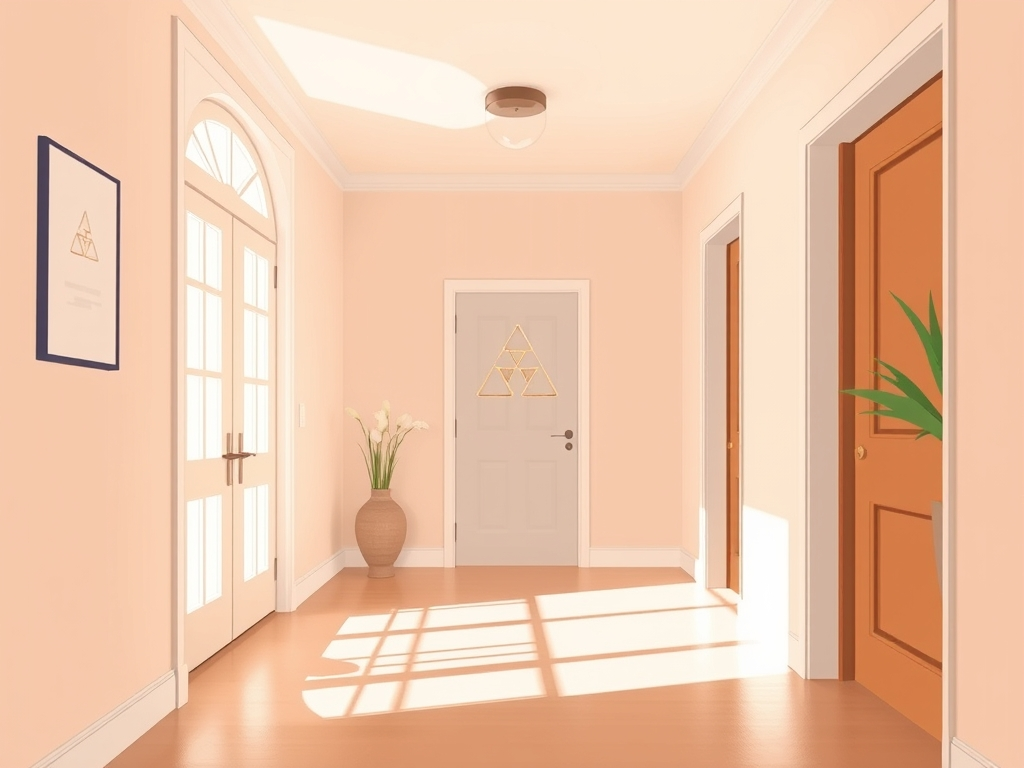
This is why Feng Shui treats hallways as more than decorative corridors. The practical question is whether the hallway supports the traffic it receives. A wide hallway with clear paths and good lighting does that naturally; a narrow hallway stuffed with storage does not. The same logic of supporting the room's activity appears throughout the home, and the general principle is described in How the Bagua Map Applies to Your Home.
A Hallway Checklist for Clear Movement
Use this checklist to evaluate any hallway in about ten minutes:
- Check the floor: clear a path at least wide enough for two people to pass without stepping sideways.
- Remove objects from the traffic line: shoes, bags, and deliveries belong in storage, not along the walking path.
- Check the light: a dim hallway feels longer and heavier, so add a lamp or brighter bulb if needed.
- Check the walls: tall furniture or heavy shelves in a narrow hall make the space feel even tighter.
- Look at the far end: a wall that stops the eye abruptly makes the hall feel dead, while a clear destination helps.
- Check the doors: doors that open into the walkway should be adjusted or kept clear so they do not block traffic.
The checklist keeps the review concrete and reversible. If the hallway feels better after one small change, you know the change was aimed at the real problem, a testing habit explained in What Makes a Space Feel Balanced.
Light, Mirrors, and the Ends of the Hall
Light is the first thing to fix in a hallway. Because hallways usually lack windows, they depend on artificial light, and a single dim bulb can make the whole corridor feel like a tunnel. A warm light at one end and a small lamp or picture light along the wall can change the room completely without any structural work. Good lighting also improves safety at night, which matters in every home.
Mirrors can help a narrow hallway by adding light and depth, but they should be placed carefully. A mirror at the end of the hall can make the space feel longer, while a mirror beside a door can make the entry feel wider. The practical rule is to use mirrors where they reflect light or a pleasant view, not where they double the visual clutter. For guidance on mirror placement, read Mirrors in Feng Shui: Practical Guidance.
Common Misconceptions About Hallways
The first misconception is that hallways are too small to matter. In fact, because people pass through them so often, hallways have an outsized effect on how a home feels, and clearing one is one of the fastest Feng Shui changes you can make. The second misconception is that hallways must be empty. A narrow console, a single picture, or a small plant can make the space feel intentional; the problem is objects that sit in the walking path or pile up over time.
The third misconception is that a long hallway is bad luck or a sign of wasted space. A long hallway is simply a design feature, and it works well when it is well lit, clearly floored, and given a visual destination such as a doorway, a picture, or a warm lamp at the end. What matters is the experience of moving through it, not its length. For more on separating practical guidance from myth, see Common Feng Shui Myths.
Keeping Hallways Clear Over Time
Hallways collect clutter faster than any other room because they are transit spaces. Shoes, mail, and bags get dropped there on the way through, and within a week the path shrinks. One practical habit is a nightly sweep: return anything that does not belong in the hall to its room, and keep one small basket for items that are genuinely used at the door. The same principle of portable, minimal storage appears in Feng Shui for Renters: Portable Adjustments.
It also helps to review the hallway seasonally, because coats, boots, and umbrellas change with the weather. In winter, provide a place for wet outerwear near the door; in summer, clear the floor entirely and let the hallway feel light. The habit of seasonal review is described in Seasonal Adjustments in Home Energy, and the entry-related aspects are covered in Feng Shui for the Front Door and Entryway.
Hallways in Apartments and Shared Homes
In apartments and shared homes, the hallway is often the first room visitors see and the last room residents think about. The same checklist applies, but two details matter more: the entry storage and the door swing. If the hallway doubles as the entry, provide a small landing area where shoes, keys, and bags can rest without blocking the path. A narrow bench or a wall-mounted shelf can hold the day's items at hand height, keeping the floor clear and the path open.
Door swings deserve a specific check in tight hallways. A door that opens into the corridor can make the hall unusable when two doors are open at once, and the fix is often simple: change the door stop, install a pocket door, or keep the door closed as a default. These adjustments are practical rather than symbolic, and they follow the same standard as the rest of the home. The path should stay clear, the light should stay even, and nothing should force a detour, because the hallway earns its place by making every trip through the home effortless.
FAQ
Are hallways important in Feng Shui?
Yes. They carry the daily movement of the household, so their condition shapes how the whole home feels.
Should I put a mirror in the hallway?
Only where it reflects light or a pleasant view; a mirror that doubles clutter usually makes the space feel worse.
Is a long hallway a problem?
No. A long hallway works well when it is well lit, clear, and given a visual destination at the end.
How do I keep the hallway clear?
Do a nightly sweep and keep one small basket for items used at the door, so the path never fills up.