The bedroom has one primary job, and that job is rest. Every other consideration, from style to storage to technology, should serve it. Feng Shui is unusually clear about this: the bedroom works best when it is calm, simple, and easy to settle into, because the space is telling your body what to do every time you enter it. This article explains how to create a restful bedroom with practical Feng Shui, building on the basics in Bedroom Feng Shui Basics.
Start with the Bed Itself
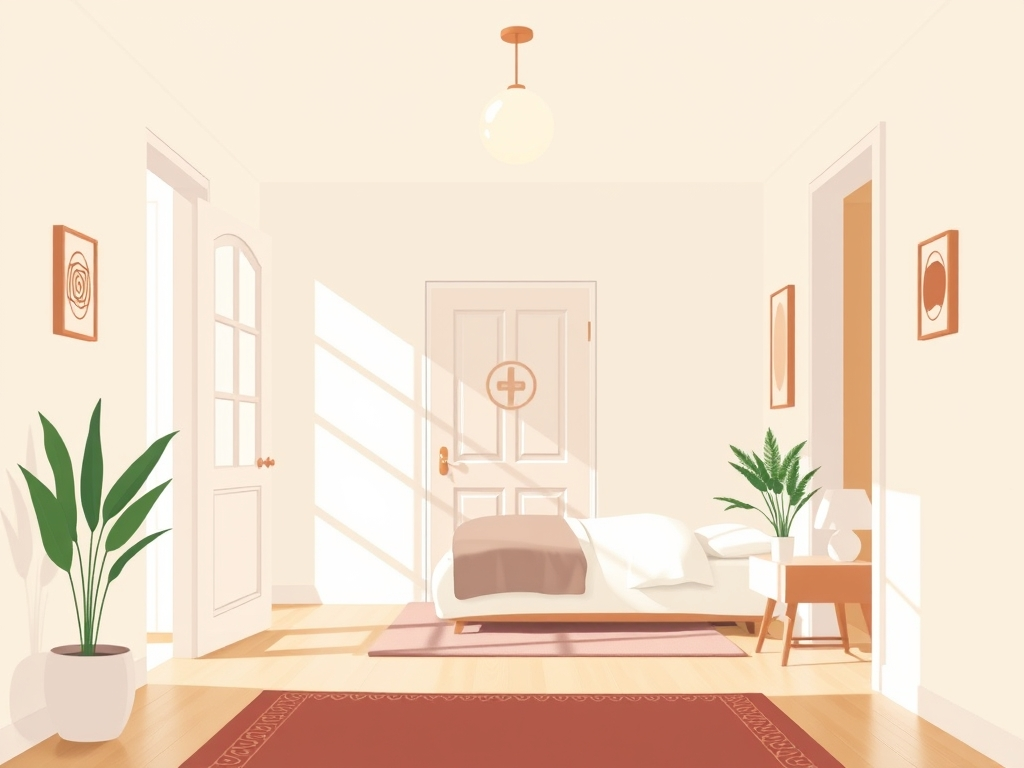
The bed is the center of the bedroom, and its placement sets the tone for the whole room. Place it against a solid wall, away from the direct line between the door and the window. You should be able to see the door from the pillow without lying directly in its path; this is the same command position used for desks, and it is explained in The Command Position in a Room. Keep both sides of the bed clear so there is a real path around it, which makes the room feel balanced and easy to use.
If the room is small, the bed still comes first. Choose a bed that fits the room with space to walk around it, rather than a large bed that blocks the door or the closet. The same practical approach for small rooms is described in Feng Shui for Small Spaces.
Calm the Colors and Materials
Restful bedrooms use calm colors and soft materials. Muted earth tones, gentle greens, warm neutrals, and soft whites support sleep, while bright reds, loud patterns, and high-contrast schemes keep the mind engaged. You do not need to repaint the whole room; changing the bedding, curtains, and one or two accessories can shift the feeling significantly. The elements behind these choices are described in The Five Elements in Feng Shui Placement.
Choose natural materials where possible: cotton or linen bedding, wooden furniture, and curtains that block light well. The textures should feel soft to the touch, because the room is where your body relaxes.
A Restful Bedroom Checklist
- Place the bed against a solid wall with a clear view of the door from the pillow.
- Clear the paths on both sides of the bed and between the door and the window.
- Remove work materials, screens, and exercise equipment from the room.
- Choose calm colors and soft, natural materials for bedding and curtains.
- Use layered lighting: bright for getting ready, dim for winding down.
- Keep the room cool, dark, and quiet at night.
The checklist follows one rule: if it does not support rest, it should not be in the room. The same standard applies to the layout of the whole home, and the room-by-room approach is covered in How the Bagua Map Applies to Your Home.
Remove the Work and the Screens
One of the most common reasons a bedroom feels restless is that it is also an office, a gym, or a media room. The mind learns to associate the space with activity, and the body stays alert. If you cannot remove the desk entirely, cover it at night, put the laptop away, and keep the work tools out of sight. The same logic applies to mirrors facing the bed, which can create a sense of being watched; the practical guidance on mirrors is described in Mirrors in Feng Shui: Practical Guidance.
This step is where most people feel the biggest difference. A bedroom that no longer shows work, screens, or clutter stops telling the mind to stay busy, and the room finally becomes the restful place it was designed to be.
Common Misconceptions About Bedroom Feng Shui
The first misconception is that the bed must face a specific compass direction. In practice, a calm layout and a comfortable bed matter more than orientation. The second misconception is that the bedroom needs many symbolic objects to be restful; the opposite is true, because fewer objects create less visual noise. The third is that Feng Shui is only about furniture placement. Light, sound, temperature, and airflow all participate, and the practical guidance is explained in Feng Shui for Lighting and Airflow.
Light, Sound, and Temperature for Sleep
Rest depends on conditions as much as layout. Keep the bedroom dark at night with curtains that block outside light, and remove or cover small glowing devices that keep the room alert. Keep the sound level low and steady, using a fan or white noise if the neighborhood is noisy. Keep the room slightly cool, because the body sleeps best in a cooler temperature. Each condition is easy to adjust, and together they do more for rest than any single furniture change. The same attention to conditions is described in Feng Shui for Lighting and Airflow.
Set an evening routine that prepares the room: dim the lights an hour before bed, close the curtains, and clear the bed of work materials. The routine signals the room to shift into rest mode, and the same value of small evening rituals is described in The Value of Small Daily Rituals.
Making the Room Work for Two People
If the bedroom is shared, the layout should work for both people: equal access to the bed, a light and a surface on each side, and enough space to move without waking the other person. A room that favors one side creates a quiet imbalance that shows up over time. Place the bed so neither person sleeps directly in the door's path, and keep the shared paths clear. The same balance principle appears throughout the home, and it is described in The Center of the Home and Its Meaning.
Talk through any bedroom changes together, because a layout that feels restful to one person may feel wrong to the other. The room is shared space, and its arrangement should reflect both people's needs rather than one person's theory of Feng Shui.
FAQ
Does the bed need to face a particular direction?
No. A solid wall, a clear path, and a view of the door from the pillow matter more than a compass direction.
Is it bad to have a desk in the bedroom?
It is not bad, but it makes rest harder; if you must keep one, put the work away and out of sight at night.
What color is best for a restful bedroom?
Calm, muted tones such as warm neutrals, soft greens, and gentle earth colors generally support rest best.
How do I know if my bedroom is restful?
Walk in and notice your body: if you feel a natural drop in alertness and a pull toward settling down, the room is working.