Feng shui advice is easier to use one room at a time. A full-home overhaul overwhelms beginners and produces weeks of half-finished rearranging. The better route is a walkthrough: move through your home room by room, make one clear change in each, and live with the results before changing anything else. By the end of the walkthrough you have a calmer home and a method you can repeat. For the foundation, read What Is Feng Shui?.
This guide walks through the entry, living area, bedroom, kitchen, and work space, with one practical change per room.
The Entry: Make the Arrival Clear
Start at the front door. The entry sets the tone for the whole home, and its most common problem is clutter: shoes, mail, bags, and coats piled where you arrive. The one change that matters most is creating a clear landing zone. Clear the path from the door into the home, give shoes and keys a settled place, and make the first two steps into the home feel open. That is the entire assignment for this room.
Test it by arriving home after work and noticing how the entry feels. For the fuller entry layer, read Feng Shui for the Front Door and Entryway.
The Living Area: Fix the Main Seat
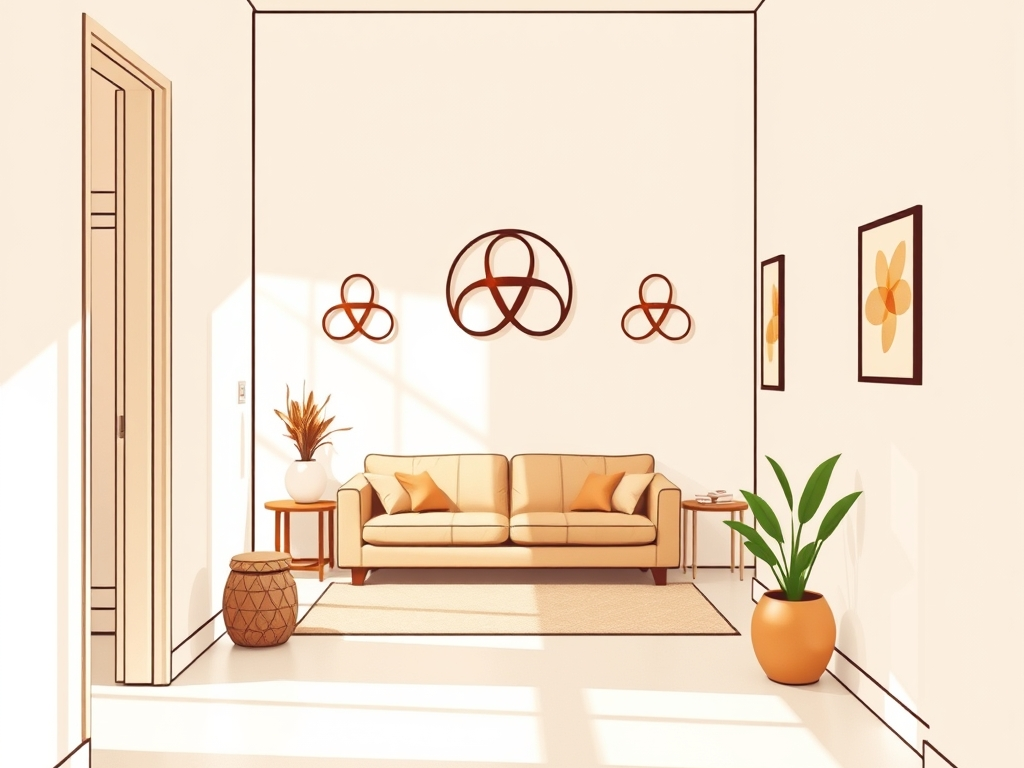
The living area works around the main seating. The one change that matters most is the command position: the main seat should see the room's entrance without being directly in line with it. If the sofa currently turns its back to the door or crowds a wall, try moving the seating so the main position has a clear view of who enters. If moving is impossible, add a mirror that reflects the entrance from the main seat, which serves the same sightline function.
Test it by sitting in the main seat and noticing whether the room feels settled and visible. For the sightline method, read The Command Position in a Room.
The Bedroom: Protect the Sleep Corner
In the bedroom, the one change that matters most is the bed's position. The bed should have a wall behind it, a clear view of the door from lying down, and no heavy shelf directly above the head. If the bed currently floats in the room or sits under a window, move it to the calmest wall position available. If the room is too small for a full move, change what you can: clear the space under the bed and remove clutter from beside it.
Sleep is the test. Give the new position a week and compare how you fall asleep and wake. For the full bedroom layer, read Bedroom Feng Shui Basics.
The Kitchen: Clear the Work Surface
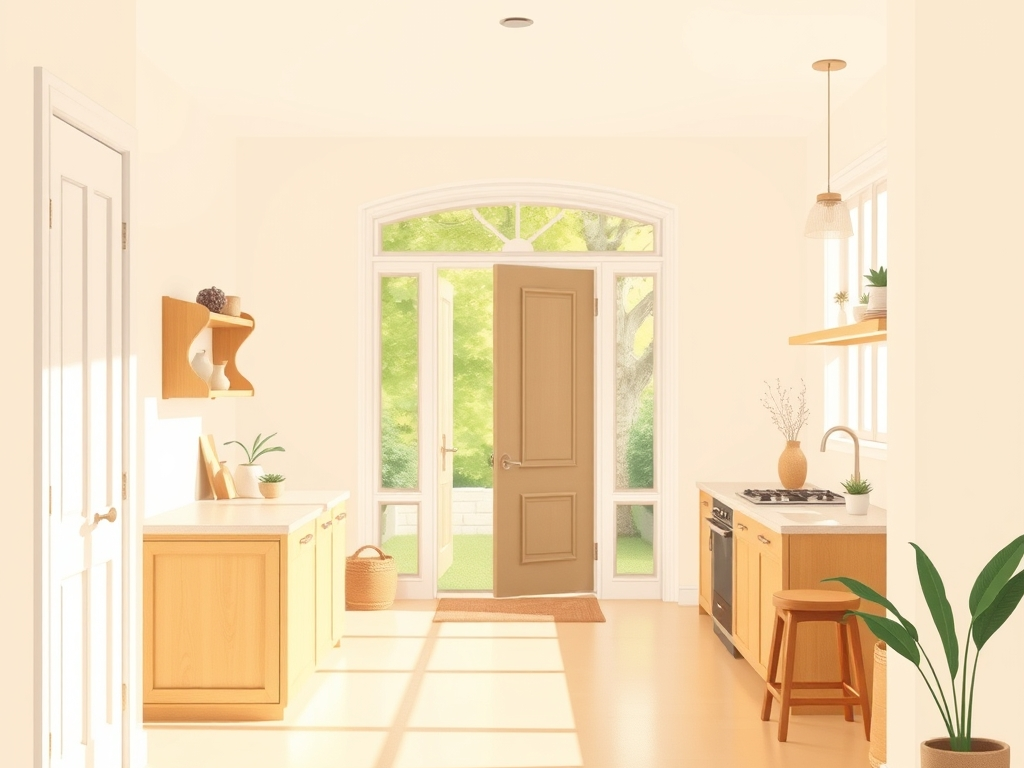
In the kitchen, the one change that matters most is a clear main work surface. The counter where you prepare food should be empty of appliances and clutter, or nearly so, because a clear surface supports calm, focused cooking. Choose the largest counter and clear it completely, moving the toaster, jars, and stacked bowls elsewhere. Keep the path from the sink to the stove clear as well.
Test it by preparing a meal in the cleared space and noticing the difference in flow and frustration. For the kitchen layer, read The Kitchen in Feng Shui: Balance and Function.
The Work Area: Face the Room
In the work area, the one change that matters most is the desk's orientation. The desk should face the room, not the wall, so the worker sees the door and the space beyond. A desk against a wall keeps the eyes pinned to the surface and the back to the room, which most people find tiring over hours. If the desk cannot move, add a mirror or a small board that opens the visual field, and keep the wall in front of the desk clear of heavy clutter.
Test it by working a few sessions in the new orientation and noticing focus and fatigue. For the desk layer, read Feng Shui for the Home Office Desk.
How to Run the Walkthrough
Run the walkthrough over two weekends:
- Saturday: clear the entry, fix the living-area seat, and clear the kitchen surface.
- Live with those changes for a week and note how the rooms feel.
- Next Saturday: move the bed and reorient the desk.
- Live with those changes for a week and compare.
- Keep the changes that worked and write one note per room.
- Repeat the walkthrough seasonally with a fresh eye.
The pacing is the point. Two changes a week is sustainable, and the notes give you a record of what actually helped. For the seasonal repeat, read Seasonal Adjustments in Home Energy.
Troubleshooting a Room That Still Feels Wrong
If a room still feels off after the one-change pass, resist the urge to change more. Go back to the evaluation step and look for a problem you classified incorrectly. A room that feels dark may actually be a function problem, with the seating placed where the light never reaches. A room that feels cluttered may be a flow problem, with the path forcing you past storage. Reclassify the problem, choose one new change aimed at the corrected diagnosis, and test again. The second pass usually finds the real issue, because the first pass was not wrong so much as incomplete.
When a room still feels wrong after a second change, the problem is sometimes outside the room entirely: noise from a neighboring space, a view that carries stress, or a window that faces a busy street. Naming the outside cause matters, because it tells you which remedies are possible. You cannot move a street, but you can add a second layer of curtain or reposition the seating, and those are real feng shui responses to a real condition. The tradition handles outside influences, and the honest version of that handling is simply noticing where the room ends and the world begins.
FAQ
How long does the walkthrough take?
Two weekends of light work plus two weeks of living with the changes, which is about the pace a beginner should keep.
Which room should I start with?
Start with the entry, because it sets the tone for the rest of the home, then follow the order above.
What if I rent and cannot move furniture?
Most of these changes are furniture moves, not construction, and even renters can usually rearrange; where walls are involved, use mirrors and screens.
Do I need to follow all the rules?
No. Take the one change per room that fits your space, test it, and keep only what works.