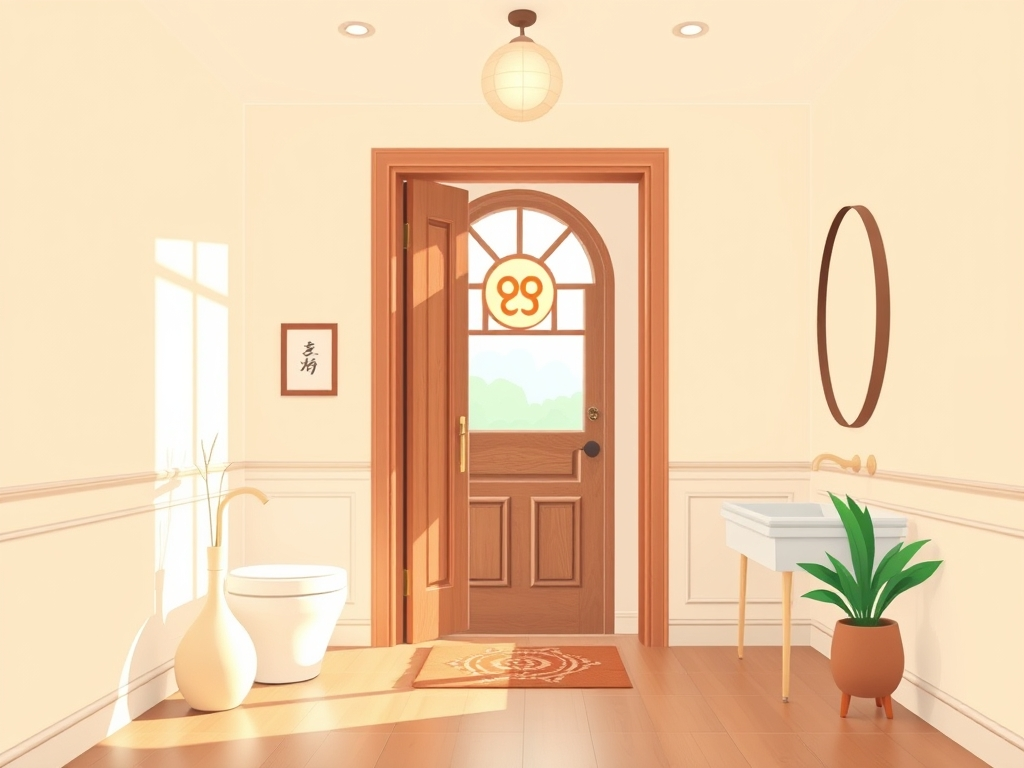
The bathroom is one of the most misunderstood rooms in feng shui. Popular advice calls it a drain on the home's energy and suggests an elaborate list of cures. The classical concerns are actually simpler and more practical: the bathroom is a room of water, waste, and humidity, and the tradition is mainly asking that it be clean, ventilated, and discreet.
Once the symbolism is translated, bathroom feng shui becomes straightforward home maintenance: keep the room fresh, keep the door closed when it is not in use, fix leaks, and avoid making the bathroom the visual center of the home.
Why the Bathroom Gets Attention
In the symbolic logic of feng shui, water is associated with resources and flow, and the bathroom is the room where water goes out. Early practitioners noticed that a wet, unventilated room affects comfort and health, and they encoded that observation as advice about water and drainage. The modern translation is the same: a damp, poorly ventilated bathroom affects the whole home.
The practical core is ventilation, dryness, and cleanliness. For the fundamentals of the system, read What Is Feng Shui?.
What to Do First
Start with maintenance. Fix any dripping taps, keep the room ventilated after showers, dry wet surfaces, and clean regularly. These steps address the real concerns behind the symbolism, and they are the highest-impact changes a bathroom can receive. A clean, dry bathroom feels better to everyone, with or without any map.
Then address discretion: keep the bathroom door closed when it is not in use, especially when it opens into a bedroom or a dining area, and avoid facing the toilet directly with the door. For the entry and first-impression logic, read Entryways, Doors, and First Impressions.
A Bathroom Checklist
Use this checklist once a month:
- Fix any dripping or leaking fixtures.
- Ventilate after every shower or bath.
- Keep the toilet lid closed when not in use.
- Store toiletries out of sight where possible.
- Keep the door closed and the room aired.
Each item is a practical habit, and together they answer most of what the tradition asks of the room. For the broader idea of balance, read What Makes a Space Feel Balanced.
Common Misconceptions
The first misconception is that the bathroom drains wealth. It drains water and humidity, not money, and the real risk is dampness, not fortune. The second is that mirrors and plants are required cures. They can make the room more pleasant, but they do not substitute for ventilation and cleanliness. The third misconception is that a bathroom in a certain position is a disaster requiring professionals; position matters far less than condition.
A related error is treating the bathroom as a room to hide and ignore. A neglected bathroom affects the whole home's comfort and health, so caring for it is not superstition, it is maintenance. For the kitchen counterpart of this logic, read The Kitchen in Feng Shui: Balance and Function.
A Worked Example
Imagine a bathroom that opens directly into a bedroom, with a dripping tap and a window that is never opened. The practical plan is modest: fix the tap, open the window after showers, close the door when the room is not in use, and add a small plant for a fresh feel. Within a week, the bedroom feels drier and calmer, and the bathroom stops being a source of background noise and dampness.
No symbols were added and no walls moved, yet the room improved in exactly the ways the tradition cares about. That is the honest scale of bathroom feng shui. For a grounded view of the whole practice, read Learn Feng Shui Without Superstition and browse the Bagua and Feng Shui library.
Small Bathroom, Big Impact
Bathrooms are usually the smallest rooms in a home, which makes their condition disproportionately noticeable. A cramped, damp, or cluttered bathroom affects the rooms around it, because it is shared and frequently used. That is why the practical fixes matter so much: ventilation, dryness, and storage solve most of what the tradition describes in symbolic terms.
If the bathroom is very small, apply the same principles in compressed form. Add a single shelf for out-of-sight storage, keep the floor clear, leave the window or extractor running after use, and close the door when the room is empty. A small bathroom that is clean and dry will always feel better than a large one that is neglected, and that difference is the real measure of the practice.
There is one more layer worth mentioning: the bathroom should not become the de facto laundry room or storage closet, because that is where clutter and dampness start. If towels, supplies, and cleaning tools have no home, add a single cabinet or basket and keep the surfaces clear. The room will stay drier, smell fresher, and feel calmer, which is the entire practical goal of the tradition's bathroom advice.
Finally, make the monthly bathroom check part of the home calendar, the way you would check smoke detectors. Ten minutes of inspection catches small problems early: a slow drip, a patch of mold behind the curtain, a towel that never dries. Those small problems are exactly what the tradition's water symbolism was pointing at, and fixing them keeps the bathroom, and the rooms around it, genuinely comfortable rather than merely decorated.
Keep a small checklist on the cabinet door if it helps, so the monthly check stays quick and complete.
FAQ
Does a bathroom in the wealth corner ruin finances?
No. The position is a symbolic observation; the condition of the room and your financial habits matter more.
Are there required cures for the bathroom?
No single cure is required. Cleanliness, ventilation, and discretion answer most of the practical concerns.
Should the bathroom door always be closed?
It is a simple habit that improves comfort and privacy, especially when the room opens into living areas.
Can plants help in a bathroom?
Yes, where light and humidity allow; they make the room feel fresher, which is a real effect.