The front door is where feng shui practice usually begins, and for good reason: it is the point where the home meets the outside world. Every person who enters, including you, crosses that threshold, and the first few steps inside set the tone for the whole visit. Traditional practice calls the entry the mouth of the home, because it is how energy, guests, and daily routines flow in and out.
None of this requires belief in a mystical force. A door that opens easily, a light that works, and an entryway that is not blocked by shoes and mail genuinely change how a home feels. The feng shui work is mostly noticing and clearing those practical details.
What to Check at the Door
Start with function. Does the door open fully, or is it blocked by a mat, a shelf, or furniture? Does the lock work smoothly, and does the doorbell function? Is the path from the street to the door clear of overgrowth and obstacles? These are the first items in any entry reading, because a home cannot receive anyone well if the threshold itself is obstructed.
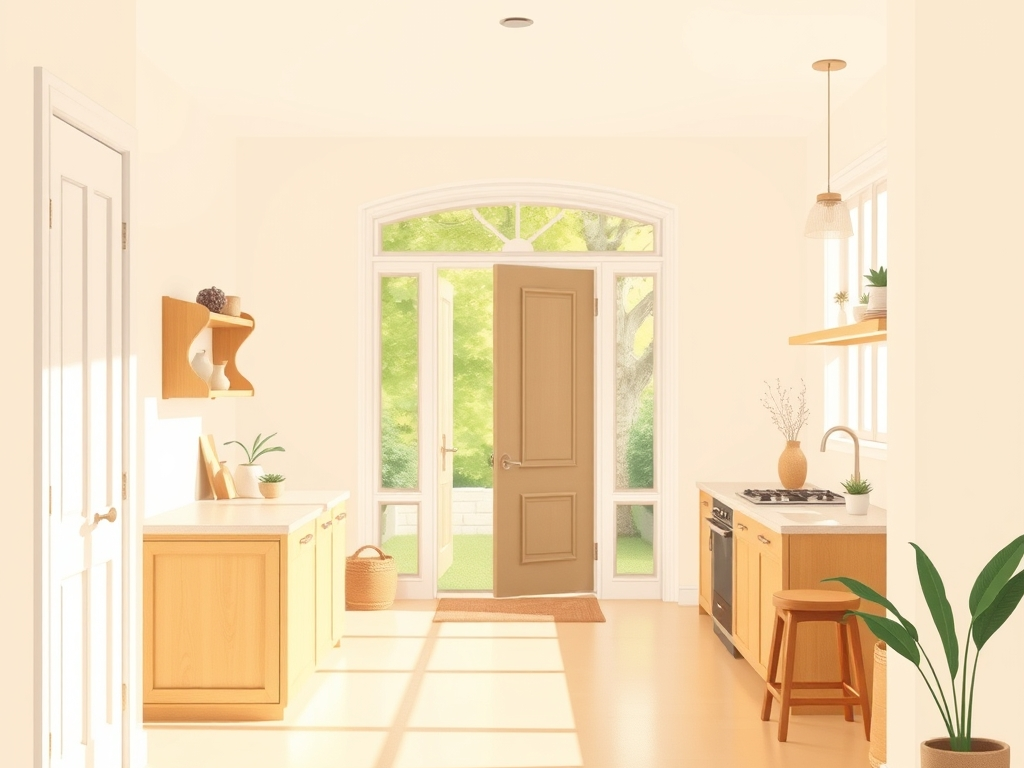
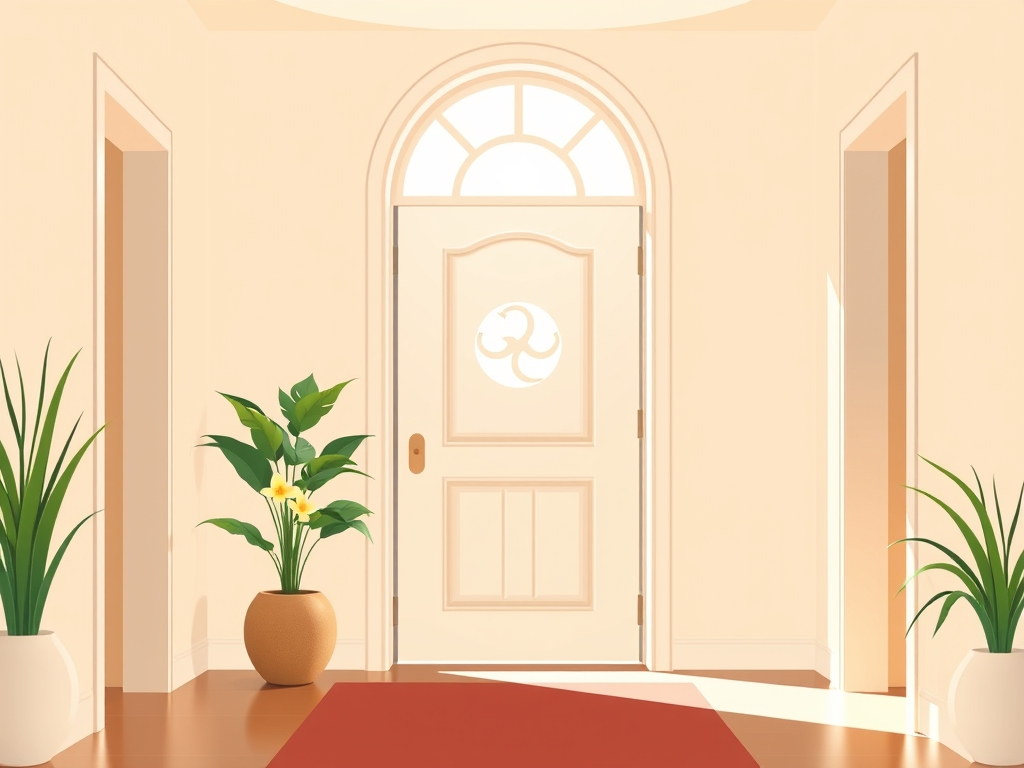
Then look at the entrance as a space. Is there room to stand, remove shoes, and set down bags? Is the lighting sufficient for evening arrivals? Is the first view into the home cluttered or calm? For the symbolic layer of the same questions, read Entryways, Doors, and First Impressions.
The Entryway as a Transition Space
An entryway works best when it acts as a buffer between outside and inside. A small bench or chair for removing shoes, a mat that catches dirt, and hooks or a tray for keys and bags create a natural pause. The pause matters: people who can complete the arrival routine without hunting for a surface arrive calmer, and calm arrivals set a better tone for the rest of the home.
The buffer also applies to what enters the home. Shoes left at the door, packages opened in the entry, and mail sorted before it travels deeper into the house keep the outside from spreading through the rooms. For the broader idea of how energy moves, read What Does Qi Mean in Feng Shui?.
An Entryway Checklist
Use this checklist to refresh a front entry in under an hour:
- Clear the path from the street to the door.
- Make sure the door opens fully and the lock and bell work.
- Add a light that turns on before you reach the door.
- Provide a mat, a seat or hook, and a tray for daily items.
- Remove anything that blocks the first three steps inside.
The checklist is practical, which is exactly the point: most entry problems are practical. Once they are solved, the decorative choices, such as color and artwork, have room to matter. For the placement layer, read Feng Shui for Renters: Portable Adjustments.
Common Misconceptions About the Front Door
The first misconception is that the front door determines wealth or luck. It influences arrival experience and daily routine; it does not decide outcomes. The second misconception is that the door must face a specific direction to be correct. Direction matters in compass-school practice, but for most homes the practical quality of the entrance matters more than its heading. The third misconception is that a mirror near the door is dangerous.
Mirrors are tools; their effect depends on what they reflect. A mirror that reflects a cluttered pile doubles the clutter visually, while a mirror that reflects a calm wall can make a narrow entry feel larger. For the full picture on mirrors, read Mirrors in Feng Shui: Practical Guidance.
Color, Light, and the First Impression
Once the entry is functional, the atmosphere work begins. Warm, even lighting makes a doorway feel welcoming at night. A mat and a few objects in colors that suit the home's purpose can set a quiet or lively tone. A small plant adds life and softens a hard entry. The goal is not to decorate by formula but to make the first impression match the home you actually want to return to.
The same principle applies to the view from the door. If the first thing you see when entering is the back of a sofa or a wall of shoes, the home announces disorder. If it is a calm surface, a piece of art, or a window, the home announces welcome. For more on the arrangement that supports this, read The Command Position in a Room.
A Worked Example
A family's entry is a narrow hall with shoes piled by the door, a broken light, and mail stacked on a small table. Over one weekend they install a brighter bulb, add a bench with shoe storage, hang hooks for bags, and put a tray for keys and mail. The hall is still narrow, but it now functions, and the family notices that arrivals feel calmer and departures take half the time.
The changes were all practical, and the atmosphere followed. That is the typical arc of entryway feng shui. For more room-by-room guidance, browse the feng shui library or start with What Is the Bagua Map?.
A Monthly Entry Check
The entryway drifts quickly, because it is the room that receives the most daily traffic. A monthly five-minute check keeps it functioning: clear the tray, return shoes to storage, replace the dead bulb, and sweep the path outside. The check takes less time than the clutter it prevents, and it keeps the threshold working without a seasonal project.
The monthly habit also makes the entry a reliable measure of the home's condition. When the entry is calm, the rest of the home usually follows; when the entry is blocked, it is often the first sign that the home's routines have slipped. Using the entry as a monthly gauge turns a small maintenance task into an early warning system.
FAQ
Does the front door's direction really matter?
It matters in compass-school practice, but for most homes the function and feel of the entrance matter more.
What is the most important entryway change?
Making the door fully functional and the path clear; lighting is a close second because it affects every evening arrival.
Should I avoid mirrors near the door?
Not automatically. Consider what the mirror reflects and whether it helps or confuses the space.
Can the entryway affect how I feel at home?
Yes, because you cross it every day. A calm, functional entry makes arrivals and departures noticeably smoother.