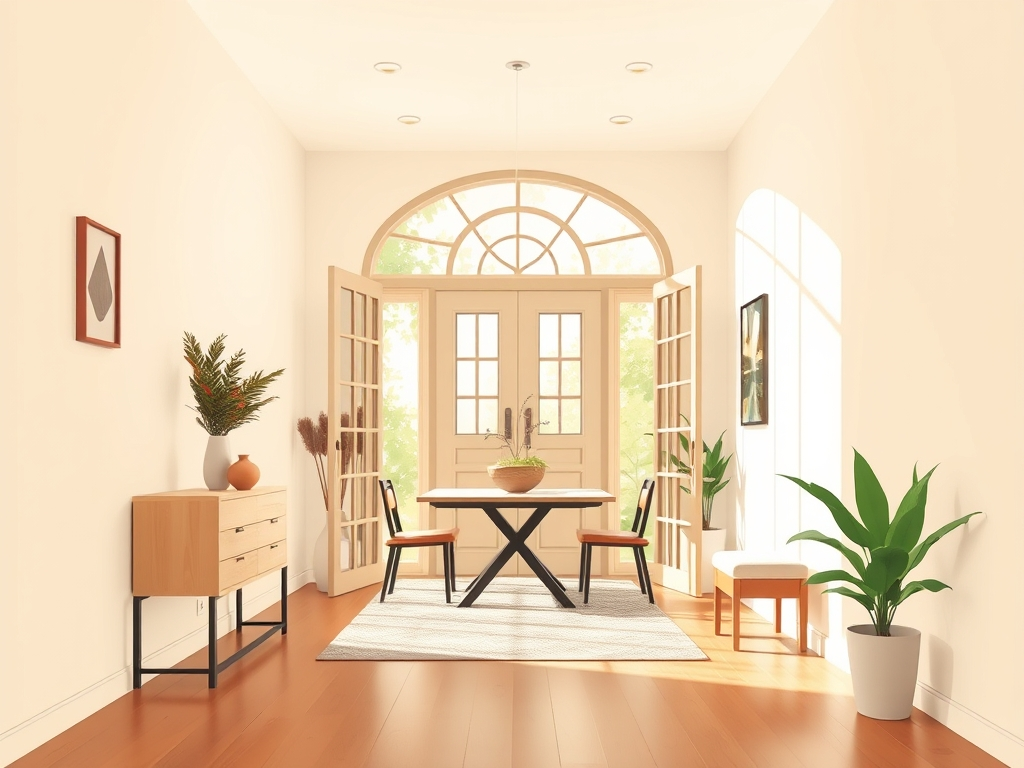
The dining area is one of the most social spaces in a home, yet it is often the last room people think about when they adjust their layout. In Feng Shui, the dining area is treated as a gathering point: a place where people face one another, share food, and spend time without screens. That simple description changes how you evaluate the room. The goal is not to decorate it with symbolic objects but to make conversation, comfort, and movement feel natural. This article explains how to apply practical Feng Shui to a dining area, starting with the basics in What Is Feng Shui?.
Why the Dining Area Matters in Feng Shui
In traditional thinking, the dining area is linked to nourishment and relationships, not because food itself is mystical but because the room hosts a repeated daily activity. People eat there every day, and repeated activities shape how a space feels. If chairs are cramped, the light is harsh, and the table sits under a heavy shelf, the room gradually feels tense even when nobody can say why.
Feng Shui looks at the dining area the same way it looks at any room: how energy moves through the space and whether the layout supports the activity. The activity here is gathering, so the room should make eye contact easy, movement safe, and cleanup simple. Those three criteria answer most layout questions faster than any symbol or color rule. For the larger framework behind room-by-room evaluation, read How the Bagua Map Applies to Your Home.
A Practical Layout Checklist for the Dining Area
You can evaluate a dining area in about ten minutes with a short checklist:
- Check the path from the kitchen to the table: can someone carry dishes without walking through a tight corner?
- Check the path from the table to the nearest wall: leave enough room for chairs to slide back without hitting anything.
- Check the view from each seat: nobody should stare directly at a wall, a doorway, or a stack of clutter.
- Check the ceiling line: a low beam or a heavy shelf directly over the table tends to make the space feel pressing.
- Check the light: a dim single bulb over the table makes faces hard to read and meals feel rushed.
- Check what is stored in the room: visible piles of mail or boxes turn a gathering space into a storage room.
The checklist is deliberately ordinary. Feng Shui becomes useful when it points at real problems, and the most common dining-area problems are traffic, light, and clutter. Once those are solved, symbolic adjustments have a foundation to stand on. The same logic appears in The Kitchen in Feng Shui: Balance and Function and The Living Room and Social Energy.
Light, Color, and the Five Elements at the Table
Light is the first element to adjust. A warm, dimmable light over the table supports conversation, while cool, bright light makes the room feel like a workspace. If the fixture is fixed, add a floor lamp at the edge of the room so the light comes from more than one direction. Natural light matters too: a dining area near a window feels more open, but glare on a white table can make the room uncomfortable at midday.
Color follows the room's function. Warm earth tones and softened wood tones support a calm gathering, while very bright reds or heavy blacks can make the room feel louder than the conversation. This is not a rule about banned colors; it is a reminder that the room should stay in the background of the meal. The five-element framework gives you a vocabulary for these choices, explained in The Five Elements in Feng Shui Placement. A wooden table brings the Wood element, stone or ceramic brings Earth, and metal cutlery or a metal frame brings Metal. The practical question is whether the mix feels balanced to the people using the room, not whether it matches a diagram.
Common Misconceptions About Dining-Area Feng Shui
The first misconception is that a mirror in the dining room doubles wealth. Mirrors can make a small room feel larger, but their practical value is visual, and a mirror that reflects clutter or a busy hallway can make the room feel worse. The second misconception is that round tables are always better than rectangular ones. Round tables do support easier conversation, but a rectangular table is fine when the room shape demands it, especially if the table is centered and the seats are comfortable.
The third misconception is that the dining area must be empty of everything except the table. A sideboard, a small plant, or a wall of family photos can make the room feel lived in; the problem appears only when objects crowd the paths or pile on the table itself. The standard to apply is the one from the checklist: does the room support gathering? If it does, the arrangement is working. For more on separating real guidance from habit, see Common Feng Shui Myths and Learn Feng Shui Without Superstition.
Keeping the Dining Area Comfortable Over Time
A dining area drifts back into clutter quickly because it is a high-use room. One practical habit is a five-minute reset: after the last meal of the day, clear the table, return chairs, and move anything that does not belong in the room back to its place. The reset is not about perfection; it is about keeping the room ready for its purpose, so the next meal starts with a clean surface.
It also helps to review the room seasonally. In warmer months, the room may feel heavy with too much fabric; in winter, it may feel cold and sparse. Small seasonal adjustments, such as changing a table runner or moving a lamp, keep the room aligned with how people actually use it. The practice of seasonal review is described in Seasonal Adjustments in Home Energy, and the broader question of what makes a room feel balanced is covered in What Makes a Space Feel Balanced.
FAQ
Does the dining table need to be round?
No. Round tables ease conversation, but a rectangular table works well when the room and the seating support it.
Should I put a mirror in the dining room?
Only if it serves a practical purpose such as widening a small room; a mirror reflecting clutter usually makes the room feel worse.
Is the dining area more important than the kitchen?
They serve different activities. The kitchen supports cooking and the dining area supports gathering, and both deserve the same practical review.
Can I fix a crowded dining area without removing furniture?
Usually yes: reduce visual clutter, move storage away from the traffic path, and check that lighting makes the space feel open.