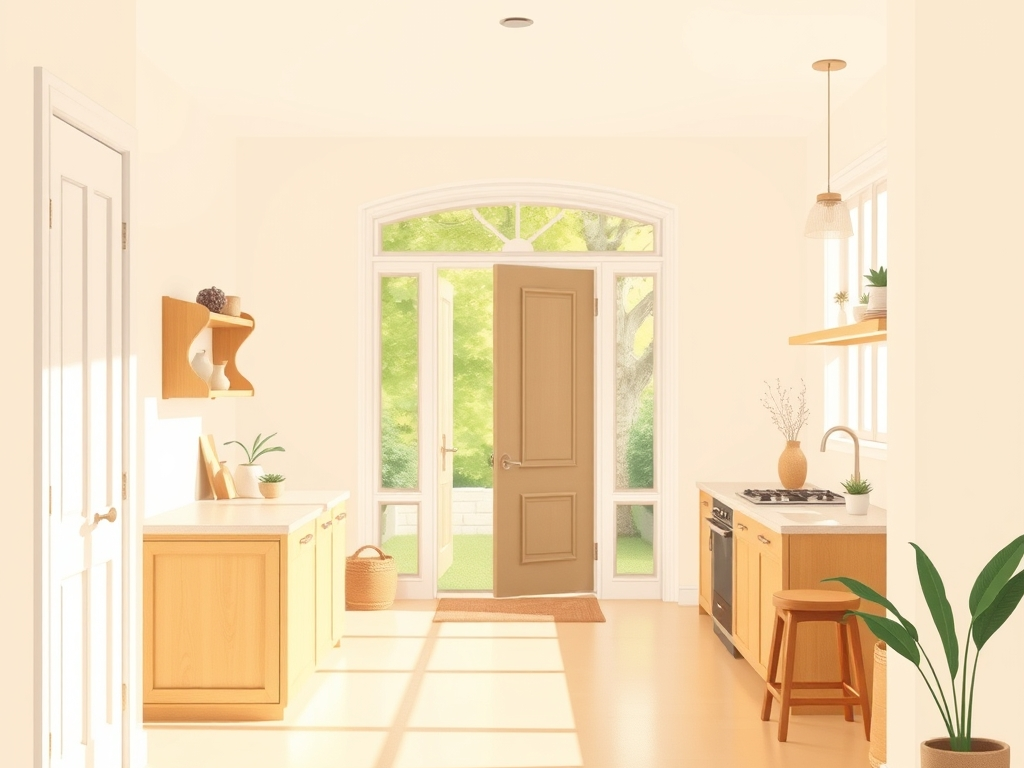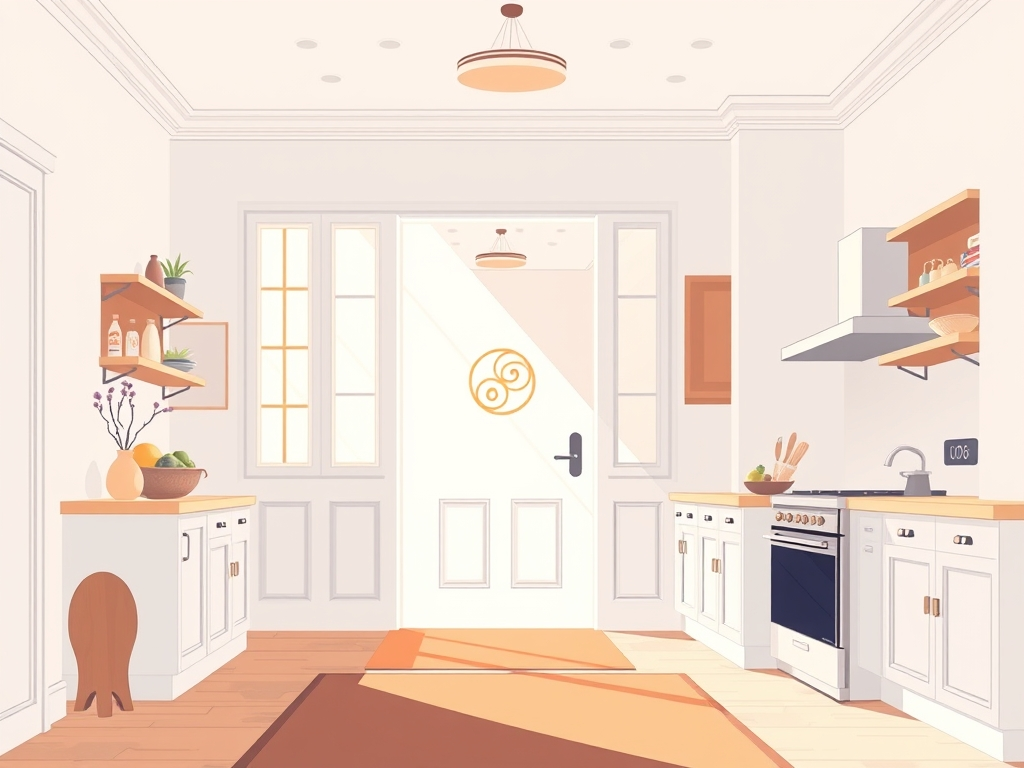
The kitchen is often described as the heart of the home because it feeds both people and daily rhythm. In Feng Shui, it is a place where function and symbolic balance meet: the elements of fire and water are both present and need to work together. The practical side, layout, ventilation, and cleanliness, always comes first.
Most kitchen guidance can be reduced to two ideas: keep the space functional and keep it balanced. A kitchen that is easy to move in and pleasant to use is already doing most of the work that Feng Shui would ask of it.
Balancing Fire and Water
The stove represents fire, and the sink and refrigerator represent water. A basic balance keeps them separated or clearly arranged so neither dominates the space. Practical layout, ventilation, and clean surfaces matter far more than symbol placement.
When fire and water are too close, the space can feel tense, and the practical risk is real: water and heat do not mix well in a working kitchen. If the stove and sink face each other directly, a small screen, a plant, or simply careful arrangement can soften the relationship without a remodel.
For the element logic, read The Five Elements in Feng Shui and What Is Feng Shui?.
Practical Kitchen Adjustments
Keep counters clear, repair anything broken, and make sure the cooking area is well lit and easy to move around. Add one element of color or texture that supports the feeling you want, such as green for freshness or warm wood for grounding.
A practical order of work is to fix function first, then light, then order, and only then decoration. A broken drawer or a dim corner will drain the room no matter how many symbols you place. The sequence matters because each layer makes the next one visible.
- Repair anything broken before adding anything new.
- Improve task lighting over the stove and counters.
- Clear counters to the items you use daily.
- Separate or soften the stove and sink relationship.
- Add one natural material or color that supports the mood.
- Ventilate the kitchen during and after cooking.
The checklist keeps the kitchen project practical and finishable.
How the Kitchen Supports the Home
In Feng Shui, the kitchen is associated with nourishment and resources, which is why its condition often mirrors the household rhythm. A kitchen that is clean and functional supports daily life; a kitchen that is cluttered and neglected drains it. This is not superstition; it is the simple fact that you use the room every day.
The symbolic layer adds a useful question: what does the kitchen feel like at the moments you actually use it? If breakfast feels rushed and dark, improving the light and clearing the counter changes the whole morning. The room does not need to be perfect; it needs to support the life that happens in it.
Common Mistakes to Avoid
The most common mistake is decorating before fixing. Symbols and colors cannot compensate for a broken drawer, poor light, or a cluttered counter. Fix the function first, and the decoration will actually have room to work.
A second mistake is obsessing over the exact relationship between stove and sink. It is a common layout, not a disaster. Balance the space with order and good lighting, and move on. A third mistake is adding too many elements at once. One strong change per month is easier to test and keep than a full redesign.
More on room balance is in What Makes a Space Feel Balanced? and the Feng Shui overview page.
A Practical Kitchen Project
Run the kitchen project in the same way: one layer at a time. Start with function by fixing anything broken and clearing the counters. Then improve the light over the work areas. Then arrange the stove and sink so the space feels less tense. Only after those three layers, add one element of color or material.
Keep a short note of what changes you made and how the kitchen feels each week. The note does not need to be detailed; a rating out of ten is enough. The record tells you which adjustments matter for your kitchen and which ones are decoration.
Most kitchens improve dramatically with just the first layer, function. A clear counter and a working drawer change the morning more than any symbol. Do not move to decoration until the function feels solid.
When you add decoration, choose one thing that supports the mood you want, such as a small plant for freshness or a wooden board for warmth. Test it for two weeks before adding anything else.
A Kitchen Balance Checklist
Use this checklist to complete the kitchen in one practical pass.
- Everything broken is fixed or scheduled for repair.
- Counters hold only items used daily.
- Task lighting is bright over the stove and counters.
- The stove and sink are separated or visually softened.
- The kitchen is ventilated during and after cooking.
- Storage is organized so tools are easy to reach.
- One natural color or material supports the mood.
- The floor is clear of obstructions and easy to clean.
- The most used path in the kitchen is comfortable.
- There is a clear, pleasant spot for the morning routine.
Complete the items in order, function before decoration. If time is short, do the first five items only. The kitchen will improve more from those five than from a full redesign, and the remaining items become easy to finish in a second pass.
FAQ
Is it bad to have the stove opposite the sink?
It is a common layout, not a disaster. Balance the space with order and good lighting.
Do I need to move my kitchen?
Almost never. Adjust what you can and keep the space functional and clean.
What colors are best for a kitchen?
Colors that support the mood you want, such as fresh greens or warm wood tones, tested in your own light.
Does the kitchen really affect the home?
Practically yes, because it is used daily; a functional kitchen supports the whole household rhythm.
For more on this topic, browse the Feng Shui library, the Feng Shui overview, and the general foundations.