Water is the most dramatic of the five elements in Feng Shui, and also the most misunderstood. A small fountain, a fish tank, or a mirror can bring Water-like qualities into a room, but the element is really about flow: the way movement, communication, and change travel through a space and a life. In practice, Water works best in homes when it is used sparingly and maintained honestly, because flowing water that is ignored becomes a maintenance problem rather than an asset. This article explains what Water represents and how to use it with restraint, starting from the placement framework in The Five Elements in Feng Shui Placement.
What Water Represents
Water in the five-element system is the element of winter, of storage, and of the deep places where things wait before they surface. Its qualities are flow, adaptability, communication, and depth. A room with strong Water feels quiet and spacious, like a still lake, while a room with very little Water can feel dry, hurried, or disconnected. Because Water moves, it is also associated with movement through life: jobs, relationships, and phases that shift.
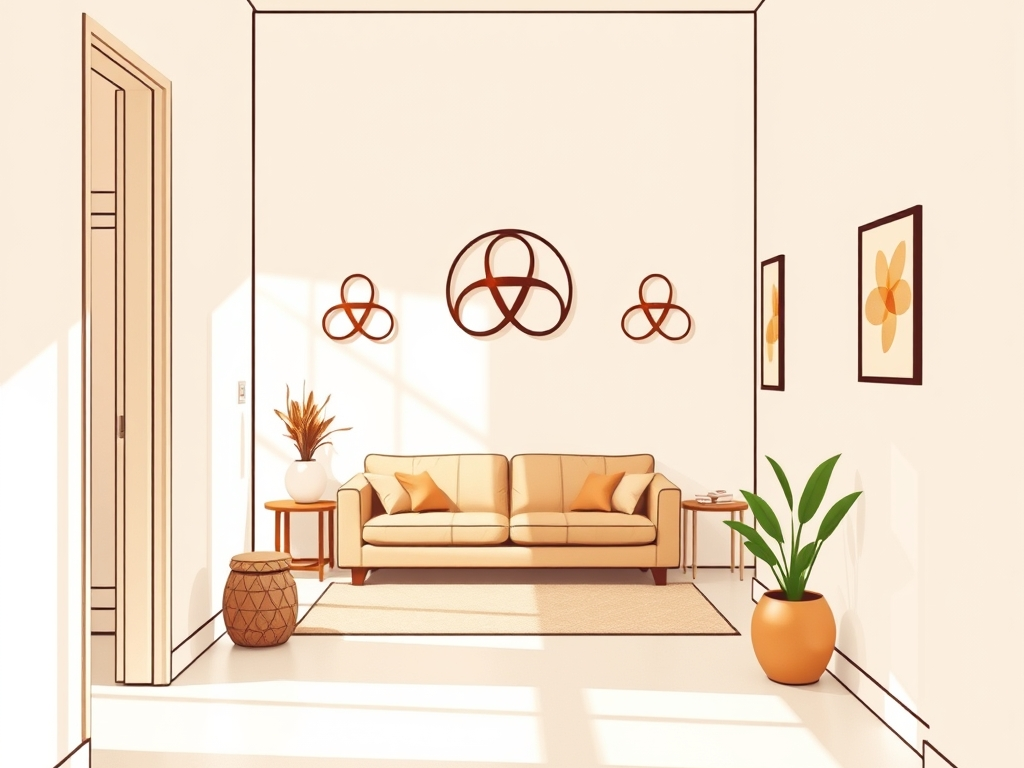
The practical translation is simpler than it sounds. Water-like qualities in a home include open pathways, clear views between rooms, and spaces that let people move and talk without obstruction. A room can express Water perfectly well with no water in it at all, which is why the element is best understood as flow rather than as fountains. The broader idea of how elements appear in daily life is covered in How to Use the Five Elements in Daily Life.
Where Water Appears in a Home
Water appears in a home in two forms: actual water and symbolic flow. Actual water lives in the bathroom, kitchen, and any fountain or aquarium. Symbolic flow appears in mirrors, dark colors such as deep blue and black, curving paths, and open circulation between rooms. The bathroom and kitchen deserve special attention because they are the rooms where water is real and daily, which is why their practical condition matters more than their decor. For a closer look, read Feng Shui for the Bathroom and The Kitchen in Feng Shui: Balance and Function.
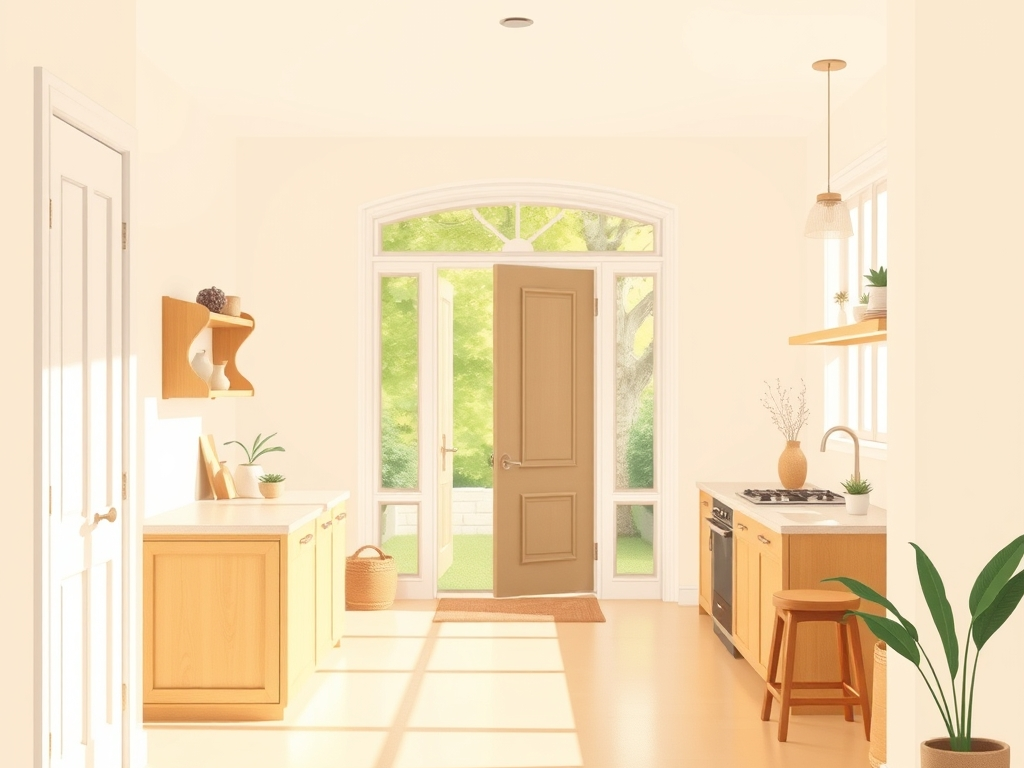
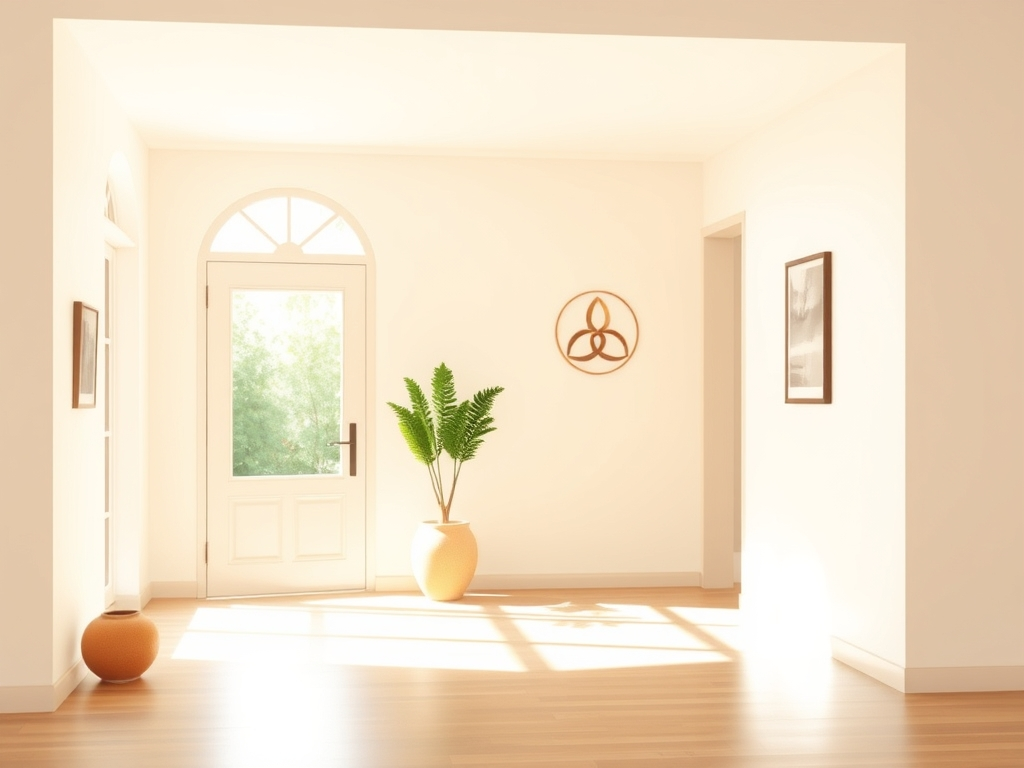
The entryway is another natural place for flow, because it is where movement into the home begins. A clear path from the door into the living area, without a pile of shoes or a blocked hallway, expresses Water far more effectively than a decorative fountain. The relationship between the entrance and the rest of the home is explained in Entryways, Doors, and First Impressions.
A Checklist for Using Water With Restraint
When you want to add Water-like quality to a room, work through this checklist:
- Check the actual water first: fix dripping taps, keep drains clear, and clean the bathroom and kitchen regularly.
- Look at circulation: can you walk from the door through the main rooms without detouring around furniture?
- Add flow with light and mirrors rather than with a fountain when the room is small.
- If you choose a fountain or aquarium, commit to its maintenance schedule before buying it.
- Use deep blue or black in small accents, such as a cushion, a rug border, or a vase.
- Remove visual blockages: a clear table surface and an open path matter more than any water object.
The order matters: real water and real circulation come first, and symbolic water second. This hierarchy keeps the element honest, because a clean bathroom with no fountain is more aligned with Water than a dirty bathroom with a fountain. The same practical priority appears in What Makes a Space Feel Balanced.
Common Misconceptions About Water
The first misconception is that a fountain in the wealth corner brings money. A fountain adds sound and movement, but its practical effects are limited to the room it is in, and a fountain that is noisy or hard to maintain can make a space worse. The second misconception is that more water objects mean more flow. In practice, too many water features create dampness, noise, and clutter, which is the opposite of the quiet spaciousness Water represents.
The third misconception is that mirrors count as large amounts of Water everywhere in the home. Mirrors do carry flow, but they also reflect whatever is around them, so a mirror reflecting a cluttered desk doubles the visual noise. The practical rule is to place mirrors where they reflect something useful, such as light or an open area. For guidance on mirror placement, see Mirrors in Feng Shui: Practical Guidance.
Water, Light, and Seasonal Rhythm
Water interacts with light in a useful way. A dark, still room can be opened up with a mirror that reflects natural light, and a small water feature can add a sense of coolness in warm months. In winter, the element is naturally strong, and rooms can start to feel damp or heavy; that is a good time to check ventilation and reduce the number of water objects rather than add more. Seasonal adjustment keeps the element in proportion, a practice described in Seasonal Adjustments in Home Energy.
Water also connects to the idea of timing and movement through life, which is why the element appears in discussions of careers and changes. That connection is symbolic, not predictive: a room that flows well supports clear movement and easy communication, which are useful in any transition. For the practical side of the same idea in another tradition, read Direction and Movement in Qimen.
FAQ
Do I need a fountain to bring Water into a home?
No. Clear circulation, good light, and maintained plumbing express Water more directly than a decorative fountain.
Is Water always beneficial in Feng Shui?
No. Too much water in the form of dampness, noise, or clutter works against the calm flow the element represents.
Where should water objects be placed?
Place them where they are visible, useful, and easy to maintain, and avoid spots where spills could damage floors or furniture.
Can mirrors replace water features?
Mirrors can carry flow and light, but they reflect their surroundings, so place them where they reflect something useful.