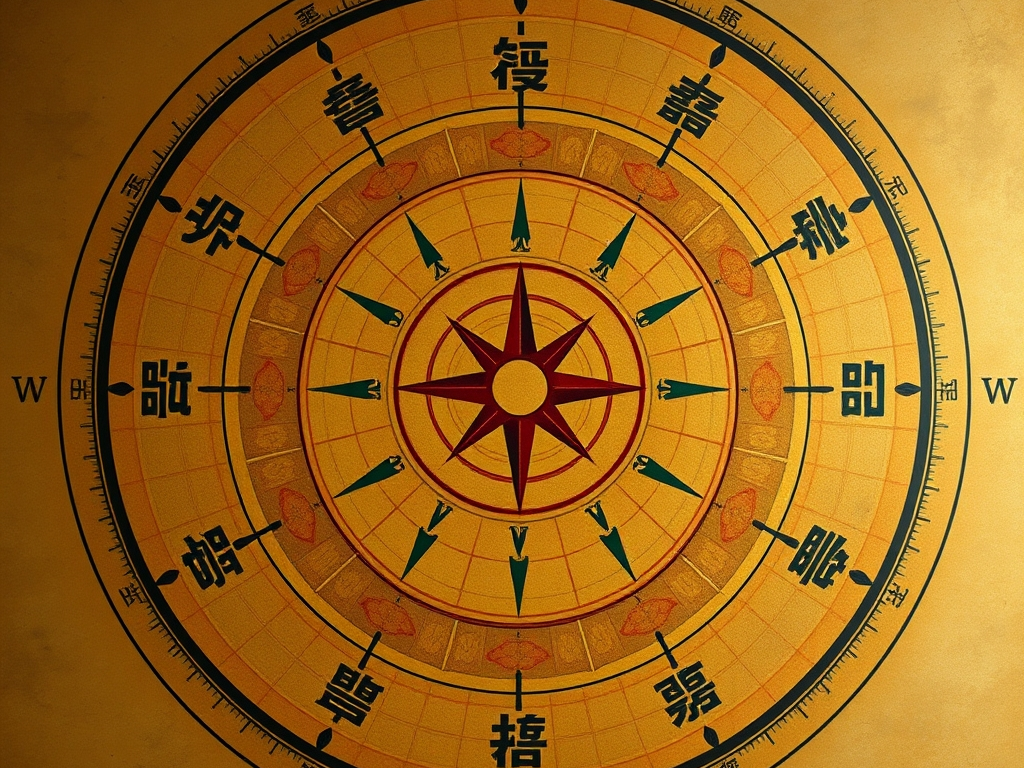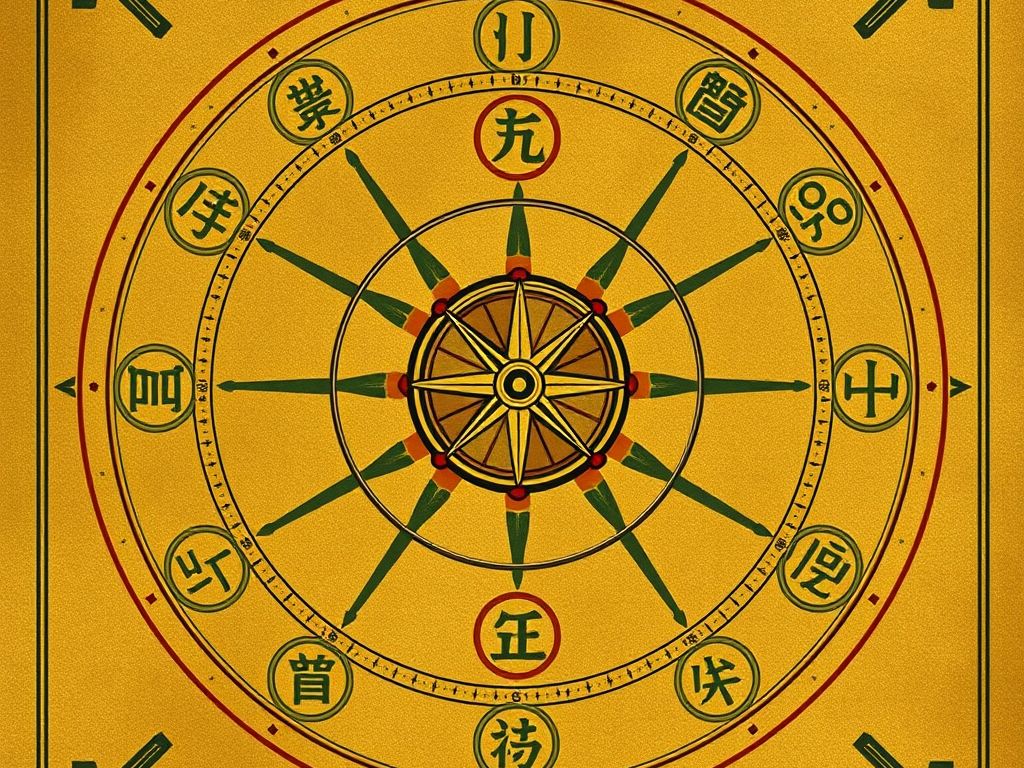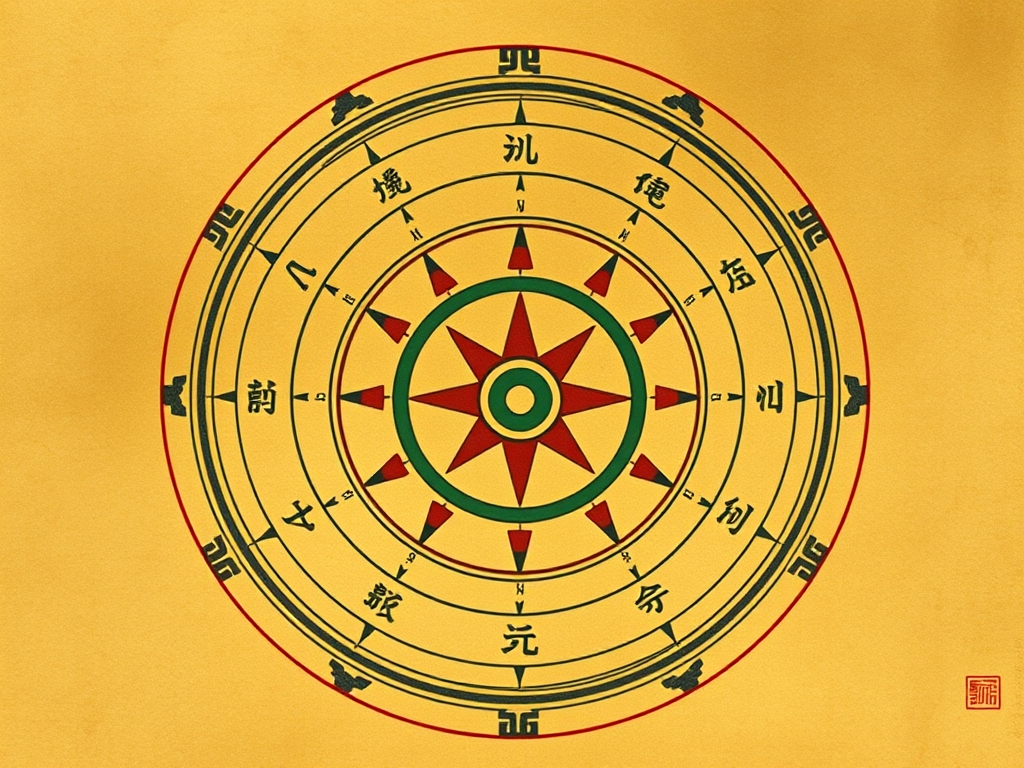
Direction is one of the most distinctive features of Qimen Dunjia, and also one of the easiest to misunderstand. When a chart suggests a direction, it is not promising that walking north will change your fortune. It is describing the quality of energy associated with that direction at that moment, and how that quality fits the action you are considering. Movement advice, read carefully, is really advice about positioning and emphasis.
To see why direction appears in the chart at all, it helps to know the layout first: read The Nine Palaces in Qimen Explained, since each palace corresponds to a direction.
Why Direction Matters in the Chart
Qimen grew out of strategic thinking, where where you stand and where you move are practical questions. The nine palaces are arranged around the eight directions plus the center, and each direction carries associations with elements, doors, and stars. When a reader looks at a chart, the placement of the useful symbols relative to a direction tells them which way the situation leans.
The direction is always relative to the place where the question is asked. North means north from here, not north in the abstract. That is why the location is an input to the chart and why two people asking the same question at the same time from different cities can receive different directional guidance. For the connection to movement, see Qimen Time and Direction.
What a Direction Suggests, Not Promises
A direction in a chart suggests a quality of activity. A direction associated with open doors may suggest that movement and visibility are favored. A direction associated with waiting may suggest that patience serves better than pushing. A direction tied to hidden or empty palaces may suggest that the situation needs more information before a move makes sense.
None of these readings is a command. They are descriptions of emphasis, and they should be weighed against logistics, relationships, and cost. The direction is useful when it changes how you position an effort, such as choosing where to hold a meeting or which route to favor, and it becomes harmful when it replaces practical judgment. For the limits of this kind of advice, read Qimen and the Art of Waiting.
A Movement Checklist
Before acting on directional advice, run it through this checklist:
- State the movement you are considering, such as travel, a meeting location, or a submission.
- Note which direction the chart highlights and what quality it describes.
- Ask whether that quality matches the kind of outcome you need.
- Check practical constraints, including cost, time, and access.
- Decide with the chart as one input, not as the deciding vote.
The checklist prevents direction advice from becoming rigid. If the highlighted direction is impractical, adjust the plan rather than the facts; the chart describes conditions, not obligations. For a structured method of comparing options, read Qimen for Choosing Between Job Offers.
Common Misconceptions About Directions
The first misconception is that one direction is permanently good or bad. Directional quality changes with the time pattern, so the same direction can read differently tomorrow. The second is that direction advice must be followed literally or not at all; most practical uses are symbolic and partial, such as favoring one side of a room or one route. The third is that direction works only for physical travel; it also applies to where you place attention, such as which market, audience, or channel to emphasize.
Those misconceptions arise when the chart is treated as an external force rather than a reading of conditions. For the mindset that keeps the system useful, see How to Use Qimen Without Creating Anxiety.
Direction in a Practical Example
Suppose you are preparing a proposal and the chart highlights a direction associated with visibility and open movement. The practical translation is not "walk northeast before sending the email." It is: choose a presentation format that is visible, lead with clear offers, and make the submission easy to act on. The direction becomes a design principle for the action, which is far more useful than a superstition.
That is how mature Qimen practice works: symbols become design constraints, and design constraints improve execution. For more on turning charts into practical plans, read Qimen for Launch Timing and Planning and Qimen for Launch Timing and Planning.
Direction as a Design Principle
The most useful way to treat direction advice is as a design principle for the action itself. When a chart highlights a direction, ask what quality that direction carries at this moment and how you can build that quality into the plan without moving physically. If the direction suggests visibility, make the submission public and easy to act on. If it suggests waiting, build a review step into the timeline. If it suggests structure, add checklists and clear agreements.
This translation matters because it keeps the practice honest. Following direction advice literally, such as walking north before a meeting, is fragile and often impractical. Translating the direction into a design constraint produces decisions you can defend to anyone, and it is the same mental operation a mature reader uses.
Over time, the habit changes how you plan. You stop asking which direction to go and start asking what quality this moment favors and how to design for it. That question is useful with or without a chart, which is the real test of a practice.
The same principle applies to conversations. If a chart highlights a direction associated with openness, you can design the conversation to be open: state your position early, invite questions, and leave room to adjust. If the direction suggests caution, you can design for listening first and responding second. Direction becomes communication strategy, and communication strategy is something you can practice every week.
FAQ
Do I have to physically move in the suggested direction?
No. Direction advice is usually symbolic, and practical constraints always come first.
Why does the best direction change over time?
Because the chart rotates with the time pattern, and each arrangement favors different positions.
Is direction advice the same for two people at the same time?
Not necessarily, because the location and the question shape how the chart is read.
Can direction advice help with non-travel decisions?
Yes, it often translates into positioning choices such as audience, format, or emphasis.