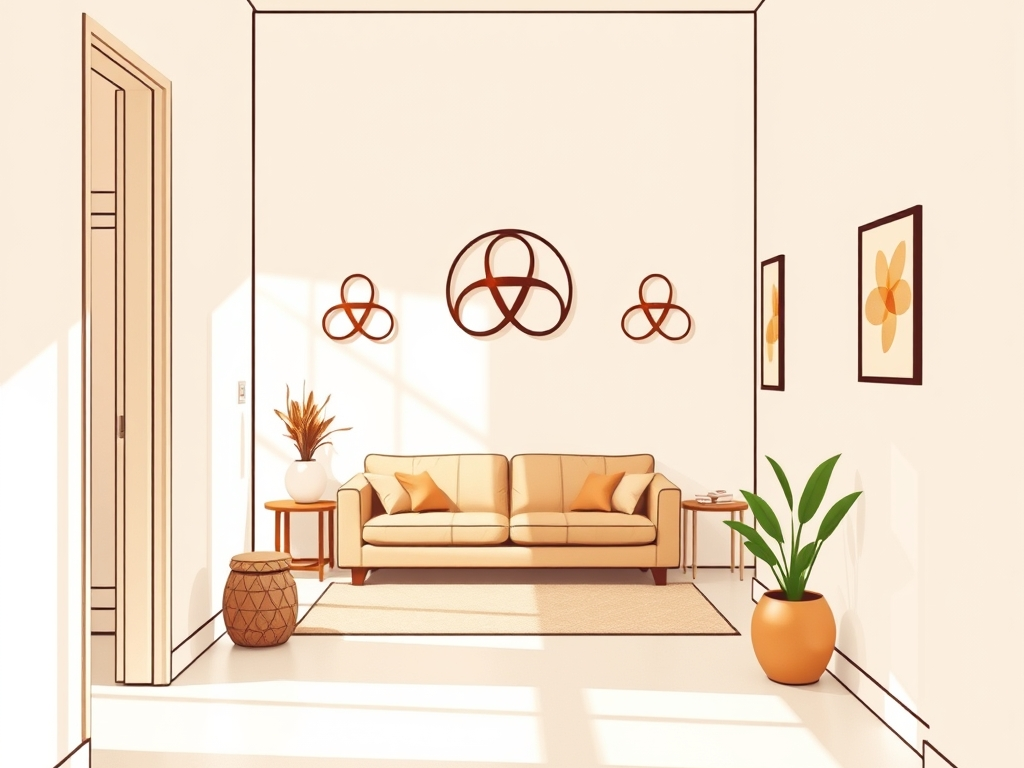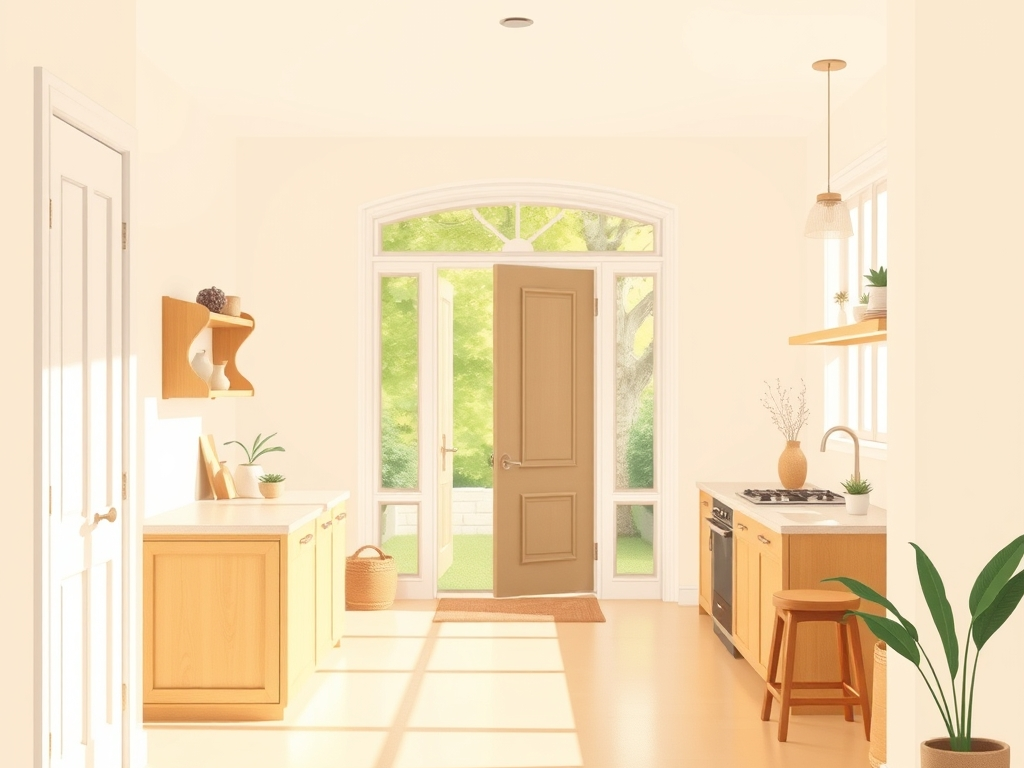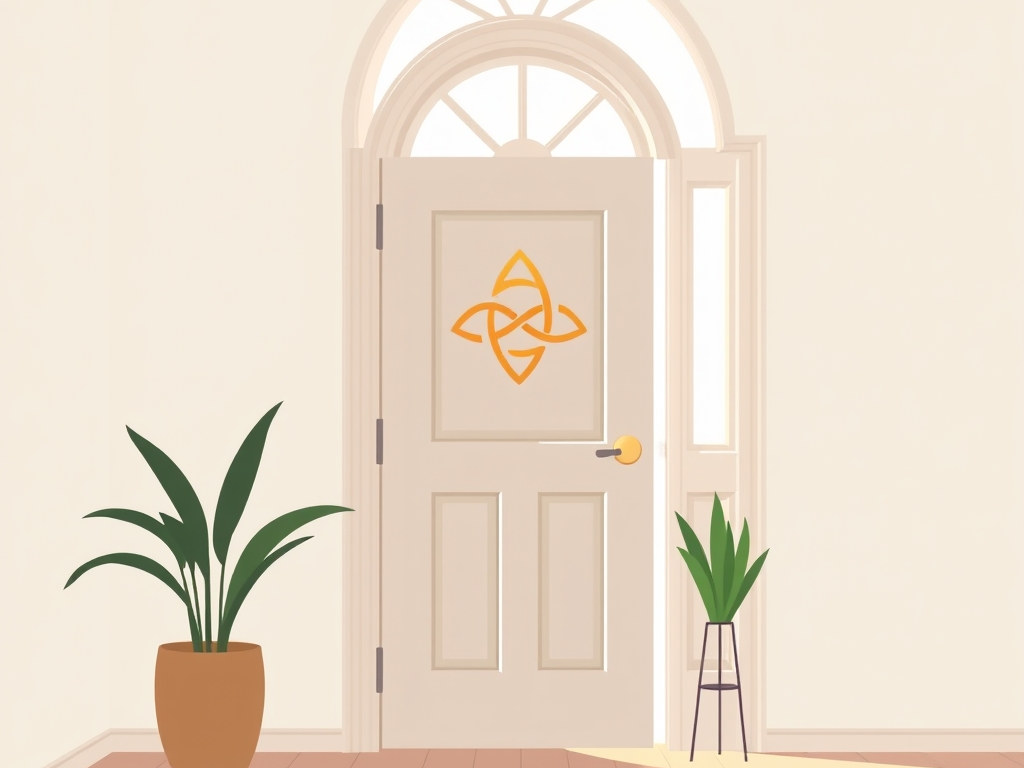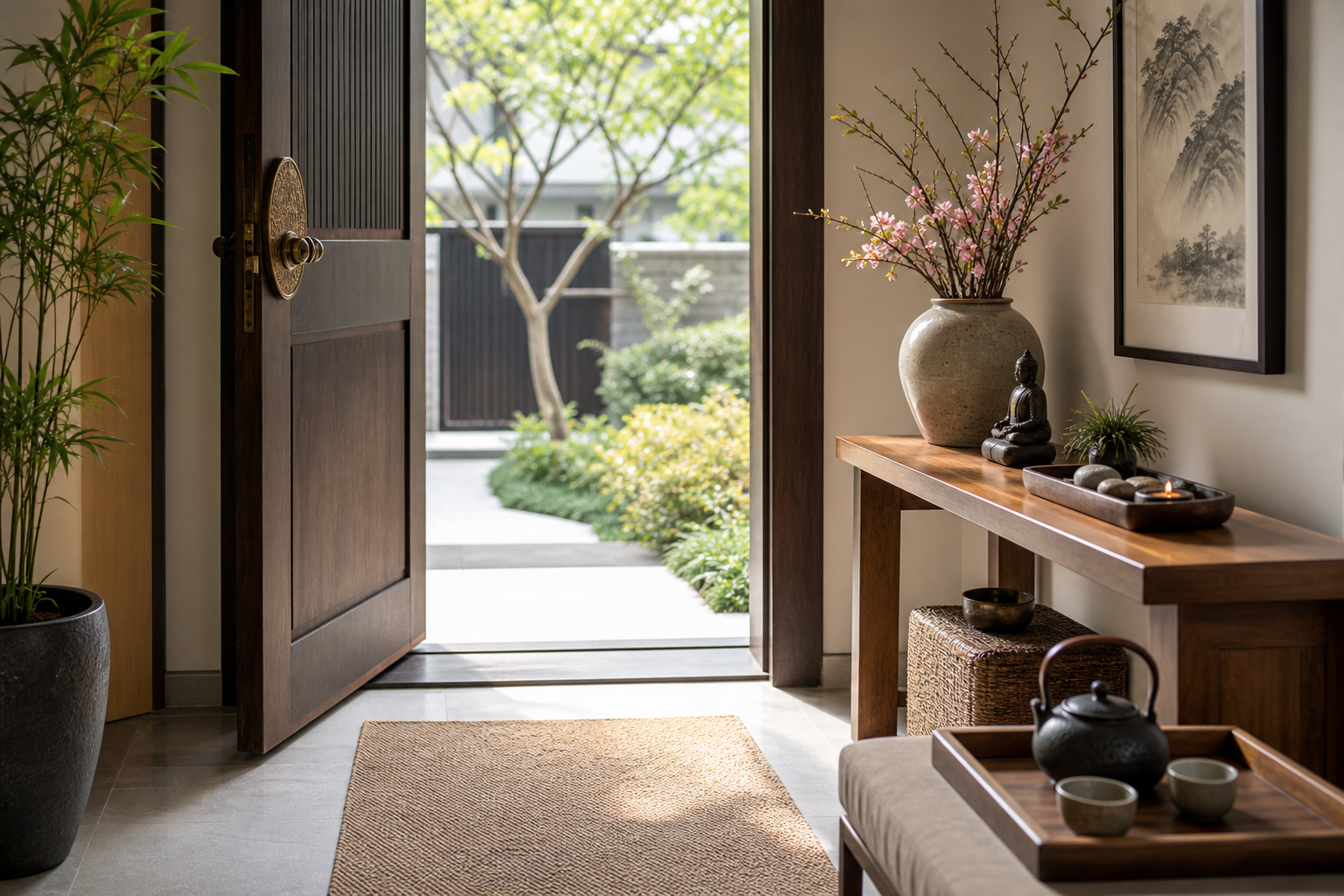
Entryways matter in Feng Shui because they shape the first contact between a person and a space. Before you sit down, before you speak, and before you fully settle, the entrance has already communicated something. It may feel open, cramped, bright, neglected, calm, awkward, or welcoming. That first impression is one reason doors and entry zones receive so much attention in beginner Feng Shui writing.
At a practical level, the idea is easy to understand. Entryways organize transition. They affect movement, orientation, visibility, and how quickly a person can feel at ease. Feng Shui adds symbolic language to that everyday experience.
What an Entryway Represents
An entrance is a threshold. It marks the shift from outside to inside, public to private, movement to arrival. Because of that, the entryway often represents how a place receives life. Is entry easy or resisted? Does the space greet you clearly, or does it immediately create pressure? Does the entrance express care, neglect, or confusion?
These questions matter because first impressions are sticky. A front door that sticks, a pile of shoes that blocks the path, or a dark hallway with no place to land keys all send messages before any deeper room symbolism is read. Feng Shui does not need to exaggerate this point. The body already notices it.
What to Notice Without Turning It into Superstition
Start with access. Can the door open fully? Is the path in and out obvious? Next, notice visibility. When you enter, do you understand where to go, or does the layout feel abrupt and confusing? Then notice maintenance. A worn mat, broken light, chipped paint, or unused overflow can make an entrance feel ignored even if the rest of the home is lovely.
You can also notice emotional tone. Does the entry create a sense of arrival, or does it dump you straight into visual pressure? None of these observations require fear-based claims. They are enough on their own to explain why an entrance may feel supportive or strained.
A Moderate Beginner Checklist
If you want one simple entryway exercise, try this sequence. First, clear the walking path. Second, check the light level and make sure the space can be seen comfortably. Third, reduce objects that have no clear purpose in the entry zone. Fourth, make one practical landing spot for everyday use, such as keys, mail, or bags. Fifth, stand at the door again and notice whether the space now feels more readable.
This kind of checklist is useful because it improves function and supports symbolism at the same time. The entrance becomes easier to move through and easier to trust. Beginners often learn a lot from this one area because the before-and-after feeling is so immediate.
Why Doors Matter Beyond the Front Entrance
Internal doors matter too. Doors affect privacy, transitions, room hierarchy, and movement between activities. A bedroom door, office door, or bathroom door can change how one room relates to another. If several doors conflict visually or physically, the whole area may feel unsettled. Feng Shui notices this because circulation and threshold experience shape how the home is lived.
Again, the beginner lesson is not to become door-anxious. It is to notice how thresholds either support or disrupt ease. A good reading leads to clearer use, not to panic over every hinge.
FAQ
Does my front door have to be perfect?
No. The goal is not perfection. The goal is clarity, function, welcome, and reasonable care. Even small improvements in access and maintenance can make a difference.
Is a mirror near the entrance always bad?
No. It depends on placement, what it reflects, the size of the space, and the method being used. Fixed mirror rules are usually too simplistic to be useful.
What if my entryway is very small?
Small spaces can still feel clear and supportive. Focus on path, light, storage discipline, and one strong sense of order rather than trying to fit too much into the zone.
What is the first thing to improve?
Usually the easiest friction point: blocked movement, poor lighting, or surface overflow. Solve the practical problem first and then reassess the feel of the space.
Where to Go Next
To connect threshold reading with the broader idea of flow, continue with What Does Qi Mean in Feng Shui?. Then read What Makes a Space Feel Balanced in Feng Shui? for a full-room perspective. More entry points into the series are listed in the Feng Shui archive.