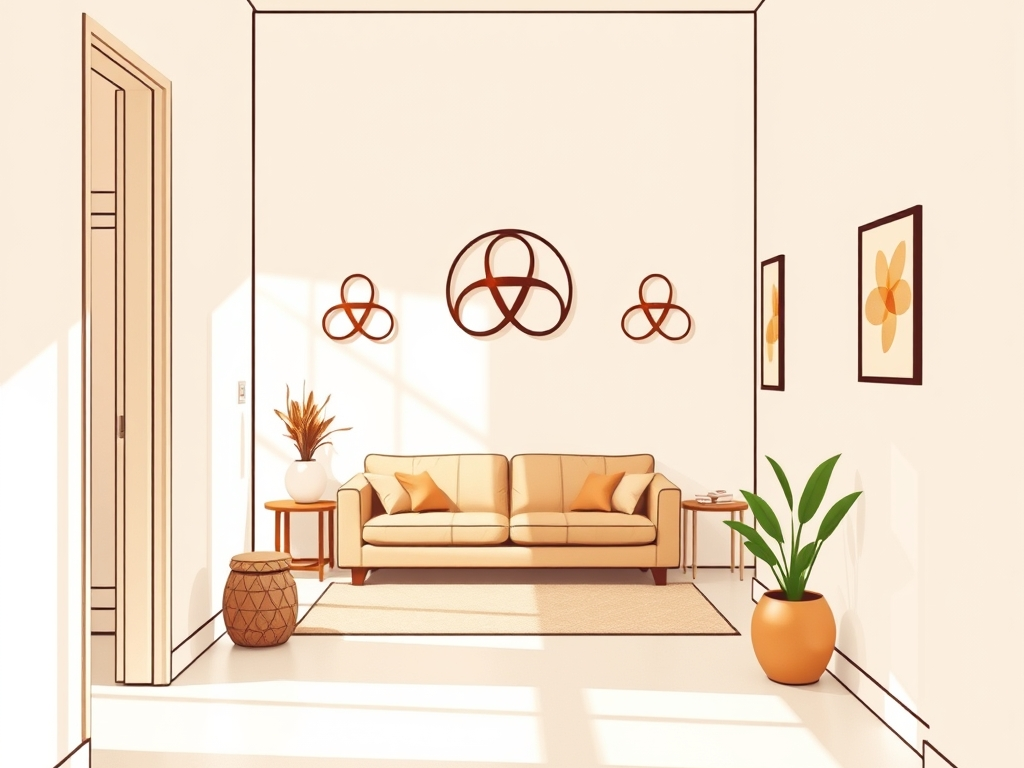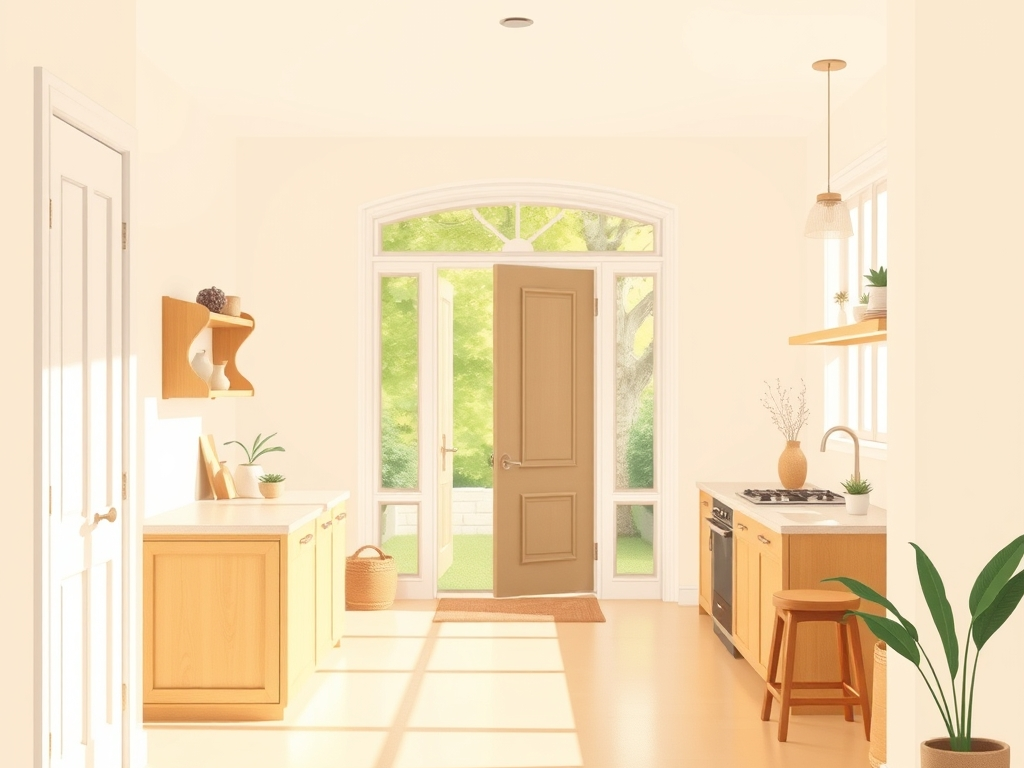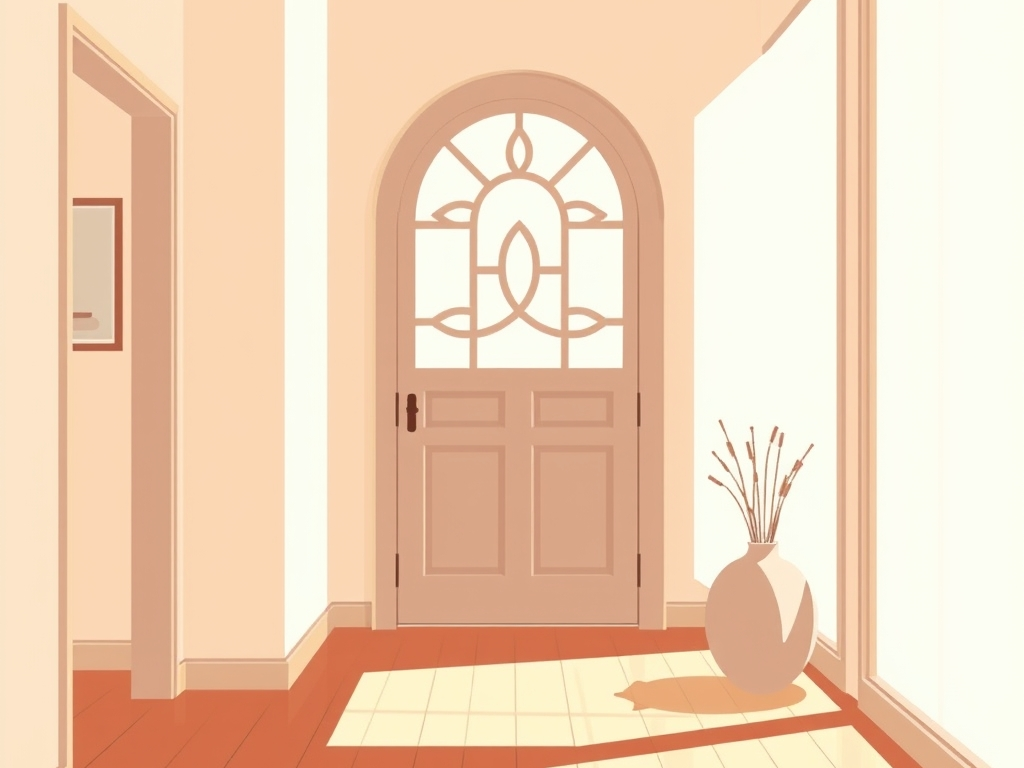
Some rooms feel wrong in ways that have nothing to do with furniture, color, or clutter. The proportions are slightly off, the ceiling feels heavy, the room is too long for its width, or the door sits at an angle that splits the space awkwardly. Feng shui has always paid attention to the shape of a room, because geometry shapes attention before any object enters the space. For the balanced-room idea behind this, start with What Makes a Space Feel Balanced.
This article explains how a room's shape and proportions affect its feel, and what to do when a space feels wrong in ways you cannot name.
The Proportions Under the Furniture
Every room has a baseline geometry: a ratio of length to width, a ceiling height, a placement of doors and windows. That geometry sets the room's default feel before you add a single object. A square room tends to feel settled and static, a long narrow room tends to feel like a corridor, a low ceiling makes a room feel heavier, and a room with too much glass can feel exposed. Naming the geometry is the first step, because most people blame the furniture for what the shape is doing.
You can test this by stripping the room in your mind: imagine it empty and ask what the proportions alone communicate. For the small-space version of this test, read Feng Shui for Small Spaces.
Long Rooms and the Feeling of a Corridor
A long narrow room tends to pull attention toward the far end and make the middle feel like a passage. The classic fixes work with the shape rather than against it: break the length with a change of level, color, or furniture line; place a strong anchor near the middle to give the eye a stopping point; and avoid lining the walls in a way that emphasizes the tunnel. The goal is to make the room read as two connected spaces instead of one endless aisle.
For the line-based fixes that support this, read Feng Shui for Apartments and the movement article on hallways.
Low Ceilings and Heavy Rooms
Low ceilings and heavy proportions make rooms feel pressing, and the traditional response is to lighten the upper visual field. Paint the ceiling a lighter tone, keep tall furniture away from the center, use lamps that throw light upward, and keep the largest objects low and calm. The effect is real and measurable in attention: a room whose upper field is dark and crowded feels smaller than one whose upper field is open, whatever the actual dimensions.
For the light and airflow layer of the same fix, read Feng Shui for Lighting and Airflow.
A Checklist for Diagnosing a Room's Shape
Run this short diagnostic when a space feels wrong and the usual fixes have not worked.
- Stand in the center and describe the room's proportions in one sentence.
- Note the ceiling height and the upper visual field.
- Trace where the eye is pulled when you enter.
- Name the one geometric feature that dominates, if any.
- Choose one change that works with that feature, then test it for a week.
The diagnostic separates shape problems from object problems, and the separation is most of the fix. For the object layer that often hides behind shape issues, read The Effect of Too Many Objects in a Space.
Working With the Shape, Not Against It
The mistake is treating a room's geometry as an enemy to defeat. A long room can be a fine gallery or a good reading corridor; a low-ceilinged room can feel intimate rather than heavy; a square room can feel centered rather than static. The practice is to name what the shape gives and arrange the room to use it, which is why the same room can feel wrong in one arrangement and right in another without the walls changing. For the element layer of the arrangement, read The Five Elements in Feng Shui Placement.
When the arrangement works with the shape, the room stops fighting you, and the felt wrongness usually disappears without any dramatic renovation.
The Shape of a Workspace
The same shape logic applies to the desk and chair. A desk facing a wall feels contained; a desk in the center of a long room can feel exposed; a work corner tucked under a low ceiling can feel pressing. Name the geometry of your workspace before you adjust the objects on it, because the shape sets the baseline that clutter either adds to or relieves. For the desk-level fixes, read Feng Shui for the Home Office Desk, and for the wider command-position idea, read The Command Position in a Room.
The test is the same as anywhere else: sit in the space, name the geometry in one sentence, then change one thing that works with it and feel the difference for a week. Workspaces respond quickly, because you spend so many hours in them, and the feedback from your own focus is immediate.
If the room's shape cannot be changed, change what the eye lands on: a poster, a plant, a lamp, or a cleared line of sight. Attention follows the first thing it meets, and the first thing it meets is nearly always adjustable, which is why shape problems usually have arrangement answers even when the walls stay fixed.
FAQ
Can I really change how a room feels without renovating?
Yes. Proportions are fixed, but attention is adjustable through furniture lines, color, light, and anchors, which is most of the felt difference.
What if my room has an awkward corner?
Give the corner a clear job, such as a lamp, plant, or reading seat, so the eye has a reason to use it instead of avoiding it.
Is the room's shape more important than its furniture?
Shape sets the baseline; furniture and objects adjust it. When they conflict, the shape usually wins, which is why it deserves attention first.
How do I know if I am blaming the shape for a clutter problem?
Clear the room in your mind; if the proportions still feel wrong when empty, shape is involved, and if they feel fine, the objects were the issue.