Much feng shui advice assumes you own the walls: hang a mirror here, move a door, install shelving. Renters often feel locked out of the practice, but the most useful feng shui work never requires a drill. It involves arranging what you already control: furniture, lighting, storage, and daily habits.
The renter's version of feng shui is actually closer to the classical spirit than the decorator version. The tradition is about how a space feels and functions, and a rented apartment can be arranged to feel calm, open, and supportive without a single permanent change.
What You Can Control
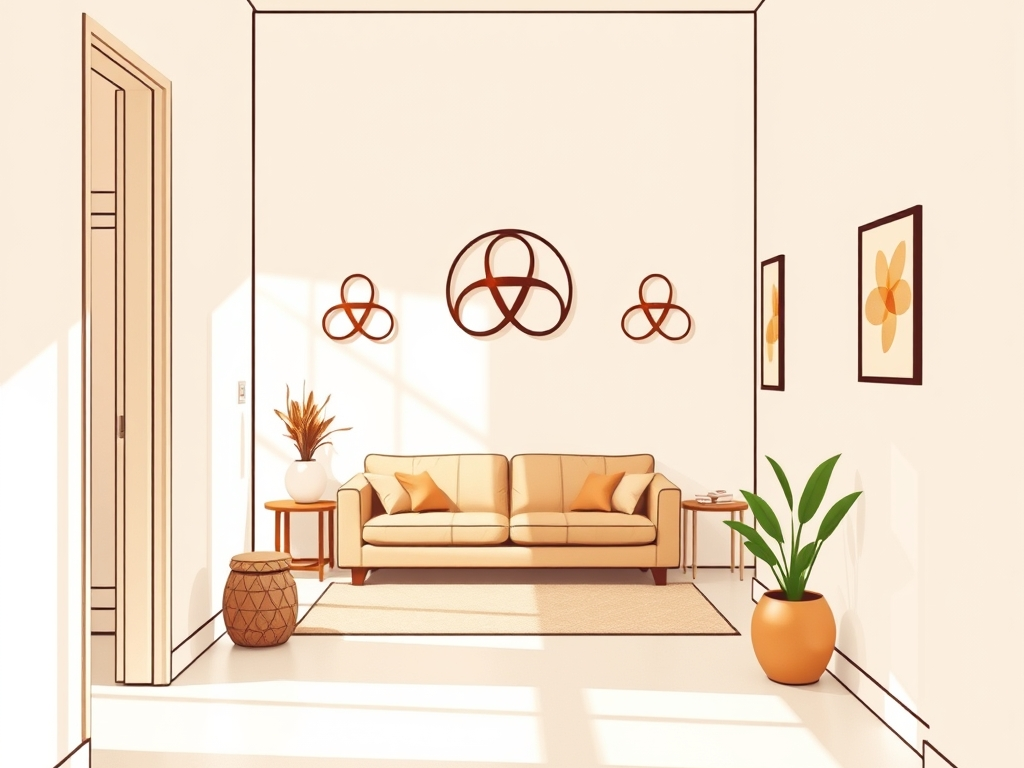
In a rental, you control the arrangement of furniture, the placement of rugs and lighting, the organization of storage, and the order of the space. Those four levers cover most of what feng shui recommends. A bed moved away from a drafty window, a desk that faces the door instead of the wall, a lamp that fixes a dark corner: each is a real adjustment available to any tenant.
You also control what you bring into the space. Furniture, plants, textiles, and art travel with you, which makes them the natural instruments of rental feng shui. For the fundamentals of the system, read What Is Feng Shui?.
Portable Adjustments That Work
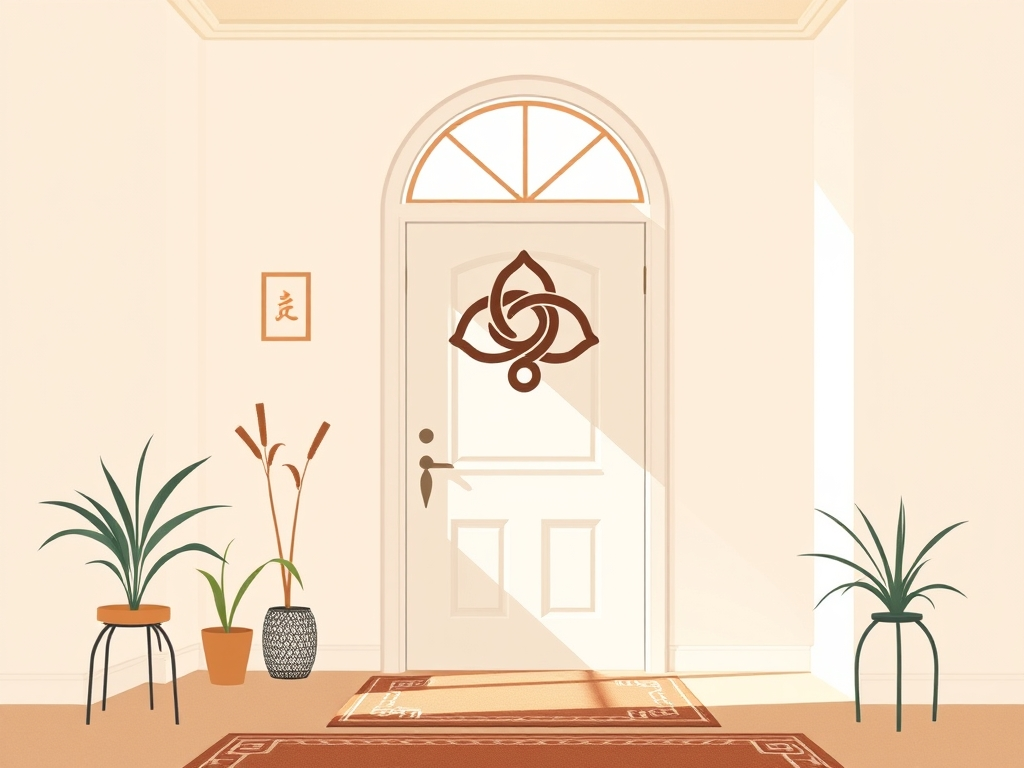
Start with the rooms where you spend the most time. In the bedroom, adjust the bed position first: aim for a view of the door without lying in direct line with it. In the home office, move the desk to the command position if the layout allows. In the entryway, add a small table or a mirror to create a landing space, even in a tiny hall.
These changes are reversible and lease-friendly. If a wall cannot take a mirror, use a standing mirror. If a room feels dark, add a lamp rather than rewiring. For the office arrangement, read Home Office Feng Shui for Focus and Feng Shui for Small Spaces.
A Renter's Checklist
Run this checklist when you move into a rental or want to improve the one you are in:
- Place the bed so it has a clear view of the door without facing it directly.
- Position the desk with a view of the room rather than the wall.
- Create a small landing area at the entry, even a chair or a tray.
- Add lighting to any corner that feels heavy or dark.
- Keep floors and surfaces clear of clutter at the end of each day.
The checklist is entirely portable. Every item survives a move, which makes it a practice you keep, not a renovation you lose. For the grounding idea behind these choices, read Learn Feng Shui Without Superstition.
Common Mistakes for Renters
The first mistake is assuming a rental cannot be improved, so nothing gets arranged. The second is making permanent changes despite the lease, such as painting or drilling, and risking the deposit. The third mistake is filling the rental with objects to compensate for a layout you do not like, which creates clutter instead of calm.
A related error is focusing only on what you cannot change. The floor plan is fixed, but your daily experience of the space is shaped mostly by arrangement, light, and order, all of which you control. For the balance between what is and what can be, read What Makes a Space Feel Balanced.
A Worked Example
Imagine a small rented studio with the bed against a window, a desk facing the wall, and a dark corner by the door. The tenant makes three portable changes: the bed turns so it views the room, the desk faces the door area, and a floor lamp opens the dark corner. The studio costs nothing to alter, yet it now has clear zones for sleep, work, and entry, and the space feels larger.
The changes took an afternoon and a lamp, and they move with the tenant. That is the model for rental feng shui: work with what you own, respect the lease, and let the arrangement do the work. For more room-by-room guidance, browse the Bagua and Feng Shui library.
Moving Your Practice With You
Because rental adjustments are portable, they also travel well. When you move, you can rebuild the same calm in the next place within a week: bed in the command position, desk with a view, a landing area at the entry, and lighting in the dark corners. The practice becomes a personal toolkit rather than a feature of one apartment, which is exactly how classical feng shui was meant to work, as a set of judgments applied to whatever space you inhabit.
Keep a short list of the adjustments that worked in previous homes. Before a move, walk the new place with that list in hand, and note where each adjustment will go. The list turns moving day from a disruption into an opportunity to apply everything you have learned, and it protects the practice from being lost in the transition.
Rental feng shui also benefits from a few tools that travel in a box: a freestanding mirror, a roll of removable hooks, a floor lamp, and a small screen. None of these requires a wall change, and together they solve most of the common arrangement problems in any apartment. Building the box takes one afternoon, and it means the next move starts with solutions instead of starting over.
Label the box clearly and keep the list of adjustments inside it, so the knowledge travels with the tools.
FAQ
Can feng shui work in a rental?
Yes. Arrangement, lighting, and order are portable, and they carry most of the practical benefit.
Do I need to ask permission for changes?
Only for permanent changes; furniture moves and freestanding items are usually fine under any lease.
What if the layout is fixed and awkward?
Focus on the best possible arrangement of what you control and let the awkward parts recede into the background.
Should I tell my landlord about feng shui adjustments?
There is no need; the adjustments are reversible and leave no trace.