The front door is where a home begins, both literally and symbolically. It is the first thing you see when you arrive, the last thing you pass when you leave, and the threshold through which guests form their first impression. In feng shui, the door is therefore treated as a primary feature rather than an afterthought. The practical claim is modest: a clear, welcoming, well-maintained entrance changes how a space feels, and how a space feels changes how you and your guests behave in it.
For the fundamentals of the tradition, start with What Is Feng Shui? before making changes.
Why the Door Carries So Much Weight
The door is the point where a space connects with the outside world. Light, air, sound, and people all arrive through it, and the arrangement around it sets the tone for everything inside. In practical terms, an entrance that is dark, cluttered, or hard to open sends a different signal than one that is bright, clear, and easy to approach. The signal is not magical; it is environmental psychology, and feng shui gives it a structured vocabulary.
The door also matters for daily rhythm. You pass through it at least twice a day, and those transitions shape your mood more than most people notice. A clean threshold and a working handle are not decorative details; they are the difference between a home that greets you and a home that merely admits you. For the deeper idea of qi moving through a space, read What Does Qi Mean in Feng Shui?.
What a First Impression Needs
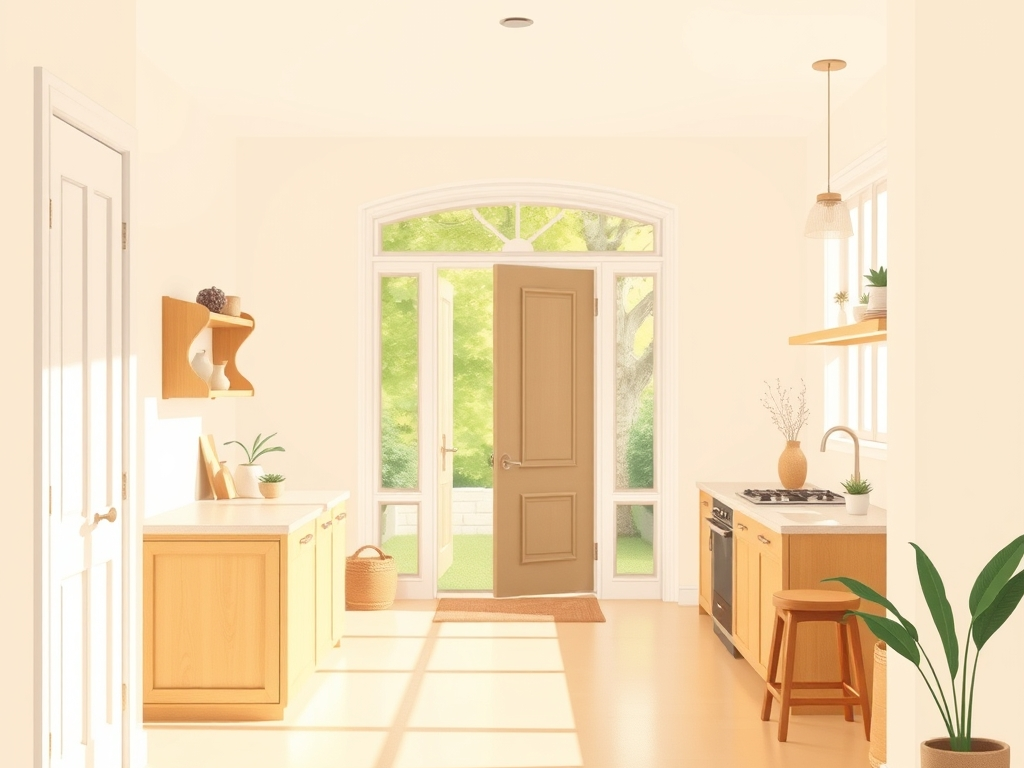
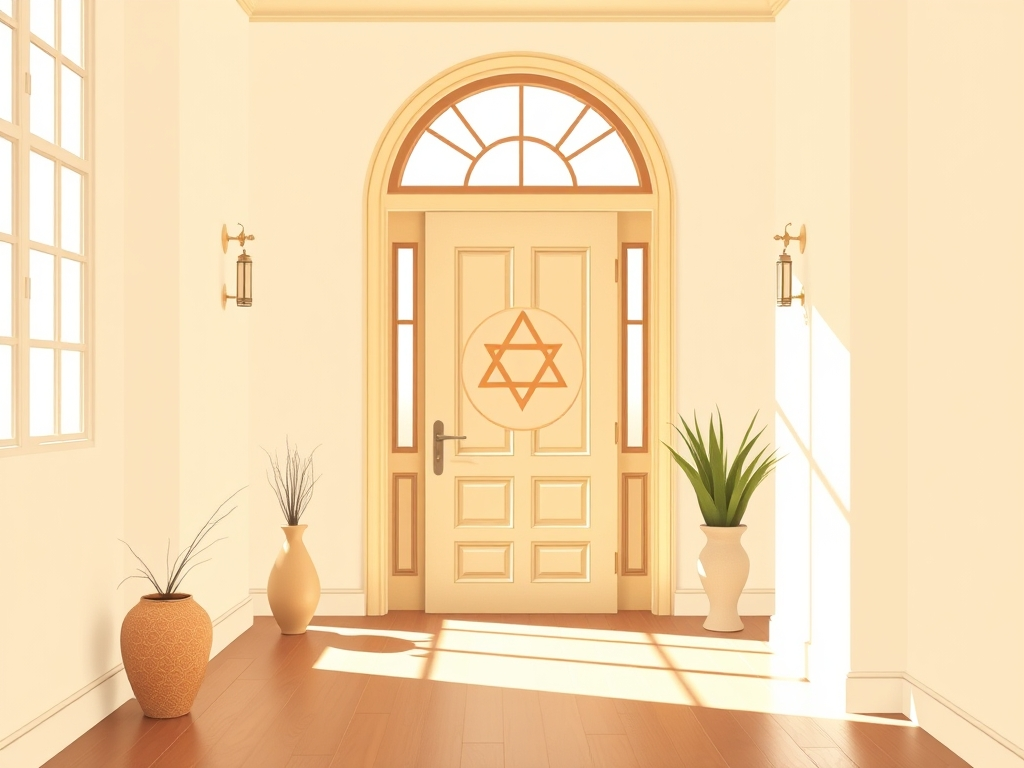
A first impression is formed in seconds, and it is built from a short list of elements: clarity, light, maintenance, and proportion. Clarity means the approach is obvious and uncluttered. Light means the entrance is bright enough to feel safe and welcoming. Maintenance means the door, handle, lock, and path are in good working order. Proportion means the door fits the house and nothing blocks its swing.
Each element is testable. Stand outside and look at your entrance as a stranger would: is the path clear, is the light working, does the door open fully, and does anything signal neglect? The answers tell you exactly what to fix. For the room-level version of this logic, read Entryways, Doors, and First Impressions.
A Front Door Checklist
Use this checklist before you spend any money on feng shui upgrades:
- Clear the path from the street or hallway to the door.
- Replace or repair anything that sticks, squeaks, or wobbles.
- Add or fix lighting so the entrance is visible at night.
- Remove objects that lean against the door or crowd the threshold.
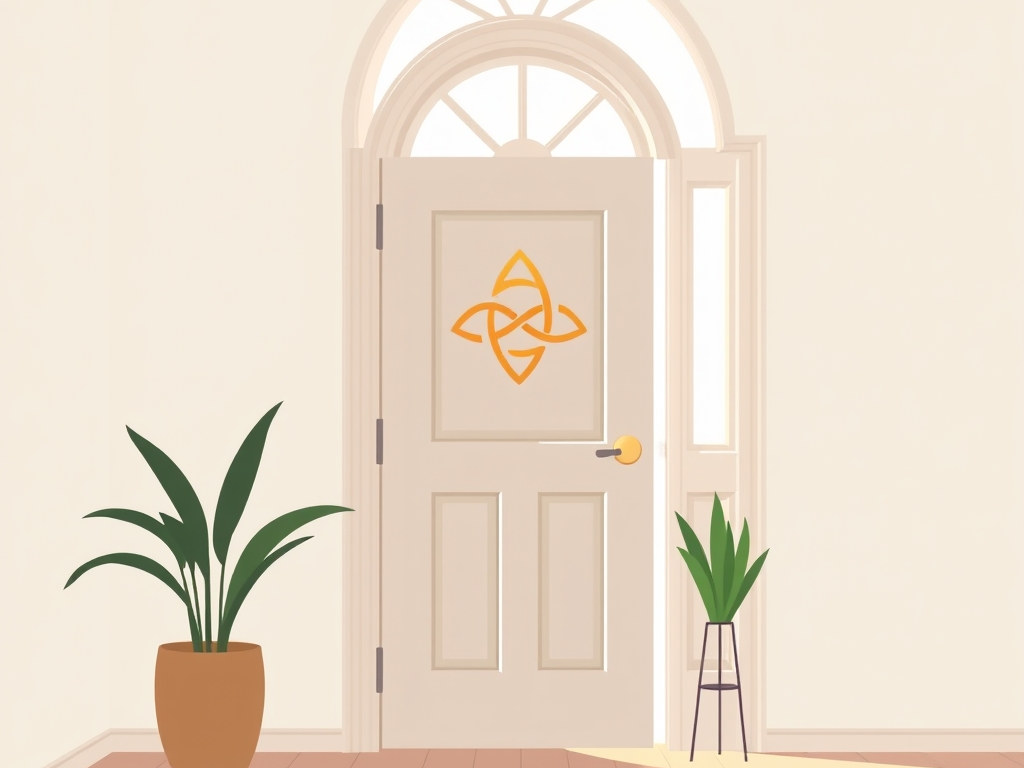
- Add one deliberate touch, such as a mat, a plant, or a clean number plate.
Most of these items cost little and take an afternoon. The result is an entrance that communicates care, which is the practical core of the feng shui approach. For the positional layer, read The Command Position in a Room.
Common Misconceptions About the Door
The first misconception is that the door must face a specific direction to be "good." Direction matters in the full system, but a neglected door in a favorable direction still reads poorly; maintenance and clarity come first. The second is that you need expensive objects such as crystals or bells to improve an entrance. A clean, well-lit door with a working handle outperforms most decorative additions. The third is that the door's importance is purely symbolic. It is also practical: the entrance is the most-used transition in the home.
For the difference between the compass school and the form school, read The Difference Between Form and Compass Schools.
Making the Change Stick
The improvements that last are the ones built into routine. Add the threshold to your weekly cleaning, replace the entry light bulb on a schedule, and keep the area in front of the door free of stored items. The goal is not a single perfect moment but a standard that persists. A maintained entrance keeps sending the same signal for years, and that consistency is what guests and residents actually feel.
For the seasonal layer of maintaining a home, read Seasonal Adjustments in Home Energy and Feng Shui for the Front Door and Entryway.
The Two-Minute Arrival Test
A simple test will tell you whether your entrance is working. Leave the house, walk around the block, and return as if you were a guest arriving for the first time. Stop at the point where the door first comes into view and notice what you see: is the path obvious, is the light on, is anything blocking the approach, and does the door look cared for? The two-minute test takes longer to describe than to run, and it reveals what habit has made invisible.
Run the test again at night, because entrances behave differently in the dark. A door that looks fine in daylight can look unwelcoming at night, and the night version is the one that greets you after a long day. Fix the night version with a light and a clear path, and the entrance will feel different in both directions.
Repeat the test after each season. Entrances accumulate: leaves in autumn, snow in winter, and stored items whenever life gets busy. The test is the maintenance routine that keeps the first impression honest.
If you live with other people, make the arrival test a shared ritual. Ask each person what they notice when they come home, because different people see different details: one notices the light, another the clutter, another the door handle. The combined list is a better improvement plan than any single opinion, and the shared ritual keeps the entrance cared for without one person carrying the whole task.
FAQ
Does the front door really affect my mood?
Yes. Entrances are transition points, and a dark or cluttered threshold measurably changes how arrival feels.
What is the single most important door fix?
Clear the approach and repair anything broken; maintenance outweighs decoration in most entrances.
Do I need to change my door's direction?
Only in advanced practice, and never before basic clarity, light, and maintenance are handled.
How long does a door upgrade take?
Most improvements take an afternoon; the lasting part is the routine that keeps them in place.