A room can have beautiful walls, good light, and comfortable furniture and still feel unfinished, and the missing piece is often on the floor. Rugs are the quiet workhorses of a room: they define zones, absorb sound, soften movement, and give the feet a sense of ground. In feng shui terms, a rug is one of the most direct ways to anchor a seating area or a room, because it tells the space where its centre is. If you are new to how rooms are read, begin with What Makes a Space Feel Balanced.
This article explains how rugs ground a room, what to consider when choosing one, and how placement does most of the work.
Why a Rug Grounds a Room
A rug grounds a room in three ways. Visually, it collects the furniture into a defined group, so a sofa, chairs, and a table stop floating and become a seating area. Acoustically, it absorbs the hard echoes that make rooms feel cold and sharp. And physically, it gives the feet a change of texture that signals arrival, which is why a rug under a dining table or at the side of a bed makes the whole area feel more settled.
Traditional practice reads the floor as the base of a room's energy, and a rug is how you mark that base deliberately. For how the bagua map divides a room into zones, read What Is the Bagua Map?.
Size Is the First Decision
Most rug mistakes are size mistakes. A rug that is too small makes the furniture look stranded, with the sofa legs hovering at the edge and the space feeling cut in half. The reliable guide is simple: the front legs of the main furniture should sit on the rug, or in a larger room, all legs should sit on it, with a border of floor visible around the whole group.
When in doubt, choose the next size up. A generous rug makes a room feel larger, while a small one makes it feel choppy. For how zones are defined in small and open rooms, read How to Balance an Open-Plan Living Area.
Colour and Element in a Rug
Because the rug covers so much visual ground, its colour sets the base tone of the zone. Neutral and earthy tones support almost any room and connect to the Earth element, which is the natural element of floors and grounding. If the room feels too cold, warm reds, oranges, or yellows add Fire; if it feels scattered, deep blues or blacks add Water and calm.
The practical rule is to let the rug carry the room's base and use smaller objects for accent. For how the five elements work in placement, read Color and the Five Elements.
Placement by Room
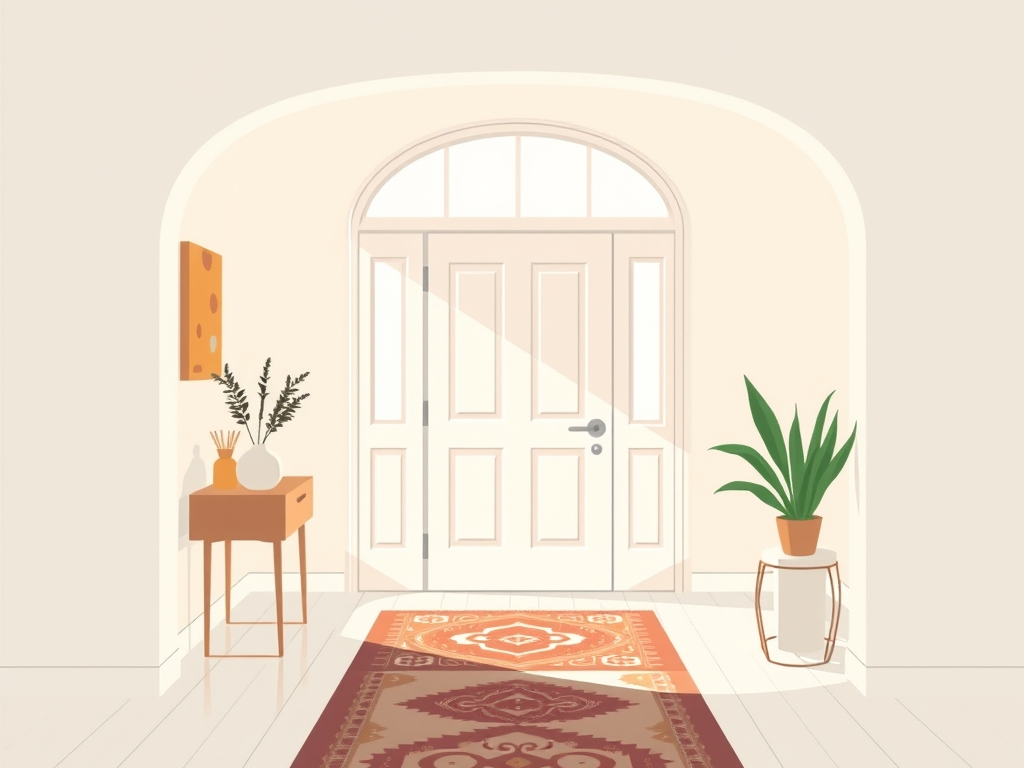
Placement depends on the room's job. In a living room, the rug should gather the conversation group, with the front legs of the seating on it. In a bedroom, runners beside the bed give the feet a soft landing and anchor the sleep area. In a dining room, the rug should extend beyond the chairs so they stay on it when pulled out. In a home office, a rug under the desk defines the work zone and softens the room's acoustics.
Each placement does the same thing: it tells the feet where the zone begins and ends. For the desk zone in particular, read Feng Shui for the Home Office Desk.
A Rug Check for Your Room
Walk through the checks below before buying or rearranging a rug, because each one prevents a common mistake.
- Measure the furniture group and choose a rug that reaches at least the front legs.
- Leave a border of floor around the rug so it reads as a deliberate zone.
- Match the rug's base colour to the room's calmest element.
- Check the traffic: the rug should not sit where it will be tripped over at doorways.
- Feel the texture with bare feet before committing, if you can.
- Consider layering a small rug over a large neutral one for flexibility.
The checklist turns rug shopping from guesswork into design. For how texture and scent shape a room, read The Role of Scent and Texture in a Room.
Common Mistakes With Rugs
The first mistake is buying a rug for its pattern alone and letting it fight every other surface in the room. The second is placing a rug that is too small and calling the layout done, when the room still feels unfinished. The third is treating the rug as permanent and never cleaning or rotating it, so it slowly becomes a source of stale energy rather than grounding.
A related mistake is covering the entire floor and losing the room's sense of depth. Rugs work by contrast: a defined area of texture against the floor reads as a zone, while wall-to-wall carpet reads as one undifferentiated surface. For how too many objects affect a space, read The Effect of Too Many Objects in a Space.
Maintaining the Ground
Once a rug is placed, maintenance is part of the practice. Vacuum weekly, air it seasonally, and rotate it twice a year so wear stays even. When a rug becomes permanently stained or frayed at the edges, it stops grounding the room and starts draining it, and replacing it is the honest fix.
A well-chosen rug can serve a room for a decade, quietly holding the zone it defines. For how rooms change through the seasons, read Seasonal Adjustments in Home Energy.
Two Rooms With the Same Sofa
The first room has a sofa, two chairs, and a table arranged on bare floor. The seating floats, the room echoes, and the conversation group feels like furniture rather than a gathering. Visitors hesitate about where to sit, because nothing on the floor tells them where the zone is.
The second room has the same sofa and chairs, now gathered on a generous neutral rug with its front legs resting on the border. The group reads instantly as a conversation area, the echo softens, and the room gains a centre it did not have. No wall colour changed and no furniture was replaced; the rug alone grounded the group. That is the quiet power of the piece of floor covering, and it is available in almost every room.
FAQ
Do I need a rug in every room?
No. Rugs earn their place where people sit, stand, or walk barefoot; a hallway or kitchen often works better without one for practicality.
What if my style is minimalist?
A single neutral rug with a quiet texture fits minimalism well, because it provides the warmth that minimal rooms need without adding pattern noise.
Can a rug be too big?
Yes. If the rug covers the whole floor or runs under the walls, the room loses its defined zones, so leave a border of visible floor around the rug's edge.
How do I clean a rug without ruining it?
Vacuum regularly, treat spills immediately, and have it professionally cleaned once a year or when it needs it; rotation twice a year also keeps wear even.