Feng Shui conversations usually start with furniture and light, but scent and texture do as much to shape how a room feels. A room can be perfectly arranged and still feel cold if every surface is hard and shiny, or unsettling if the air smells stale. Scent and texture are the sensory layer of the space, and they are the easiest layer to adjust quickly. This article explains the role of scent and texture in a room, building on the foundations in What Is Feng Shui?.
Why Texture Changes the Feeling of a Room
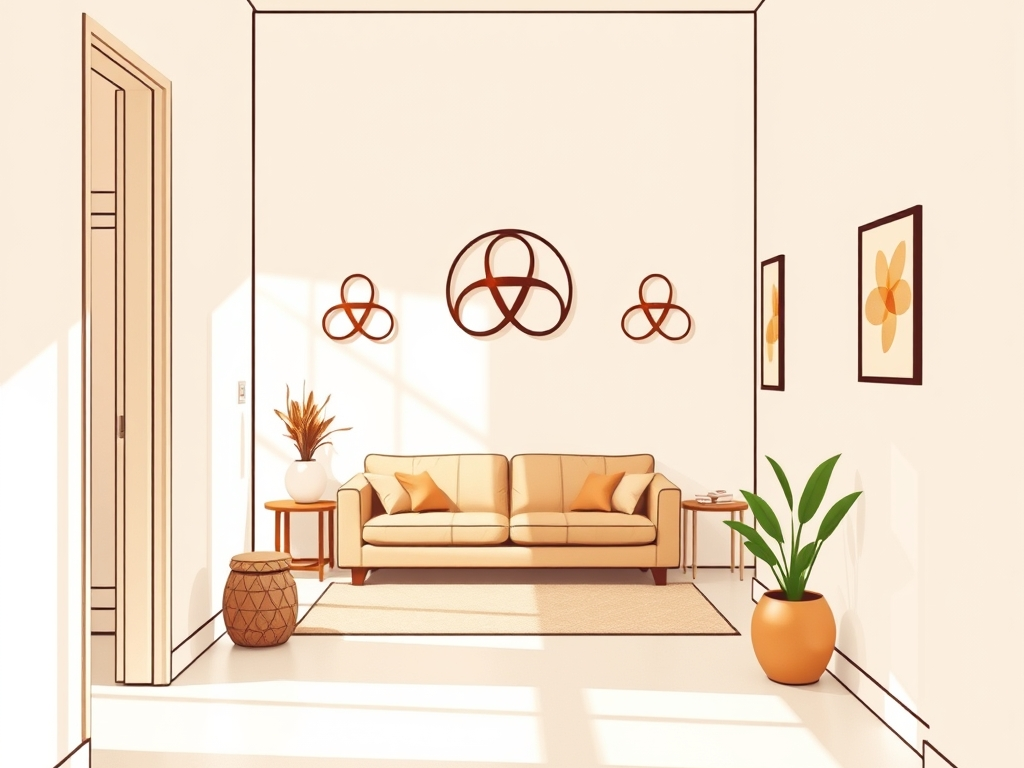
Texture tells the body how to interact with a space. A room with soft fabrics, warm wood, and natural fibers invites relaxation and touch, while a room of glass, metal, and polished stone feels efficient but can feel cold. Traditional Feng Shui reads this through the five elements: wood and earth bring warmth and stability, while metal and water bring clarity and coolness. The balance between them is described in The Five Elements in Feng Shui.
The practical test is simple: walk into a room and notice whether you want to sit down and stay. If the answer is no, look at the textures first. A rug, a woven throw, a wooden side table, or a linen curtain can change the room's temperature of feeling more than any rearrangement of the furniture.
How Scent Shapes the Space
Scent works on the body before conscious thought, which makes it one of the most direct tools in a room. A calm, clean scent supports rest in the bedroom; a fresh, clear scent supports focus in a home office; a warm, simple scent supports conversation in a living room. The traditional approach favors natural and subtle scents over strong artificial ones, because the goal is to support the room's activity, not to overpower it. The same logic of matching the room to its activity is described in What Makes a Space Feel Balanced.
Start with cleanliness, because no scent can fix a stale room. Then choose one subtle layer: a candle, a diffuser, fresh flowers, or simply open windows. Keep the scent consistent with the room's purpose and change it with the seasons.
A Checklist for Adding Scent and Texture
- Clean the room and air it out before adding any fragrance.
- Add at least two textures to the main seating area: one soft and one natural.
- Choose a rug or curtain that matches the room's activity, not just its color scheme.
- Keep one natural material in each room, such as wood, linen, wool, or clay.
- Choose one subtle scent per room and keep it consistent for a week.
- Change the scent seasonally, matching heavier scents to cooler seasons.
The checklist keeps the sensory layer simple and repeatable. You do not need many objects; a few well-chosen textures and a consistent scent can carry the whole room. The seasonal adjustment of materials is also covered in Seasonal Adjustments in Home Energy.
Common Misconceptions
The first misconception is that scent and texture are decoration, separate from Feng Shui. In practice they are part of the same system, because Feng Shui is about how a space feels to the people in it. The second misconception is that every room needs a strong style statement. A calm, neutral base with one or two textures usually works better than a heavily themed room. The third misconception is that expensive materials are required; a cotton throw and a wooden bowl create the same effect as designer equivalents. The same practical caution applies to all Feng Shui guidance, as explained in Learn Feng Shui Without Superstition.
When to Change What You Have
Review the sensory layer when a room starts to feel wrong. If a room feels cold, add warmth through texture; if it feels cluttered, remove objects before adding anything; if it feels flat, adjust the light and add one natural scent. Each change is small, and the effect is usually immediate. The same review habit applies to the whole home, and the room-by-room approach is described in How the Bagua Map Applies to Your Home.
Building a Sensory Routine for Each Season
The sensory layer works best when it changes with the seasons. In summer, swap heavy throws for light linen, let more natural light in, and choose lighter scents such as fresh herbs or citrus. In winter, add wool and warm textures, keep the light soft, and reach for deeper scents such as cedar or spice. The change is small, but it keeps the room responsive to the year, and the same seasonal review applies to the whole home in Seasonal Adjustments in Home Energy.
Set a simple rule: when the season changes, change one texture and one scent in each main room. The rule keeps the practice manageable and prevents the sensory layer from going stale. A room that is refreshed twice a year feels alive without any renovation, and the effort is measured in minutes rather than hours.
When to Remove Before Adding
Texture and scent are additions, but they work best on a clear base. Before buying a new rug or candle, remove what is not working: the faded cushion, the stale diffuser, the pile of objects on the shelf. A room with too many things will not feel better with one more texture, and the same logic is central to What Makes a Space Feel Balanced. Removing first is faster, cheaper, and usually more effective than adding.
Make the removal a habit: when a room feels wrong, take one thing out before you put anything in. The discipline keeps the sensory layer honest, because it forces you to notice what the room already has instead of covering it with new purchases.
FAQ
Do I need scented candles or diffusers for good Feng Shui?
No. Clean air and one subtle, natural scent are enough; the scent should support the room, not dominate it.
How many textures should a room have?
Two or three is usually enough, such as one soft fabric, one natural material, and one woven or rough surface.
Can texture really change how a room feels?
Yes. Texture influences whether the body feels invited to rest, work, or talk, and it is one of the fastest things to adjust.
Which scents suit which rooms?
Keep it simple: calming scents for rest spaces, fresh and clear scents for work spaces, and warm subtle scents for shared spaces.