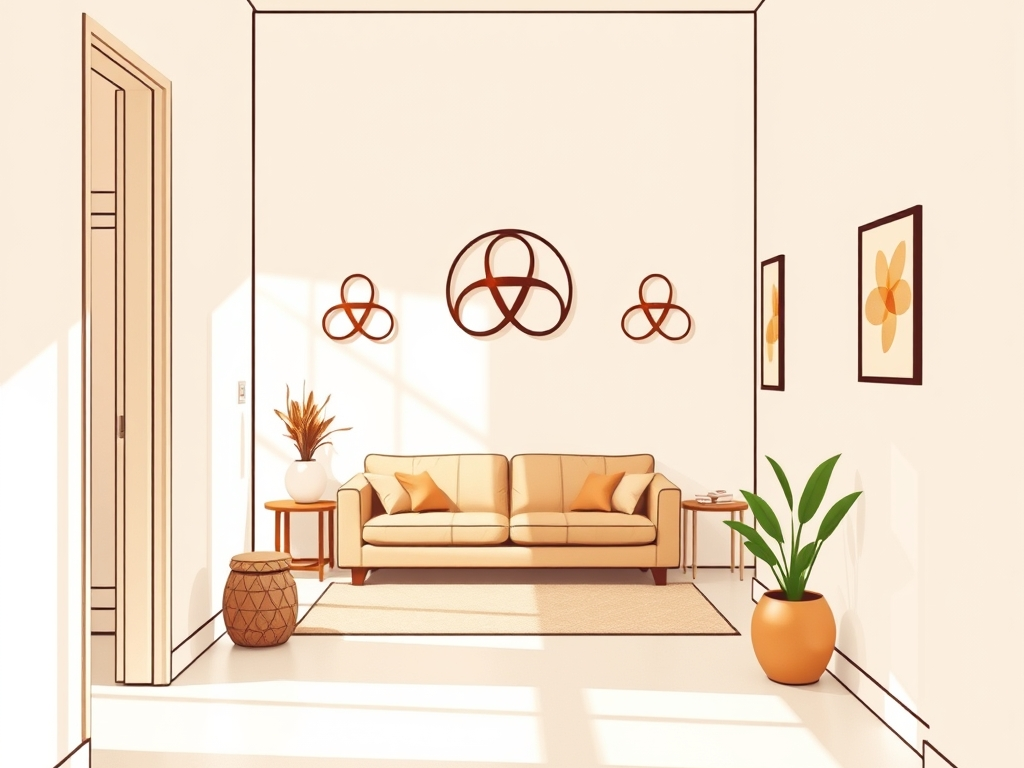
A guest room is a room with a very specific job: it must make someone who does not live in the house feel comfortable enough to sleep, rest, and find things without asking. That job makes Feng Shui unusually simple for this space. You do not need to express your personality or impress anyone; you need to remove obstacles, keep the room clean, and make the basics obvious. This article explains how to apply practical Feng Shui to a guest room, building on the general framework in What Is Feng Shui?.
Why the Guest Room Deserves a Practical Review
Guests form their first impression of a home from the room they sleep in, and that impression is mostly about ease. Can they reach the light switch from the bed? Is there a clear place to put a suitcase? Do the curtains block the morning sun? These questions matter more than any decorative symbol, because a guest who cannot find the bathroom or stumbles over luggage at night will remember the inconvenience, not the decor.
Feng Shui looks at the guest room the same way it looks at any space: how energy moves through it and whether the layout supports the activity. The activity is rest and orientation, so the room should feel settled, uncluttered, and easy to navigate. The same room-by-room logic used for the bedroom applies here, and the shared principles are covered in Bedroom Feng Shui Basics.
A Checklist for a Comfortable Guest Room
You can evaluate a guest room in about fifteen minutes with a short checklist:
- Walk the path from the door to the bed: nothing should force a detour, including furniture corners and open drawers.
- Check the bedside setup: a lamp within reach of the bed and a small surface for a phone or glasses.
- Clear one surface for luggage, either a low bench, an empty shelf, or part of the closet floor.
- Check the window coverings: they should block light well enough for sleep without being difficult to operate.
- Remove personal clutter: mail, laundry, and half-finished projects turn a resting space into a storage room.
- Test the temperature and airflow: a stuffy room or a vent that blows directly on the bed will ruin the stay.
The checklist is deliberately ordinary because the room's purpose is ordinary comfort. Once the paths and basics are solved, any symbolic adjustment has a solid foundation, a principle explained in Learn Feng Shui Without Superstition.
Choosing Furniture and Layout
The guest room works best with simple, well-proportioned furniture. A bed, a small nightstand, and one storage piece are usually enough. A room crowded with extra chairs, shelves, and a desk starts to feel like a half-used office, which makes guests hesitate to spread out their things. If the room is small, choose one clear focal point, the bed, and let everything else stay at the edges. Portable and flexible arrangements are especially useful in apartments, where the guest room may double as an office, and the same flexibility is discussed in Feng Shui for Apartments.
Placement matters for comfort rather than symbolism. The bed should not sit directly in the path between the door and the window, because that path is where people walk and where drafts travel. A bed against a solid wall with a view of the door from the pillow is comfortable and reassuring, and the same principle is described as the command position in The Command Position in a Room.
Common Misconceptions About Guest-Room Feng Shui
The first misconception is that a guest room must look like a hotel room, stripped of everything personal. Guests usually appreciate a few signs of life, such as a plant, a stack of books, or a soft rug, as long as the room stays easy to use. The second misconception is that the room needs a strong decorative theme to be welcoming. In practice, neutral colors and comfortable furniture do more work than an elaborate theme, because they let the guest relax without feeling watched by the decor.
The third misconception is that you should apologize for a small or imperfect guest room. Hospitality does not require a large room; it requires a clean room with clear paths and working basics. A small, tidy guest room with good light and a comfortable bed will always beat a large room that is crowded with furniture and clutter. For more on separating real guidance from habit, see Common Feng Shui Myths.
Seasonal Touches and Maintenance
A guest room benefits from the same seasonal review as the rest of the home. In summer, remove heavy blankets, add lighter curtains, and make sure the room does not trap heat. In winter, add a warm throw and check that the heating reaches the room evenly. These small changes keep the room ready for visitors at any time, and the habit of reviewing rooms seasonally is described in Seasonal Adjustments in Home Energy.
It also helps to give the guest room a quick reset after every stay: strip the bed, open the windows, and return anything that was moved. The reset takes ten minutes and keeps the room from slowly becoming a storage area between visits. Over time, the rooms that stay easiest to use are the ones with a clear center, a clear path, and a small number of objects that all have a purpose, which is the same standard described in What Makes a Space Feel Balanced.
FAQ
Does the guest room need to face a particular direction?
No. Practical comfort matters more than direction, and a comfortable room in any orientation will serve guests well.
Should the guest room be completely empty of personal items?
No. A few personal touches are fine; the problem appears when clutter crowds paths and surfaces.
Can a small guest room work well?
Yes. A small, tidy room with clear paths, good light, and a comfortable bed is more welcoming than a large crowded one.
How often should I change the guest room?
Review it seasonally and reset it after each stay, and it will stay ready without major rearrangements.