Stairs connect the levels of a home, and in Feng Shui they are treated as movement: the daily flow between private and shared spaces, between rest and activity. A well-designed stair makes that flow feel natural, while a cramped, dark, or cluttered stair makes every trip upstairs feel like an effort. This article explains how to apply practical Feng Shui to stairs and entrances, with an emphasis on safety and smooth movement, building on the entry guidance in Feng Shui for the Front Door and Entryway.
Why Stairs Are Different From Other Rooms
Stairs are the only part of the home where people move vertically, and that changes the design priorities. The treads need to be clear, the landings need to be wide enough to turn comfortably, and the lighting needs to be even so nobody misjudges a step. In Feng Shui terms, the stair is a channel for movement, and a channel that is blocked or awkward affects the rooms it connects.
The traditional associations with stairs are simpler than people expect: movement upward is linked with progress, and movement downward with return and rest. Those associations are descriptive, not verdicts. A stair does not guarantee progress, and a stair facing the door does not automatically drain wealth. What matters is whether the stair supports safe, comfortable movement, the same standard applied throughout the home and explained in What Makes a Space Feel Balanced.
A Safety Checklist for Stairs
Evaluate your stairs with this practical checklist:
- Check the treads: they should be clear of shoes, boxes, and anything that could be tripped over.
- Check the lighting: the top and bottom of the stair need light switches within reach, and the treads need even light.
- Check the handrail: it should run the full length of the stair and feel secure when tested.
- Check the landings: a landing that is crowded with furniture makes turning difficult and the stair feel tighter.
- Check the risers: open risers can feel airy, but they are harder for small children and pets to navigate safely.
- Check the view from the top: the stair should arrive somewhere clear, not at a wall or a closed door.
The checklist is deliberately safety-first because stairs are the one place where a practical problem can cause real harm. Once safety is settled, the decorative questions have a foundation, a principle also found in Entryways, Doors, and First Impressions.
Light, Walls, and the Feel of the Stair
Lighting is the most important design element on a stair. A stair that is bright at the top and dark at the bottom forces the eyes to adjust mid-step, and the same is true in reverse. Even, soft light across the whole stair feels safer and calmer. If the fixture is fixed, add a small wall light at the landing or a lamp near the bottom to balance the brightness.
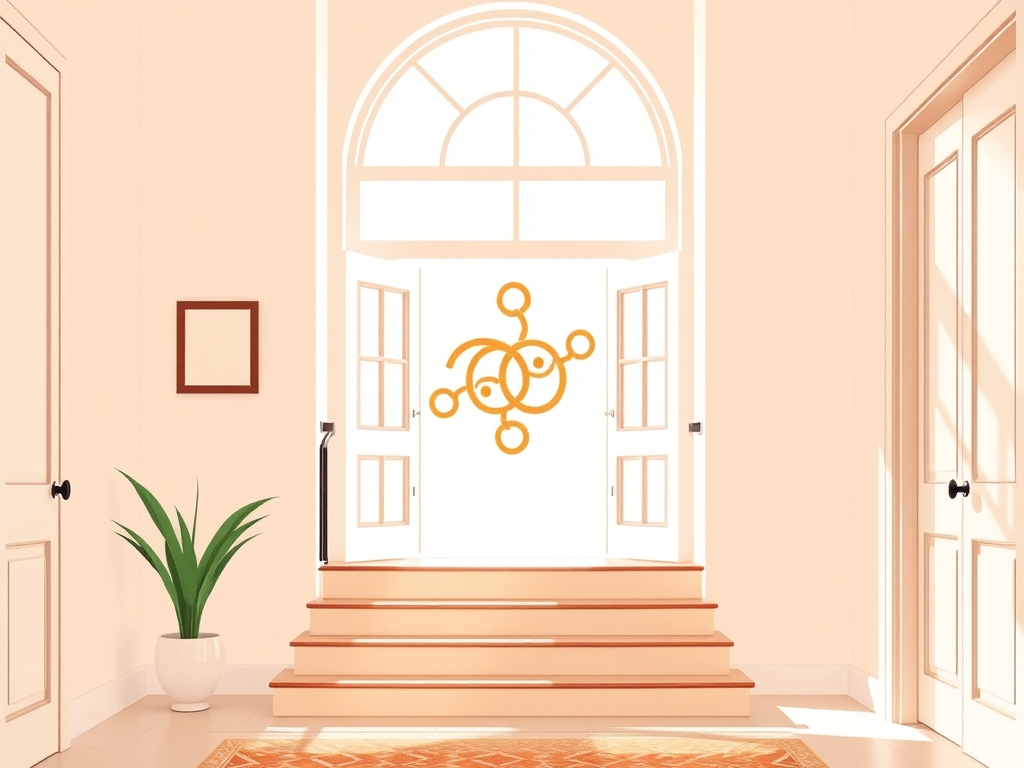
Walls beside stairs are an opportunity, not a problem. A single large picture, a runner that softens the treads, or a warm paint color can make the stair feel like part of the home rather than a functional tunnel. The mistake is to crowd the stair with small objects that gather dust and narrow the path. The balance between decoration and function is the same one used throughout the home, described in Feng Shui for Small Spaces.
Common Misconceptions About Stairs
The first misconception is that a stair facing the front door is unlucky or drains money from the home. In practice, many well-designed homes have stairs near the entry, and the arrangement works fine when the stair is safe, well lit, and visually integrated. The second misconception is that stairs must always be covered by a rug or carpet. Rugs can soften the space and reduce noise, but a bare stair with good treads and a secure handrail is perfectly acceptable, especially where carpet is hard to keep clean.
The third misconception is that you need symbolic objects on the stair to make it work. A stair needs light, clear treads, and a safe handrail; decoration is optional. If you add a picture or a plant, choose one that does not narrow the path or create clutter. For more on separating real guidance from habit, see Common Feng Shui Myths and Learn Feng Shui Without Superstition.
Keeping Stairs Safe and Simple
Stairs collect clutter for the same reason hallways do: they are transit spaces where people drop things on the way through. A weekly check that clears the treads and landings takes five minutes and prevents the slow buildup that makes the stair feel tight. In winter, provide a place near the bottom for boots and umbrellas so wet items do not end up on the treads.
It also helps to review the stair when the seasons change, because light levels and the items people carry shift through the year. A stair that feels fine in summer may need a brighter bulb or a clearer landing in winter. The habit of seasonal review appears throughout the home, and the general method is described in Seasonal Adjustments in Home Energy.
Stairs and the Daily Rhythm of the Home
Stairs also sit at the junction of the home's daily rhythm: they connect the private upstairs to the shared downstairs, and their condition affects both levels. A useful test is to walk the stair at the time you use it most, such as first thing in the morning or late at night, and notice what the trip feels like. Many people discover that lighting is the real problem, because a stair that looks fine at noon can be dim and uncertain at eleven at night, and even lighting is the cheapest fix the stair will ever receive.
The same test reveals the small habits that shape a stair over time. If the landing collects bags on the way upstairs and the treads collect slippers on the way down, the stair will always feel cluttered no matter how often it is cleaned. The fix is placement: give the stair a clear rule, such as one basket at the bottom for things going up and nothing stored on the treads, and the daily rhythm will keep the path clear on its own. The stair then does what it is supposed to do, moving people between the levels of the home without asking them to think about it.
FAQ
Is a stair facing the front door a problem?
No. Many well-designed homes have stairs near the entry; what matters is safety, light, and clear treads.
Do stairs need to be carpeted?
No. A bare stair with secure treads and a handrail is fine, and rugs are only one option for softening the space.
What is the most important stair fix?
Even lighting and clear treads, because both prevent missteps and make the stair feel calmer to use.
Should I decorate the stair walls?
Yes, with restraint. One large picture or a simple runner works; small clutter that narrows the path does not.