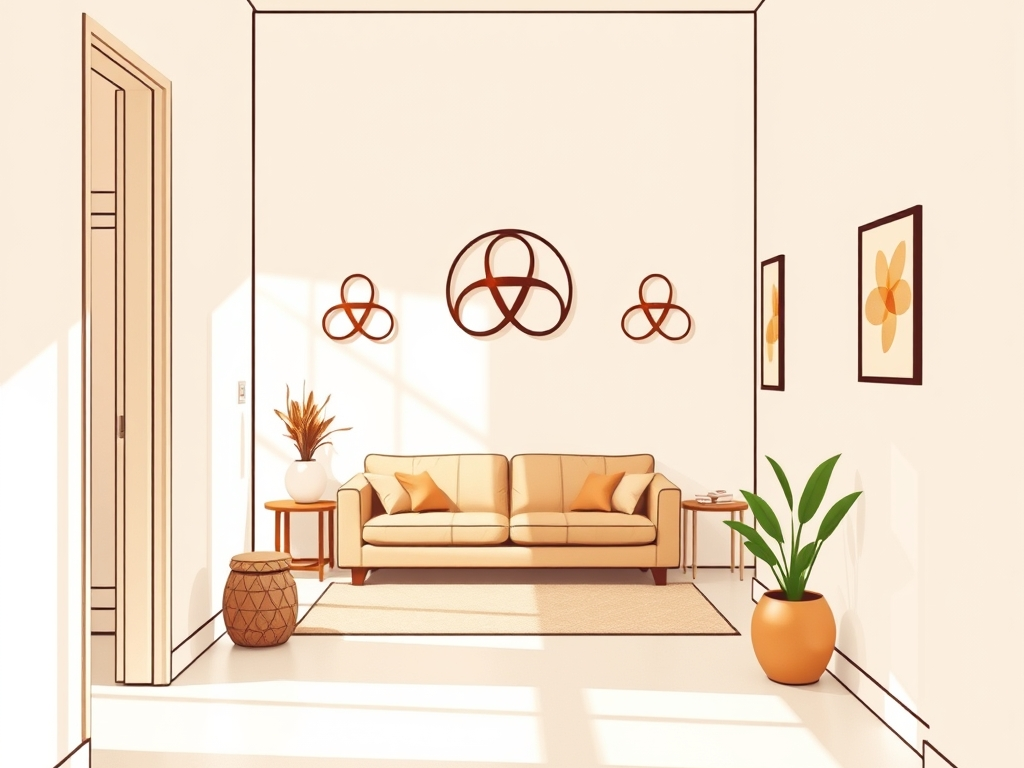
Not everyone has a room that can become a dedicated office, and a desk squeezed into a bedroom, living room, or kitchen is increasingly common. Feng Shui for a shared-space office is less about adding objects and more about creating boundaries: a clear edge between work and life, a supportive position for the desk, and an honest sense of what can be changed. For the beginner's map of the home, start with How the Bagua Map Applies to Your Home.
This article explains how to make a shared-space office work with feng shui principles, without turning your home into a display of remedies.
Start With the Desk Position
The desk is the anchor of any home office, and its position matters more than any single ornament. In a shared space, place the desk where you can see the entrance to the room without sitting directly in line with the door. This is the command position, and it works in a bedroom or living room exactly as it works in a dedicated office. If the layout will not allow it, a small mirror can give you a view of the entrance without changing the furniture.
The second priority is the wall behind you. A solid wall behind the chair supports the work, while a window or a busy corridor behind you tends to pull attention. For the full reasoning behind the position, read The Command Position in a Room.
Create a Visual Boundary
In a shared space, the work area needs an edge even when it cannot have a wall. A rug under the desk, a screen, a tall plant, or simply a consistent arrangement of the same furniture can mark where work begins and ends. The boundary is not decoration; it is the signal that lets your attention switch modes. When the workday ends, the visual boundary also tells the room that work has ended, which helps the space go back to being a home.
If you share the room with a partner or family, agree on the boundary together. A boundary that everyone respects works; one that only you see does not. For the practical side of boundaries in small homes, read Feng Shui for a Studio or Single Room.
Separate Work From Rest
The hardest part of an office in a bedroom is that rest and work share one room. The feng shui goal is not to remove work from the room but to give each function its own zone. Keep the bed visually separate from the desk: a screen, a curtain, or even a change of lighting can do this. Cover the desk at the end of the day with a cloth or simply close the laptop and turn the chair away, so the bed is not facing a work surface all night.
Lighting helps too. Use a bright task light for work and a soft, warm light for rest, and change between them deliberately. The change of light is one of the simplest signals that the room has switched functions. For more on light, read Feng Shui for Lighting and Airflow.
A Shared-Space Office Checklist
- Place the desk where you can see the room's entrance, with a solid wall behind you.
- Mark the work zone with a rug, screen, plant, or consistent arrangement.
- Keep the desk clear at the end of the workday.
- Separate the bed or sofa from the desk with a visual or light boundary.
- Use different lighting for work and rest, and switch deliberately.
The checklist keeps the adjustments practical and honest. You do not need a bagua remedy for every corner; you need a working boundary between the two lives the room supports. For the room-by-room version of this thinking, read A Beginner's Room-by-Room Feng Shui Walkthrough.
What Not to Do
The common mistake in a shared space is overcorrecting: filling the room with crystals, plants, and symbols until the space feels like a shop. Feng Shui for a shared room should be quiet, because the room already carries two functions. If an adjustment makes the space feel crowded or strange, remove it. The measure of success is whether the room supports both work and rest, not whether it looks obviously feng shui.
Another mistake is ignoring the practical side. A screen that blocks the light, a rug that trips people, or a plant that needs constant care are not remedies; they are obstacles. For the grounded version of the practice, read Learn Feng Shui Without Superstition.
Making It Sustainable
A shared-space office changes with life: a new housemate, a new schedule, a new season. Review the arrangement every few months and adjust what no longer works. The review is part of the practice, and it keeps the space honest rather than frozen. For the weekly version of this maintenance, read A Weekly Feng Shui Reset.
Keep the intention simple: the room should help you work when you work and rest when you rest. Everything else is optional.
Sound and visual noise deserve attention in a shared-space office, because they are the two leaks that blur the work boundary. A screen or a shelf between the desk and the rest of the room softens the visual pull of the home, while a consistent background sound, quiet music or a fan, masks the small household noises that break focus. The boundary works both ways: at the end of the day, the same screen and sound can be switched off to let the room return to rest. The switch is a small daily ritual, and it is the practical heart of the arrangement.
FAQ
Can feng shui really help an office in a shared room?
Yes, by improving position, boundaries, and the switch between work and rest, which are practical changes with visible effects.
What if I cannot move the desk at all?
Use the next layer: a mirror for the entrance view, a solid screen behind you, and clear boundaries around the work zone.
Is a bedroom office always bad feng shui?
Not always. It works when the bed and desk are visually and functionally separated, and the separation is maintained daily.
How many objects do I need to add?
As few as possible. The practice works best when the adjustments are quiet and the room still feels like a home.