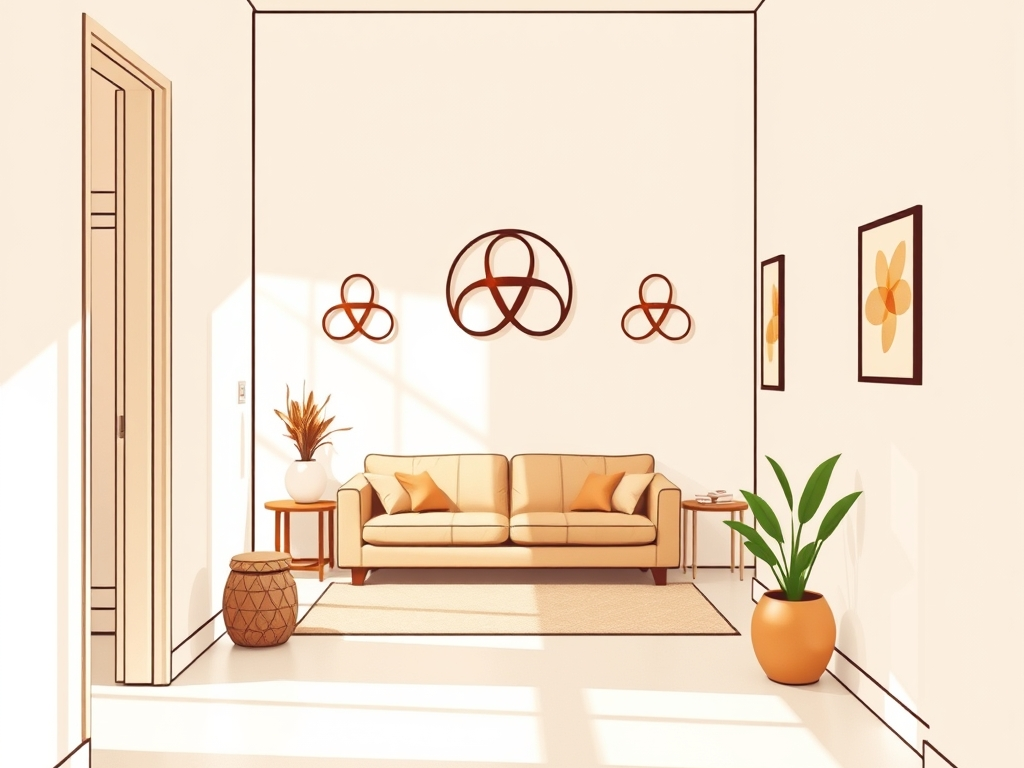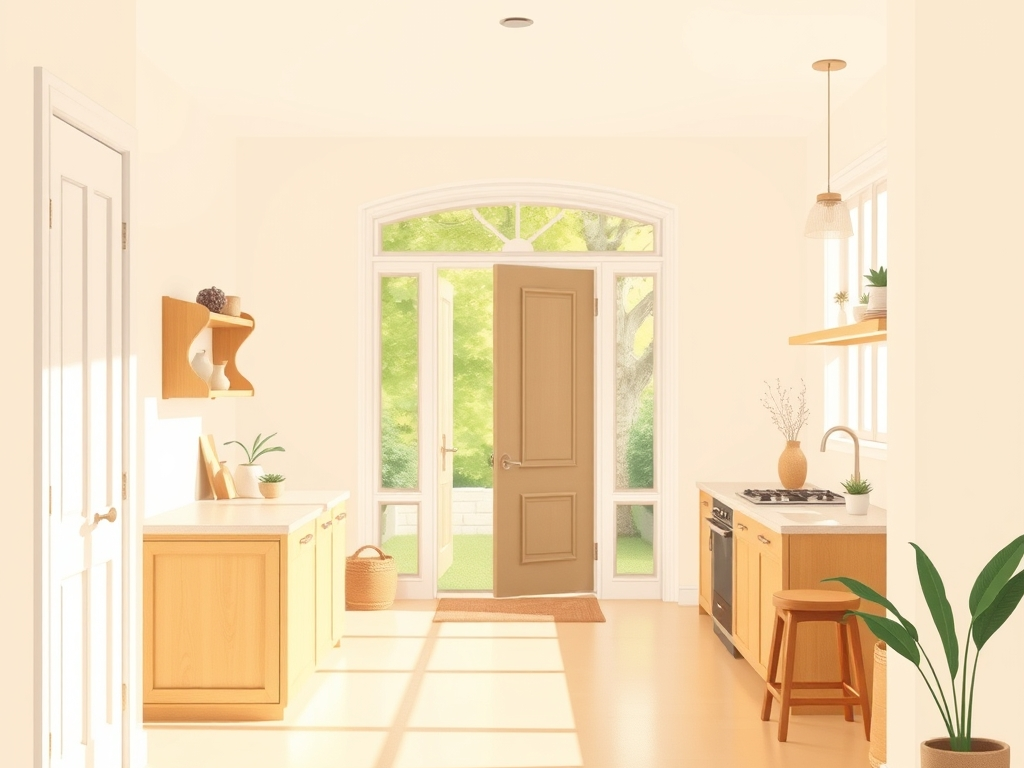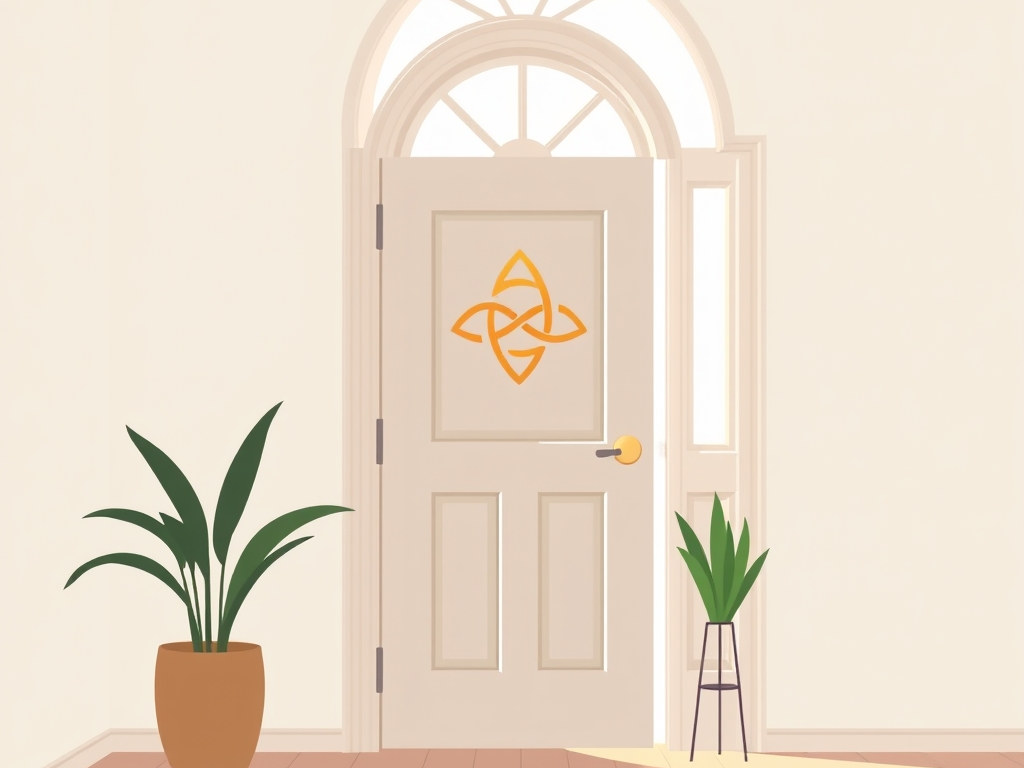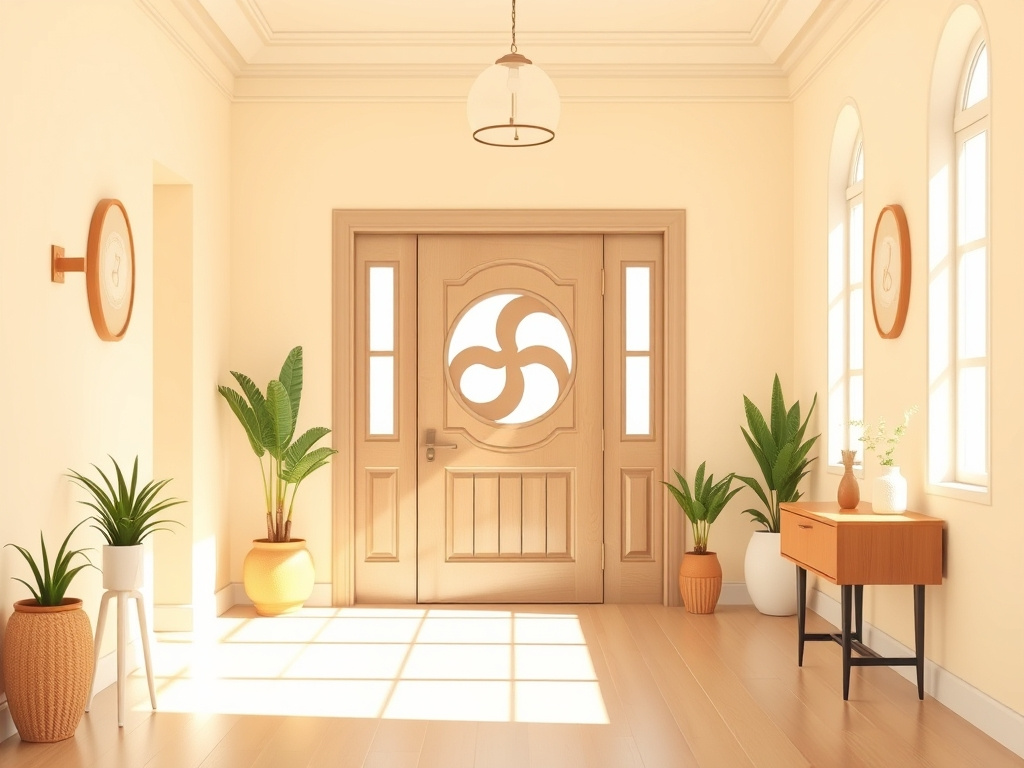
In bagua-based Feng Shui, the front-center area of a home maps to career and life direction, and it is one of the first places people check when work feels stuck. The practical claim is simple: if that area is piled with boxes, mail, and broken items, the space where you orient your working life is telling you a story of stagnation. Clearing the career area is a concrete, testable practice that fits the wider decluttering tradition. This article explains how to approach clutter in the career area, building on the foundations in What Is the Bagua Map?.
Where the Career Area Is
The career area sits at the front-center of the home, along the wall opposite the back wall, near the entry. In the standard bagua layout, the map is placed over the floor plan with the entrance at the bottom, so the career gua occupies the lower-middle position. The full mapping method is described in How the Bagua Map Applies to Your Home, and it works in irregular layouts as well as regular ones.
Before you change anything, find the area in your actual home. It is often the entry hall, a corner near the front door, or the front part of a living room. The area matters more than the label, and cleaning the physical space is the first step regardless of which gua it falls in.
Why Clutter Tends to Accumulate There
The front-center of the home is a natural collection point: shoes, keys, mail, bags, and packages all land near the entrance. Because the area is a passage rather than a room, its clutter is easy to ignore. The result is that the space most connected to direction and starting points becomes the most blocked. Traditional practice notices this pattern and responds by treating the career area like a working surface: it should be clear enough to move through and open enough to accept new things. The connection between clutter and the bagua is also covered in How the Bagua Relates to Different Areas of Life.
A Cleanup Checklist for the Career Area
- Remove everything from the area and sort it into keep, move, and discard.
- Clear the floor and the lower surfaces completely before replacing anything.
- Give each kept item a home elsewhere, such as a shoe rack, key hook, or drawer.
- Keep the area visually open: one or two small objects at most.
- Add one symbol of direction, such as a clear lamp, a map, or a meaningful image.
- Set a weekly five-minute reset so the area stays clear.
The checklist makes the practice concrete. The goal is not to decorate the career area with career symbols; it is to keep the space open and easy to use, and the same standard is described in What Makes a Space Feel Balanced.
What to Add After Clearing
Once the area is clear, add only what supports its function. Good light is the first addition, because the front of the home is often darker than the rest. A small lamp or a bright bulb changes how the passage feels. Then choose one object with a clear meaning for you: a piece of art, a plant, a stack of books about your field, or a note with a current goal. The water element is often associated with career in the five-element system, and its practical use is described in Water Elements and Flow in a Home.
Keep the additions minimal. A clear space with one meaningful object supports focus; a busy space with many career symbols becomes clutter again. The same restraint applies to every gua in the home.
Common Misconceptions
The first misconception is that the career area must be filled with career objects to work. In practice, openness matters more than symbols. The second is that clearing the area guarantees job changes or promotions. It changes the environment you act in, and the effects show up through your own behavior and attention. The third is that the area must be mapped with absolute precision. The exact boundary matters less than the habit of keeping the front-center clear. The practical limits of bagua practice are discussed in Learn Feng Shui Without Superstition.
Keeping the Area Clear Over Time
The front-center of the home will try to become a drop zone again within days, because it is the natural landing place for keys, mail, and bags. Plan for the re-accumulation instead of being surprised by it. Put a small tray or basket near the door for the daily items, give every category a home, and set a five-minute reset at the end of each day. The reset is not a deep clean; it is returning the surface and the floor to clear within five minutes. The same reset habit is described in Feng Shui for Apartments, where small spaces depend on quick resets.
If the area keeps filling up despite the reset, reduce what enters it. A weekly mail check, a shoe rack with enough space, and a hook for keys will stop most of the accumulation at the source. The goal is a system that keeps the area clear without daily willpower, and systems always beat intentions for long-term clutter.
When the Area Feels Right
You will know the career area is working when it disappears from attention. A clear, well-lit passage is simply there, easy to walk through, easy to leave, and easy to return to. That ease is the practical point of the practice, and it is the same feeling described for balanced spaces in What Makes a Space Feel Balanced. Do not over-decorate the area once it feels right; protect it instead. The area works because it is open, and the discipline is keeping it that way.
Review the area at each seasonal change, remove anything that drifted in, and ask whether the one meaningful object still supports your current direction. The review takes ten minutes and keeps the front-center honest, which is the real long-term practice behind the career gua.
FAQ
Do I need to know the exact boundary of the career area?
No. Work with the front-center of the home as a rough zone, and keep that physical space clear and well-lit.
Will clearing the area change my career?
It changes the space you work and live in, which can shift your attention and routines; it is not a guarantee of outcomes.
How often should I clear it?
Do a full clear when it accumulates, and keep a weekly five-minute reset so it never builds up again.
What belongs in the career area?
Very little: good light, a clear path, and one meaningful object that supports your sense of direction.