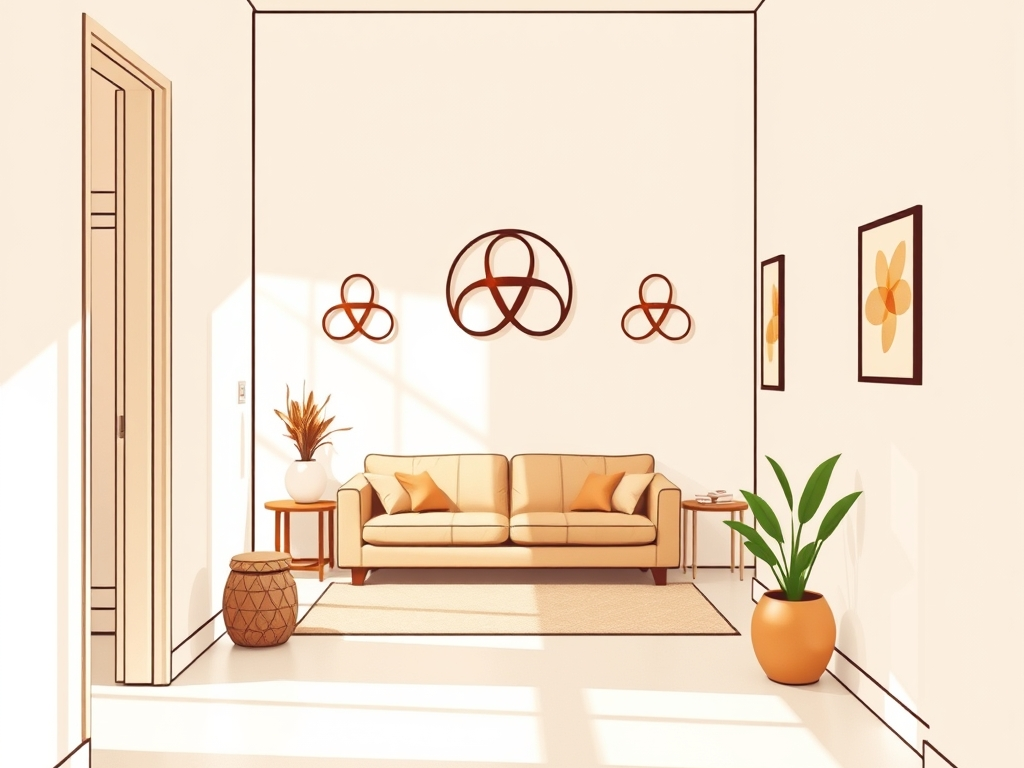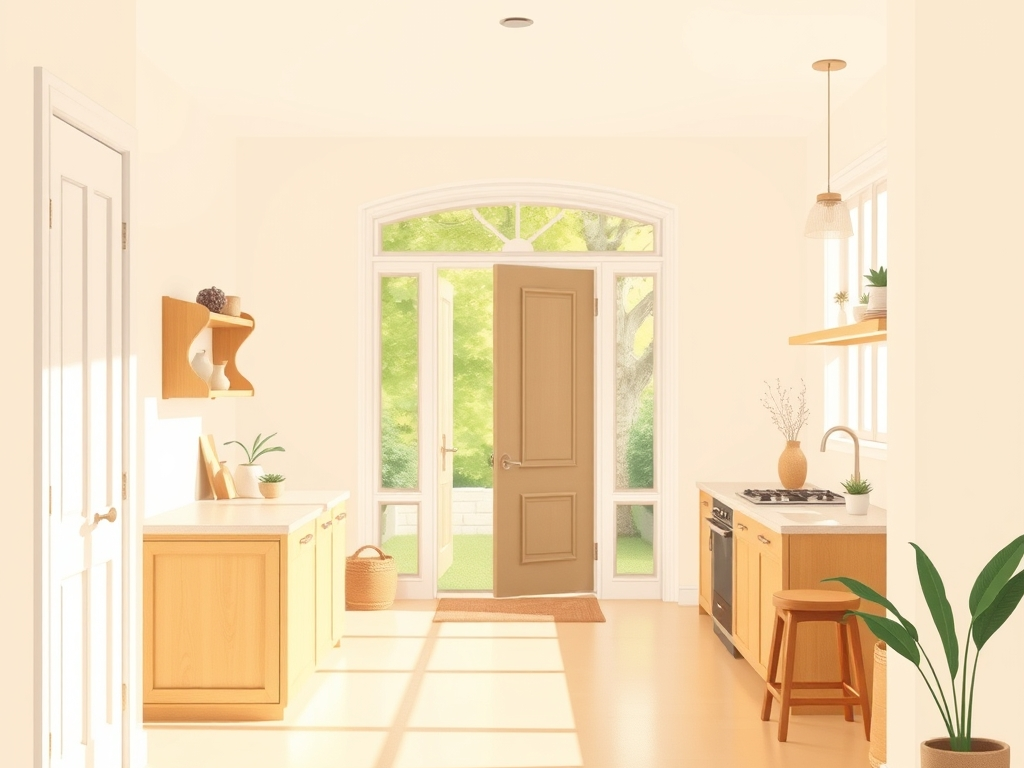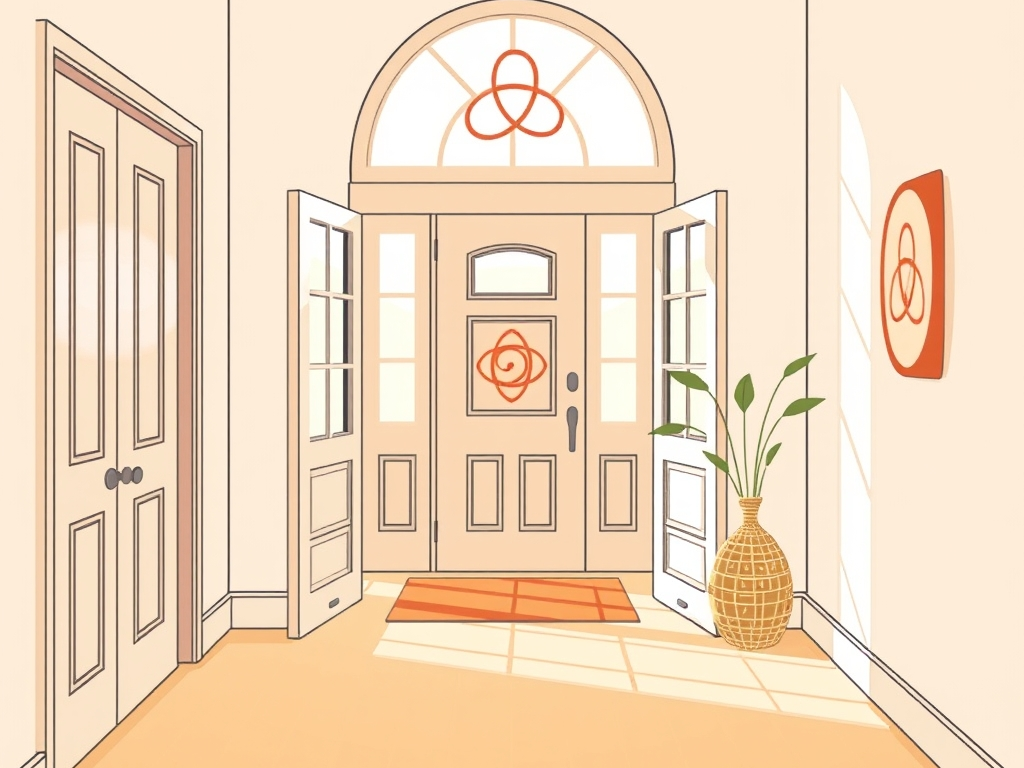
Rooms are full of invisible lines. The edge of a sofa, the path from the door to the window, the corner of a table pointing at your chair, all of these draw lines through a space, and those lines shape how the room feels more than the furniture itself. Feng shui pays attention to these lines because movement is the simplest way energy shows up in a room: blocked paths feel tight, clear paths feel calm. For the basic ideas, start with The Hallway and How Energy Moves.
This article explains how to see the lines in a room, how they shape its feel, and how to arrange furniture for clearer movement.
Seeing the Invisible Paths
The first skill is seeing the paths. Stand at the doorway and trace the routes you actually walk: to the desk, to the window, to the bed, to the door. Then look at what crosses those routes. A chair back that blocks the path to the desk, a table edge that points at the sofa, a rug that stops the route short, each of these is a line interrupting a path. The room's flow is the sum of these interruptions, and most people can feel the difference without naming it.
To practice, trace the three main routes in any room with your eyes and name the first obstacle on each. That naming is the whole observation skill. For the movement layer across the home, read The Hallway and How Energy Moves.
The Command Position in a Room
The most important line in a room is the one from the main seat or bed to the door. Feng shui calls this the command position: a place with a clear view of the entrance, a solid wall behind, and no direct line from the door to the seat's back. The practical reason is simple. People settle better when they can see who is coming and are not exposed from behind, and that sense of settled attention changes how the room works for work and rest.
For the full treatment of the command position, read The Command Position in a Room. For the bedroom version of the same idea, read The Bedroom and Restful Energy.
Sharp Edges and Soft Lines
Furniture draws sharp lines, and sharp lines point attention. A table corner aimed at a chair creates a point of unease even when nobody can say why; a shelf edge cutting across a desk does the same. The fix is rarely to remove the furniture; it is to redirect the line. Move the offending piece a few degrees, add a plant or lamp to soften the angle, or shift the chair so the edge points at open floor instead of a person.
This is practical geometry, not mysticism. An angled table corner aimed at your chest feels different from one aimed at a wall, and arranging the room is simply arranging the lines. For the element and object layer of the same work, read The Five Elements in Feng Shui Placement.
A Checklist for Better Flow
Run this short sequence when a room feels off and you cannot say why.
- Stand at the door and trace the three main routes in the room.
- Name the first obstacle on each route.
- Check the main seat or bed for a clear view of the entrance.
- Find any sharp edges pointing at seating or work positions.
- Move one thing to open one route, then sit and feel the difference.
The sequence makes the invisible visible. For the office version of the same checklist, read Feng Shui for the Home Office Desk.
Why Flow Matters More Than Style
Style is what a room looks like in photographs; flow is what it feels like in use. A room can be beautiful and still feel wrong because the paths are blocked, and it can be plain and feel right because the lines are clean. Feng shui's lasting contribution is to insist that the felt quality is real, observable, and adjustable, which is why the tradition survives as practical design advice rather than superstition. For that grounded view, read Feng Shui Without Superstition.
When in doubt, remove the obstacle closest to the door. The room will tell you whether that was right, usually within a day.
Testing One Line at a Time
The flow method is easiest to trust when you test one change at a time. Choose the single obstacle that bothers you most, move it, and live with the room for a few days before changing anything else. If the room feels better, the line was the issue; if nothing changes, restore the piece and try the next line. Single-variable testing keeps the practice honest and teaches you which lines matter in your own space, which no general rule can tell you, because your room, your habits, and your thresholds are particular. For the evaluation routine behind the tests, read How to Evaluate a Room Before Rearranging.
Keep a one-line note of each test and its result. After a few months you will have a small file of what actually works in your home, which is more reliable than any article, including this one, because it was built from your own experiments. The note also protects against the drift problem: when a room slowly closes up again, the file reminds you which single move reopened it the last time, and the fix takes minutes instead of another investigation.
FAQ
Do I need a compass to improve flow?
No. Flow is about paths and lines you can see and feel; the compass layer is separate and optional.
What if my room is too small to move anything?
Then move one thing a few inches, rotate a chair, or remove one object; even a small change to the main route shifts the feel.
Is a pointed corner really a problem?
It is a line aiming at you, and lines affect attention; whether it matters in your room is something you can test by redirecting it.
How quickly should a room feel different after a change?
Usually within a day of living with it. If nothing changes, the obstacle was not the issue, and you move on to the next one.