A north-facing room is the quiet one of the house. In the northern hemisphere it receives indirect, cooler light, stays out of the harshest sun, and can feel calm, even cool, at every hour of the day. In feng shui, north is traditionally associated with water, depth, and stillness, which suits rest and focus but can tip into coldness if nothing balances it. The practical question is not whether north is good or bad; it is how to make the room feel right for its use. If you are new to directional thinking, start with Feng Shui Without Superstition.
This article explains what a north-facing room receives, how to balance its coolness, and what to arrange first.
What North Brings to a Room
North-facing rooms receive even, indirect light for most of the day. They avoid the glare of the morning and the heat of the afternoon, which makes them excellent for bedrooms, studies, and offices. The same qualities can make a room feel dark or cold in winter, when the light is already thin and the room adds nothing warm to it.
The traditional association of north with water deepens the effect: stillness, depth, and reflection. A north room can be the calmest room in the house, and also the one most easily left unused. For the wider element map, read The Five Elements in Feng Shui.
Reading Your North Room
Before changing anything, notice what the room actually feels like at three times: morning, midday, and evening. North rooms change less than others, which is their gift and their risk.
- Is the room used, or is it the one everyone avoids?
- Does it feel calm or just cold?
- Does the light work for the room's purpose?
- Does the room warm up with people in it, or stay cool?
- What is the first word that comes to mind when you enter?
The answers tell you what the room needs. For how to evaluate a room before rearranging it, see How to Evaluate a Room Before Rearranging.
Warmth Without Heat
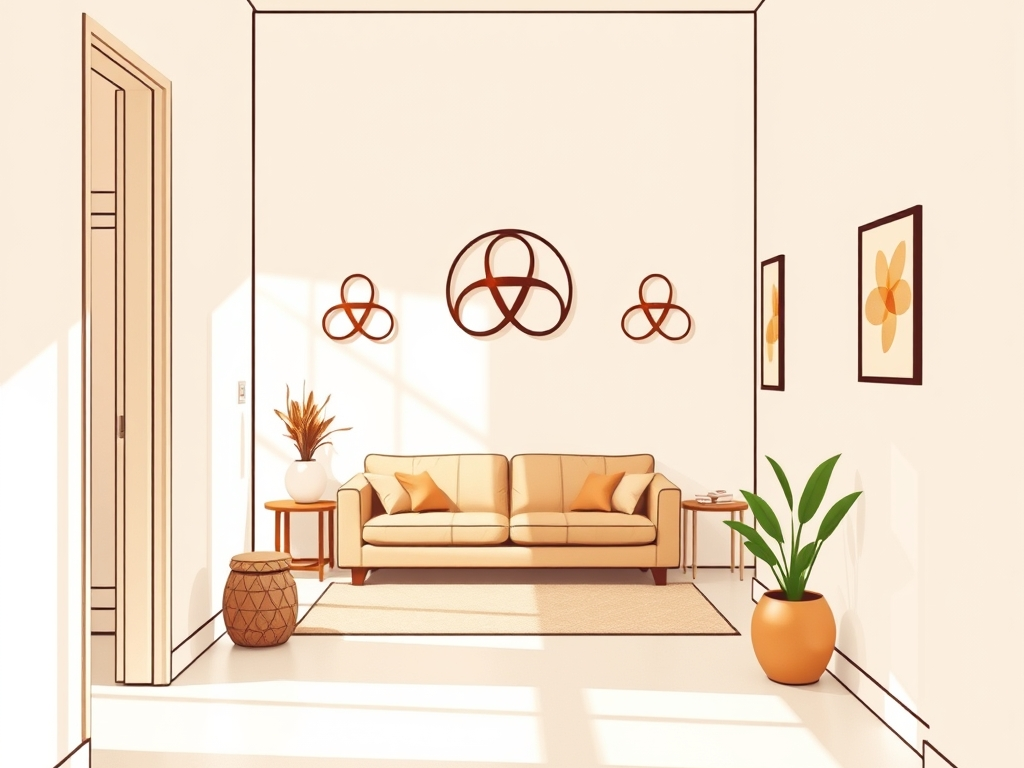
Balancing north does not mean turning the thermostat up. It means adding the qualities the room lacks: warmth in color, texture, and light temperature. These are the highest-leverage changes.
- Use warm light bulbs instead of cool daylight ones.
- Add one warm accent color: a terracotta cushion, an amber lamp, a wooden frame.
- Layer a rug and a throw to soften the coolness underfoot.
- Add wood, which reads warm even in small amounts.
- Keep one bright, warm source of light for the evening.
The list respects the room's nature while correcting its edge. For how materials carry the elements, read The Five Elements in Feng Shui Placement.
Best Uses for a North-Facing Room
Match the room to its light. North suits the rooms that want stillness: bedrooms, studies, meditation corners, and home offices. It is a weaker match for rooms meant to gather and energize, such as a living room that should feel bright at every hour, where the northern light may need significant help.
- Use it as a bedroom, and the calm works for you.
- Use it as a study, and the even light suits long focus.
- If it must be a living room, add strong warm lighting.
- If it must be a kitchen, check that cooking light is bright enough.
The match between use and light does most of the work. For the rest of the bedroom arrangement, read The Bedroom and Restful Energy.
A Five-Step Adjustment
If the room currently feels wrong, adjust in this order.
- Change the light temperature first; it costs almost nothing.
- Add one warm accent and see if the room changes.
- Add a rug or underfoot warmth.
- Bring in one wooden piece or plant.
- Spend one evening in the room before judging it.
The steps are cheap and reversible, so the room can be tested honestly. For the seasonal version of the same logic, read Seasonal Adjustments in Home Energy.
What Not to Do
Do not flood a north room with red and call it balanced; strong fire colors in a quiet room can feel tense rather than warm. Do not fill it with artificial light trying to fake midday sun. And do not leave it empty because it is hard to furnish; an unused room costs more than a plain one.
The aim is a room that feels right for being in, not a room that pretends to face south. For the myths that grow around such rules, read Common Feng Shui Myths.
Keeping the Room Lived In
The best thing a north-facing room can have is use. A study that is used daily warms itself; a bedroom that is slept in well is doing its job. The direction sets the conditions, and your arrangement and attention do the rest.
For how the whole home's directions work together, see How the Bagua Map Applies to Your Home.
North-Facing Rooms in Different Climates
The north-facing problem changes with the climate. In a hot region, a north room can be the most comfortable room in the house, and its coolness is a gift rather than a flaw. In a cold region, the same room can feel like a cave in winter, and the warmth work matters far more. The practice should always be read against the actual weather, which is the traditional way: the season and the place modify every rule.
This is why the first adjustment is observation, not decoration. Note how the room feels in the coldest and warmest months, and adjust for the season you actually live in. A north bedroom in a hot climate may need almost nothing; the same room in a cold climate may need warm lighting, layered textiles, and a plan for winter evenings. The direction names the tendency, and the climate names the real task.
FAQ
Is a north-facing room bad luck?
No. Direction is not luck; it is light and character, and a north room is well suited to rest and focus when arranged honestly.
How do I make a dark north room brighter?
Use warm light, mirrors placed to reflect existing light, light wall colors, and keep the window clear of heavy coverings.
What colors suit a north-facing room?
Warm neutrals and soft accents work well; the room already has coolness, so it does not need more of it.
Should I avoid putting a living room in the north?
Not necessarily, but it needs stronger lighting and warmer materials than a south-facing room to feel inviting.