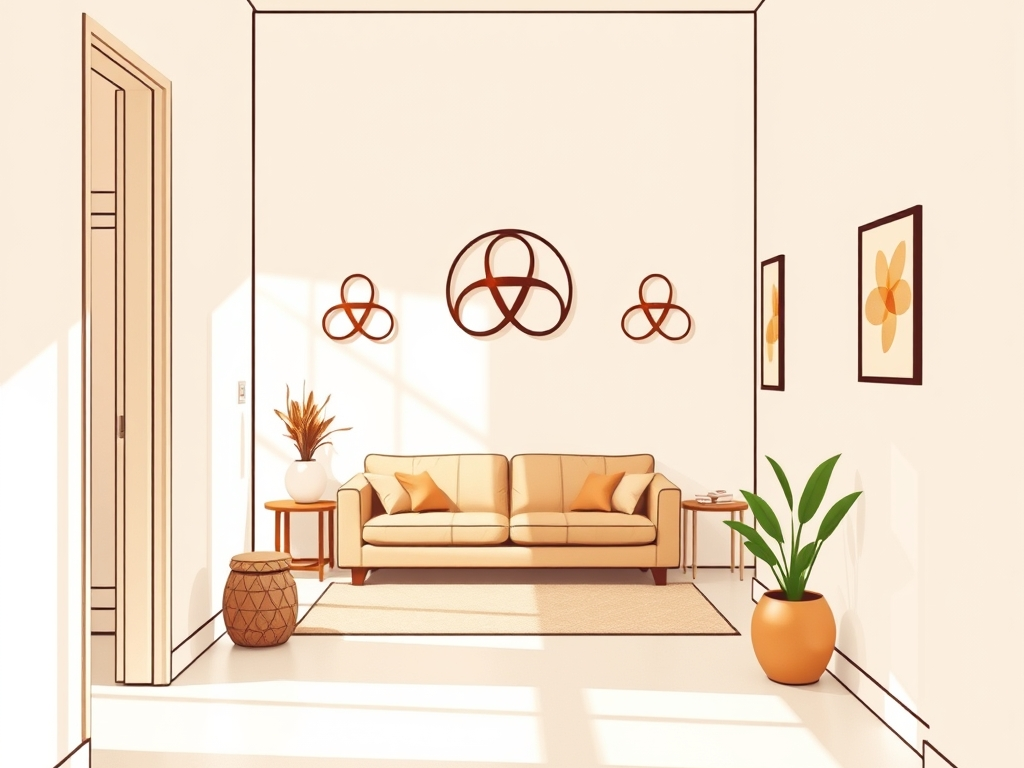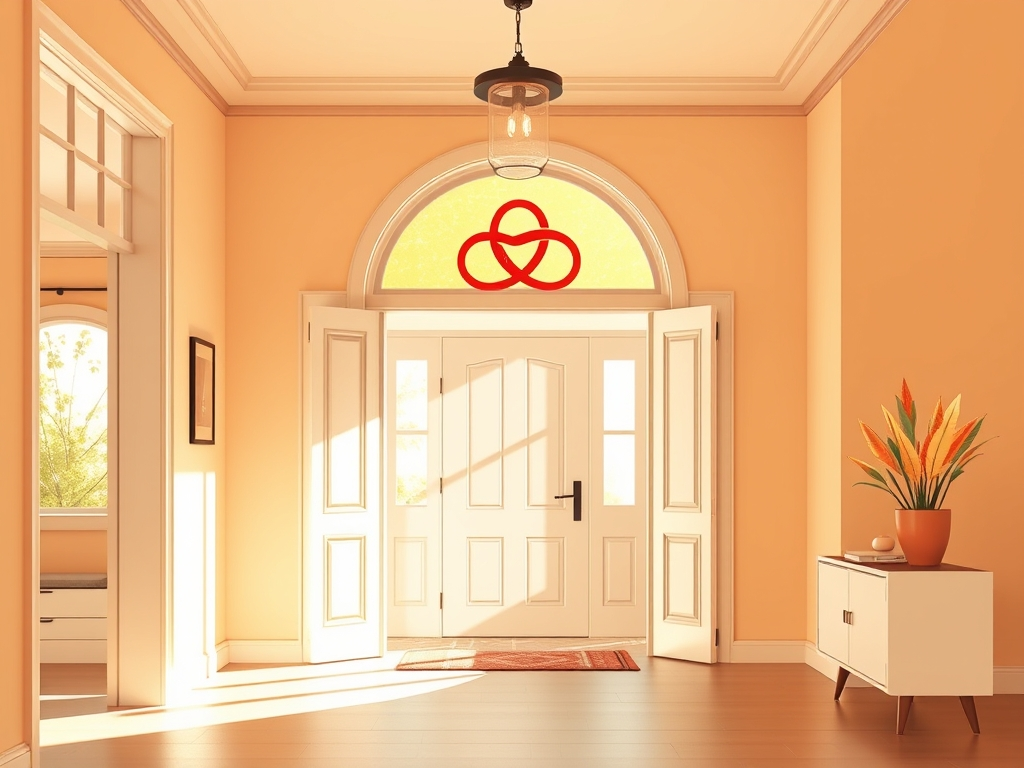
A room with too much Fire energy is easy to recognize and hard to name. It feels restless, loud, or urgent even when nothing is happening. The colors are warm, the lighting is bright, the decor has many sharp or pointed forms, and the room seems to demand activity. In feng shui terms, the Fire element has taken over, and the fix is not to remove all warmth but to add the balancing elements that let the room settle.
Fire in feng shui represents warmth, visibility, and transformation, all of which are useful qualities. The problem is proportion. A room that is all Fire has no place to rest, and the atmosphere becomes tense. Balance does not mean eliminating Fire; it means giving the room other qualities to rest on.
Signs of a Fire-Heavy Room
Fire-heavy rooms share a handful of visible markers. The palette leans red, orange, or hot pink. Lighting is bright and direct, often with many small lamps or bare bulbs. Shapes are pointed, zigzag, or triangular, from decor to furniture lines. Candles, electronics, and screens multiply, adding both literal heat and visual energy. The room may also be the one where people argue, rush, or feel unable to relax.
None of these signs is a judgment on taste. A red dining room or a media room with bright screens can be wonderful; the question is whether the intensity serves the room's purpose. For the element vocabulary, read The Five Elements in Feng Shui.
Which Elements Balance Fire
In the element cycle, Earth absorbs Fire, and Water controls Fire. Both are useful in different ways. Earth, through ceramics, stone, square forms, and yellow and brown tones, gives Fire something to settle into; it is the best first addition for a restless room. Water, through dark blues, glass, mirrors, and flowing shapes, cools and redirects the energy; it is the best addition when the room feels overheated rather than merely lively.
Wood is a middle option: it feeds Fire, so small amounts can soften the transition without adding heat. The practical rule is to start with Earth, test the effect, and add Water only if the room still feels hot. For the cycle relationships, read The Cycle of Creation and Control.
A Balancing Checklist
To rebalance a Fire-heavy room without redesigning it, work through this checklist:
- Reduce the number of bright, direct light sources; use one warm lamp instead of five small ones.
- Add an Earth object: a ceramic bowl, stone tray, or square wooden table.
- Introduce one darker, cooler surface or textile, such as a navy cushion or deep green throw.
- Replace pointed decor with round or oval forms where easy.
- Turn off unused screens and candles when the room is meant for rest.
The checklist changes the room's proportion, not its identity. A Fire room that gains a little Earth still has its warmth; it simply has somewhere to land. For more on the feel of a room, read What Makes a Space Feel Balanced.
Common Misconceptions About Fire Rooms
The first misconception is that red is bad. Red is a powerful and appropriate color in small, deliberate amounts; the problem is usually a surplus of Fire qualities at once, not the color alone. The second misconception is that balance means boring. Earth and Water additions can be beautiful, and the room usually becomes more comfortable, not less stylish. The third misconception is that the element balance is about luck.
It is about atmosphere and function. A Fire-heavy living room where people cannot relax has a practical problem, and the element reading simply names it. For the practical side of the system, read Learn Feng Shui Without Superstition.
Fire in Rooms with Specific Purposes
The right amount of Fire depends on what the room is for. A kitchen, a media room, or a social dining room can carry more Fire because warmth and activity belong there. A bedroom or a study needs far less, because rest and focus require the energy to settle. The same red wall that energizes a dining room can make a bedroom feel like an alarm.
When Fire is useful but overwhelming, scale it down rather than removing it: dim the lighting, reduce the number of pointed objects, and add a single grounding surface. For the room-by-room version of this thinking, read Bedroom Feng Shui Basics and Home Office Feng Shui for Focus.
A Worked Example
A couple's living room is bright red, lit by five lamps, and decorated with many small triangular ornaments. Guests leave earlier than expected, and the couple rarely relaxes there. They swap two lamps for one warm floor lamp, add a ceramic vase and a square coffee table, and replace the red cushions with deep green and navy ones. The room keeps its character but now holds a quiet conversation until late.
The change took one afternoon and no new furniture beyond the vase and cushions. That is the practical scale of element work. For more guides, browse the feng shui library or read The Kitchen in Feng Shui: Balance and Function.
Scaling Fire Down Gradually
If a room is strongly Fire-heavy, resist the urge to change everything at once. A sudden removal of all warm color and bright light can make the room feel flat, and the flatness produces its own discomfort. Instead, reduce the intensity in steps: one less light source, one cooler textile, one Earth object. Give each step a week and notice the difference.
The gradual approach also teaches proportion. Most people discover that the room needed only a small reduction in Fire, not an elimination, and that the remaining warmth is what made the room pleasant. The goal of balancing Fire is not to extinguish it but to give it a place to rest, and finding that place usually takes a few gentle adjustments.
FAQ
Does a Fire-heavy room cause arguments?
It creates a restless atmosphere that can make tension more visible; it does not cause specific events.
Do I have to remove all red decor?
No. Reduce the total intensity of Fire qualities; a few red accents are fine in the right proportion.
Is Earth or Water better for balancing Fire?
Start with Earth, which settles Fire without cooling the room; add Water only if the room still feels overheated.
How quickly will the room feel different?
Usually within days of the change, since the effect is mostly visual and practical atmosphere, not a mysterious process.