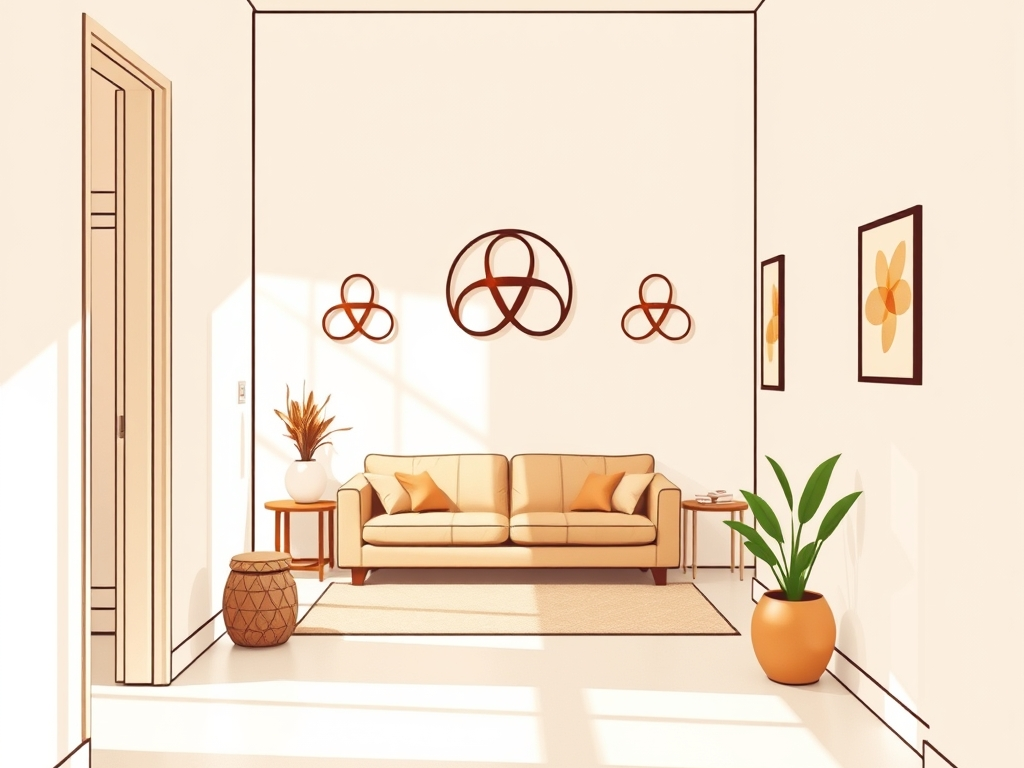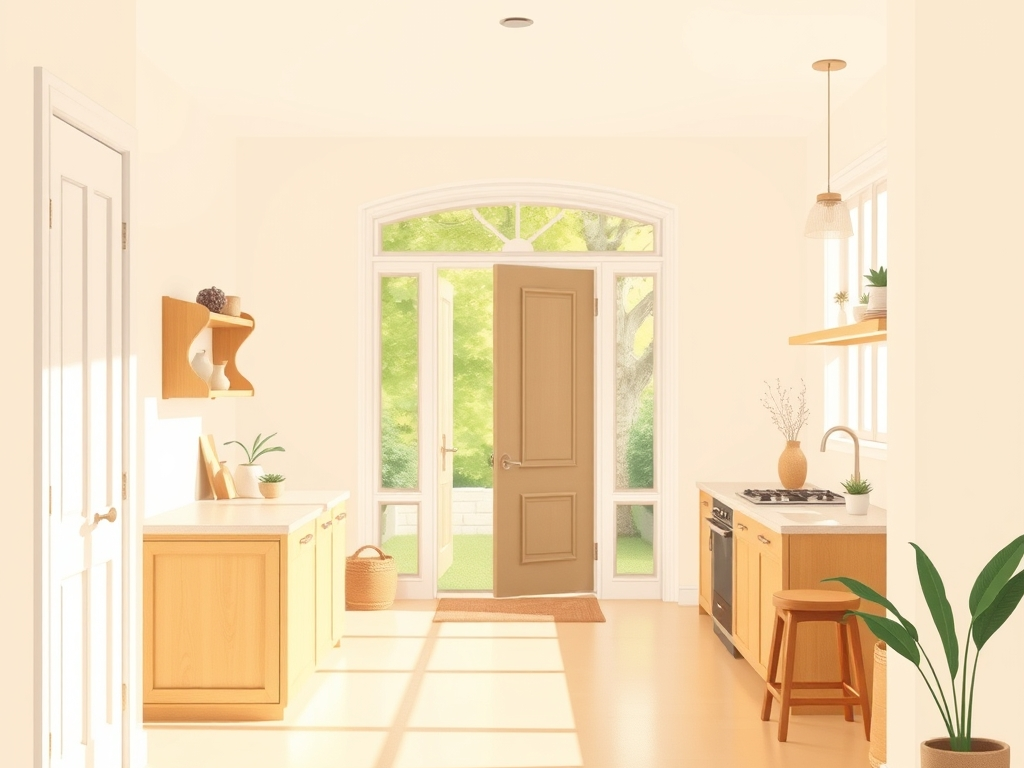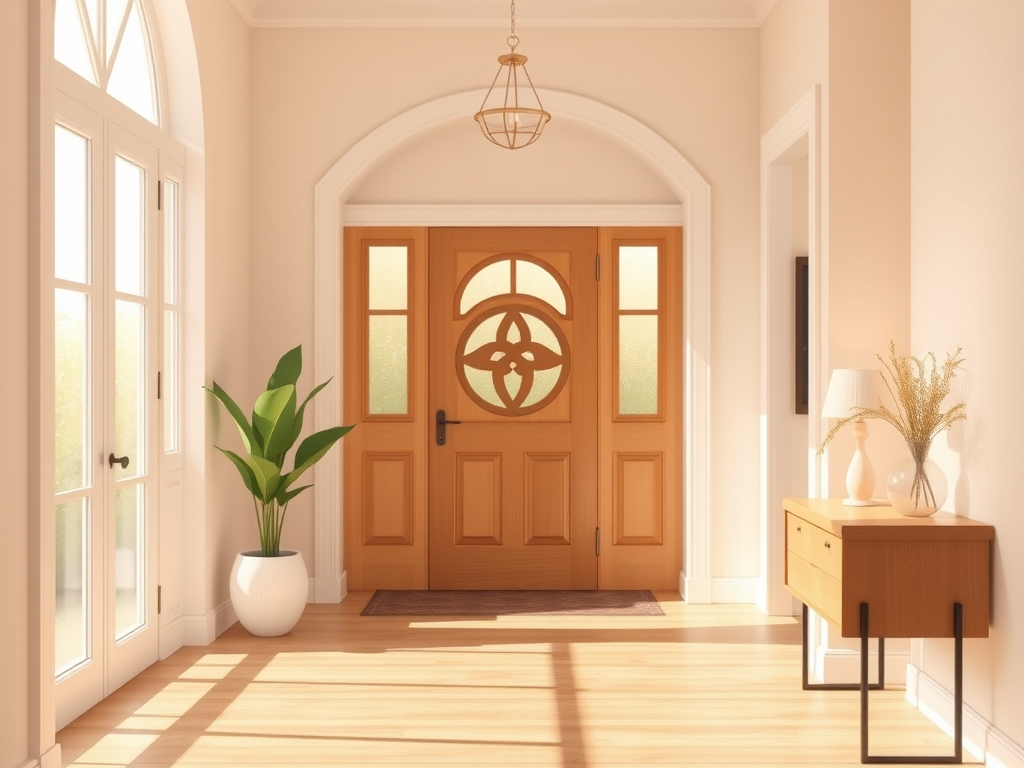
Feng shui is not one system. It is a family of traditions, and the two best-known branches are the form school and the compass school. The form school reads the physical shape of the land and the building: hills, water, roads, and the proportions of rooms. The compass school reads directions and time, using a compass and calculated values to place and adjust the space. Both have something useful to say, and understanding the difference helps you use each one where it works. For the basics, read What Is Feng Shui?.
This article explains the two schools in plain terms, what each is good at, and how to combine them without turning your home into a construction project.
The Form School: Shape and Surroundings
The form school starts with what you can see. It reads the shape of the land around a building, the position of water, the presence of protective hills, and the way roads approach. Inside, it reads the shape of rooms, the placement of doors and windows, and the flow of movement. Its core claim is practical: a building's surroundings and layout shape the experience of living in it, and some arrangements are more supportive than others.
The form school is the easier of the two to test. A house with a long path to the door, poor light on the main side, and a cramped entry genuinely feels different from one with a clear approach and a generous entrance. For the entryway layer, read Feng Shui for the Front Door and Entryway.
The Compass School: Directions and Time
The compass school adds two things the form school does not emphasize: direction and time. It uses a compass to measure the orientation of the building and its spaces, and it calculates favorable and less favorable directions and periods. The underlying idea is that orientation matters for how a space receives light, weather, and daily use, and that the emphasis of a space changes over time.
The practical part of the compass school is easy to respect: a south-facing living area in the northern hemisphere gets different light than a north-facing one, and the difference changes the room's mood and function. The calculated values are harder to verify, and a sensible practice holds them lightly. For the direction vocabulary, read What Favorable Direction Means.
How the Two Schools Complement Each Other
The two schools answer different questions. The form school answers "does this place support the way we live?" The compass school answers "which orientations and periods add or subtract support?" A complete practice usually starts with form, because no amount of directional calculation fixes a room with terrible flow and no light. Only after the physical basics are sound does the compass layer earn attention.
This ordering protects you from the most common error: adjusting directions while ignoring the obvious physical problems in front of you. A bagua remedy placed in a cluttered, dark corner is decoration, not feng shui. For the room-level method, read How to Map the Bagua in an Irregular Layout.
A Combined Approach That Stays Practical
Use this sequence when working with any space:
- Walk the space and note the physical basics: light, flow, function, and proportions.
- Fix the clear problems first: clutter, blocked paths, poor seating, missing light.
- Check the orientation of the main rooms and note how the sun actually moves through them.
- Apply any directional advice only where the physical basics are already sound.
- Keep a record of what you changed and how the room felt afterward.
- Treat any untestable claim as optional and set it aside when it adds anxiety.
The sequence keeps the schools in their proper order: form first, compass second, testing always. For the mapping tool the two schools share, read How the Bagua Map Applies to Your Home.
Why the Distinction Matters for Beginners
Beginners get confused when advice from the two schools contradicts itself, such as a form-based suggestion to open a wall and a compass-based suggestion to avoid that direction. The distinction explains the conflict: the two schools are answering different questions. When they conflict, the physical answer usually comes first, because the form school's concerns are observable and the compass school's are calculated.
Hold both schools lightly and let your experience arbitrate. A tradition that cannot be tested is a tradition that cannot teach you anything new. For the honest limits of feng shui advice, read Learn Feng Shui Without Superstition.
Reading One Room with Both Schools
Take a single room and run it through both schools to see how they work together. The form reading notes the shape, the windows, the path from the door, and where the light lands. The compass reading notes the orientation and any directional advice for the room's main function. Usually one of the two produces an immediate practical suggestion, such as moving the desk off the wall or changing where the main light comes from, while the other produces a smaller adjustment. When the suggestions conflict, the form suggestion wins for the first round of changes. That sequence is the whole relationship in practice.
The same room can also reveal which school you naturally trust, and that discovery is worth making early. Some people see orientation instantly and have to work to notice flow; others see flow and resist directional talk. Neither instinct is wrong, but each needs balancing by the other school. Use the room experiment to practice the side you do not trust, because that is the side that will teach you something. A practice that only confirms your instincts is a mirror; a practice that stretches them is a teacher.
FAQ
Which school is more accurate?
Neither is "more accurate" in a simple sense. The form school is easier to verify, while the compass school adds structure; use each where it fits.
Do I need a compass to practice feng shui?
Only if you want the compass layer. Most rooms benefit more from fixing physical basics than from measuring orientation.
Can the two schools be combined in one room?
Yes. Fix the form first, then apply directional advice where it does not fight the physical layout.
Are the calculated compass values essential?
No. They are one input among many, and a calm, functional room matters more than any calculated number.