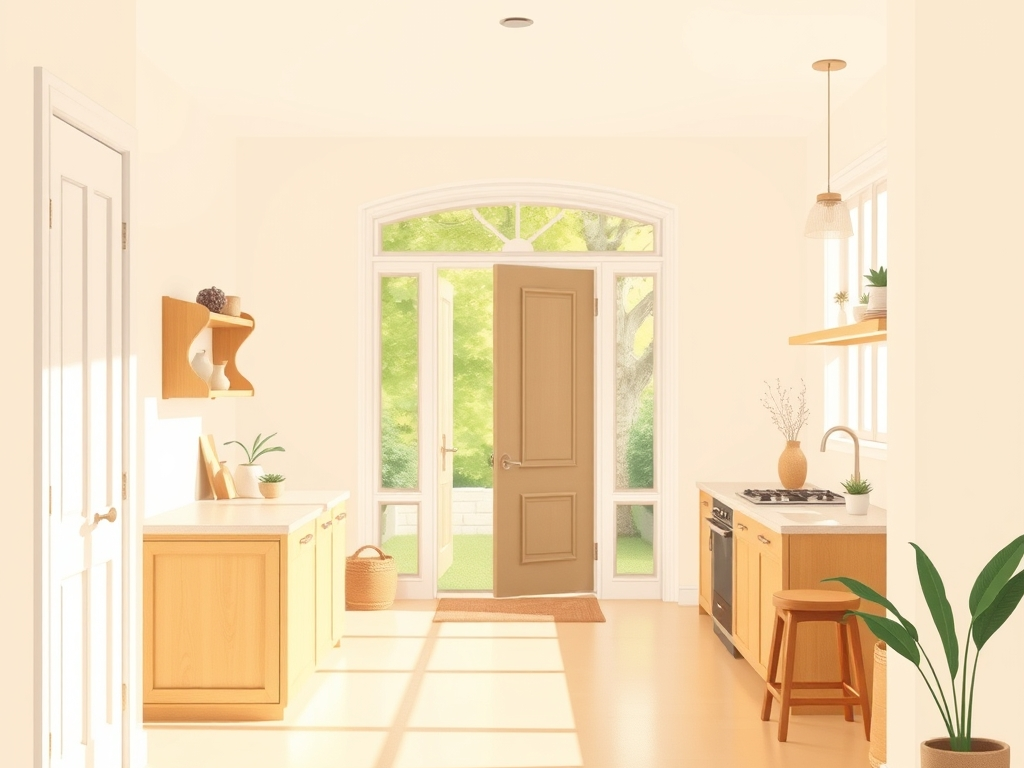
The bagua map is usually taught as a symbolic diagram, but its most practical use is much simpler: it is a checklist for walking through a room. Each area of the map corresponds to a slice of life, and walking the room with the map in hand shows you which slices are visible, supported, and calm, and which ones are hidden under clutter or ignored entirely. For the map itself, start with How the Bagua Map Applies to Your Home.
This article explains how to use the bagua as a working checklist, and how to keep the practice light enough to repeat.
Laying the Map Over a Room
To use the bagua as a checklist, overlay the map on the room from the entrance wall: the front row covers career, knowledge, and helpful people; the middle row covers family, center, and creativity; the back row covers wealth, fame, and relationships. You do not need a compass for a first pass; the entrance is the anchor, and the nine zones flow from it. For irregular layouts and rooms without a clear entrance, read How to Map the Bagua in an Irregular Layout.
The checklist works because it organizes observation. Instead of asking vaguely how the room feels, you ask nine concrete questions, and concrete questions produce usable answers.
What Each Zone Is Really Asking
Each zone asks a practical question about a slice of life. The career zone asks whether you can see your work path from this room. The wealth zone asks whether abundance is visible or buried. The relationships zone asks whether the room has a place for two people to be together. The knowledge zone asks whether there is a corner for learning. The fame zone asks what the room communicates about you. The family zone asks whether the room supports connection and repair.
The symbolic layer is thin; the practical layer is what carries the value. For the life areas behind the zones, read How the Bagua Relates to Different Areas of Life.
A Ten-Minute Room Checklist
Walk the room with a notebook and score each zone in one of three ways: clear, cluttered, or missing. Clear means the zone has visible purpose and space. Cluttered means it is crowded with objects that do not belong. Missing means the zone has no anchor at all, no light, no furniture, no life. The scores take ten minutes and produce a map of where the room's attention is spent, which is exactly the information feng shui adjustments need.
- Stand at the entrance and divide the room into nine rough zones.
- Score each zone clear, cluttered, or missing.
- Note which zones you never use.
- Pick one cluttered zone and one missing zone to work on.
- Set a date to recheck the room and compare scores.
The checklist turns a vague feeling of "something is off" into a named list, and naming is the first repair. For the evaluation method behind this, read How to Evaluate a Room Before Rearranging.
What to Do With the Scores
Work on one zone at a time, starting with the zone that is both cluttered and important to you. Clear the clutter first, because no placement works on top of a pile. Then give the zone one clear anchor: a lamp for the fame zone, a pair of chairs for relationships, a shelf for knowledge, a visible path for career. The adjustment is usually small, and the test is whether the zone feels different to walk through. For the element layer that supports these choices, read The Five Elements in Feng Shui Placement.
Do not try to fix all nine zones. A room with two well-kept zones feels more alive than a room with nine half-finished projects, and the bagua is a checklist, not a mandate to renovate.
Keeping the Checklist Honest
The bagua checklist drifts into superstition when the zones become demands: you must have a wealth corner, you must activate your fame area, your home must be balanced. In practice the map is descriptive first. It tells you where attention currently sits, and attention follows use, not symbols. A zone you never use is missing because your life does not use it, which may be fine; the checklist is for noticing, and only you decide what to change.
For that grounded frame, read Feng Shui Without Superstition and The Practice of Intention in Home Design.
Making It a Recurring Habit
The bagua checklist earns its place when it repeats. Once a season, walk the main room with the same nine questions and compare the scores with the last pass. The comparison shows which changes held and which zones drifted back, and that record is the actual practice. It is fast, cheap, and it keeps the home from slowly accumulating the clutter that makes rooms feel wrong. For the seasonal rhythm of home care, read Seasonal Adjustments in Home Energy.
Used this way, the bagua map is not a mystery to decode; it is a checklist you can finish in ten minutes, and finishing it is what changes the room.
The Missing Zone Question
Before you treat a missing zone as a problem, ask why it is missing. A zone with no anchor may reflect a life area you genuinely do not use, which is information rather than failure; or it may reflect a room that has quietly abandoned an area you care about without noticing. The distinction matters because it decides the fix: either leave the zone alone and spend your effort where the room actually supports you, or give it one clear anchor and see what changes. The checklist is for noticing, and the noticing includes what you choose not to change.
This is where the bagua becomes honest rather than prescriptive. A home is not a duty roster of nine life areas that all demand equal attention; it is a space that reflects how you actually live, and the map simply shows the reflection. Your judgment about which zones matter is the final authority, and the checklist works best when it serves that judgment.
FAQ
Do I need a compass to use the bagua?
No. For a practical checklist, the entrance anchors the map, and a compass adds precision only if you want the full directional layer.
Can I use the checklist in one room or does it need the whole home?
It works room by room, and starting with the room where you spend the most time is the sensible first step.
What if every zone scores cluttered?
Then start with the smallest zone and one clear item; the goal is a first repair, not a full transformation.
Does a missing zone mean something is wrong with my life?
No. It means that area of life is not visible in that room, and whether that matters is your judgment, not the map's.