A reading corner is one of the most forgiving rooms in the home to work with, because its needs are simple: a comfortable seat, good light, and a quiet boundary. The bagua map can tell you which area of the home the corner sits in, but the corner's own conditions matter more. Reading is a focused activity, and feng shui for a reading corner is really feng shui for attention. For the map that places the corner in your home, start with How the Bagua Map Applies to Your Home.
This article explains how to build a reading corner that actually supports reading, without turning a corner into a project.
The Three Needs: Seat, Light, and Quiet
Every reading corner needs a seat that supports the back, light that reaches the page without glare, and a quiet that is mostly a matter of arrangement. The seat should face into the room or toward a wall, not directly at a busy doorway. The light should come from behind or beside the book, not from straight ahead. The quiet comes from the corner's edges: a plant, a screen, or simply a consistent arrangement that marks the zone.
These three needs are practical before they are symbolic. A corner that physically supports reading will be used; one that does not will stay decorative. For the lighting side, read Feng Shui for Lighting and Airflow.
Where to Put the Corner
The best location for a reading corner is a place with a wall behind the seat, indirect light, and a view that does not demand attention. A window to the side is ideal; a window directly behind the seat is tiring. The corner should be out of the main foot traffic of the room, so that movement does not pull the reader's attention. If the only available corner faces a doorway, a low screen or tall plant can soften the line.
If you use the bagua map, note which area the corner falls in and let it colour your choices without controlling them. A reading corner in the knowledge or wisdom area is a natural fit, but a corner in any area can be a reading corner if it meets the three needs. For the areas, see How the Bagua Relates to Different Areas of Life.
Balance for a Focused Mind
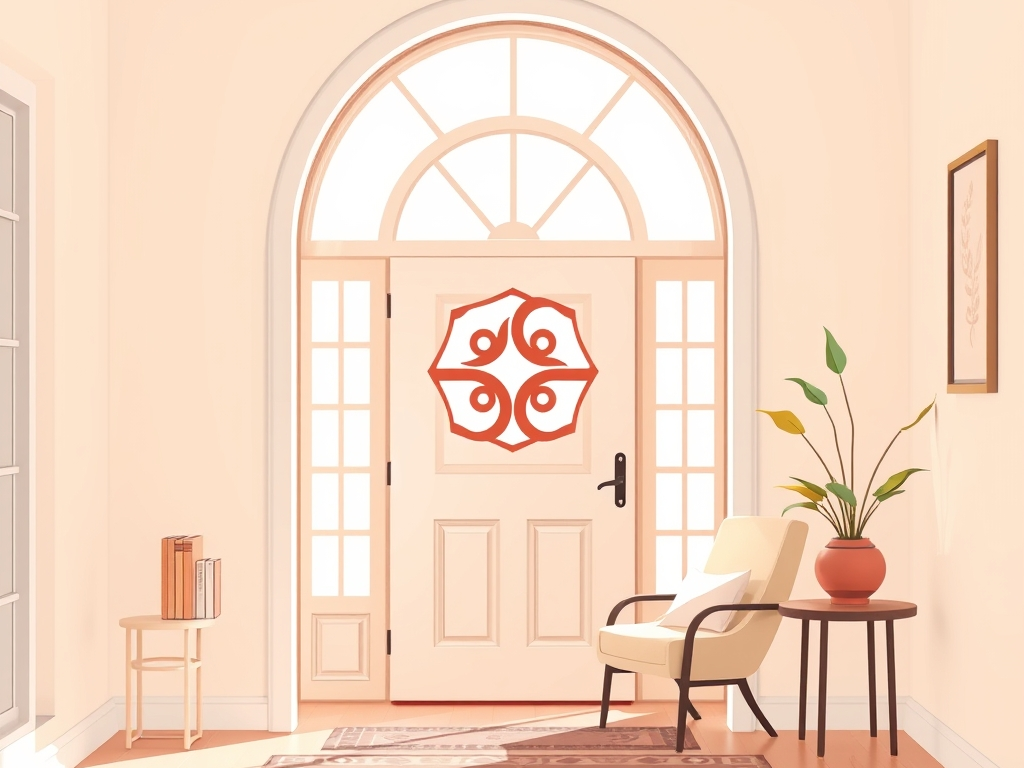
Reading wants a balance that is neither empty nor busy. Too little in the corner, and the space feels bare; too much, and the eye has nowhere to rest. One or two supporting objects are enough: a small table for a cup of tea, a lamp, a plant, and the books themselves. The books are the corner's natural decoration, and they carry its meaning better than any added object.
Keep the colours calm: the muted tones of wood, paper, and a single accent. The purpose is a field that lets attention settle on the page. For the element balance behind this, read The Five Elements in Feng Shui Placement.
A Reading Corner Checklist
- Place the seat with a wall behind it and the room's entrance in view.
- Set the light beside or behind the reading position, without glare.
- Keep the corner out of the main traffic path.
- Limit objects to the useful and the meaningful.
- Leave the corner ready to use, not arranged as a display.
The checklist is short because the corner is short: a small space with a clear job. Leave it ready, and it will be used. For the evaluation habit behind this, read How to Evaluate a Room Before Rearranging.
What to Avoid
Three common mistakes turn a reading corner into decoration. Facing the seat directly at a television or doorway pulls attention from the page. Overfilling the corner with candles, figurines, and quotes makes the eye wander before the reading starts. And placing the light straight overhead creates glare on glossy pages. Each mistake is easy to fix, and fixing them does more than any remedy.
A reading corner is also not a storage corner. If papers and boxes drift in, the corner stops being a place for reading. Keep the boundary, and the room will remember what the corner is for. For keeping a small space clear, read Feng Shui for Small Spaces.
Making It a Habit
The corner only matters if it is used, and use is a habit. Keep the seat comfortable, the lamp on, and the table clear, so that sitting down costs nothing. After a week of daily use, the corner will feel like part of the room, and after a season, it will be the place your attention knows to go. For the habit of small rituals, read The Value of Small Daily Rituals.
Review the corner with the seasons: change the light as the days shorten, move the seat if the sun shifts, and clear the table when the pile grows. The review is what keeps the corner alive.
The corner also works in relation to the rest of the room, not in isolation. If the corner sits next to a busy area, the boundary needs to be a little stronger, with a screen or a plant; if it sits in a naturally quiet part of the room, a simple rug may be enough. The relationship changes with the season too, as the sun moves and the room's light shifts. Checking the corner twice a year, at the change of light, keeps the arrangement honest. A reading corner that adapts to the room and the season stays a place of rest instead of slowly becoming decoration.
FAQ
Can a reading corner work in a small apartment?
Yes. A single armchair with a lamp and a side table is enough; the corner's size matters less than its conditions.
Which direction should the seat face?
Face into the room or toward a wall, with the entrance visible; avoid facing directly at doors, windows behind, or screens.
How many objects belong in a reading corner?
Enough to be useful and no more: a seat, light, table, plant, and the books themselves usually cover it.
Does the bagua area of the corner matter?
It adds a layer of meaning, but the practical conditions of seat, light, and quiet matter more.