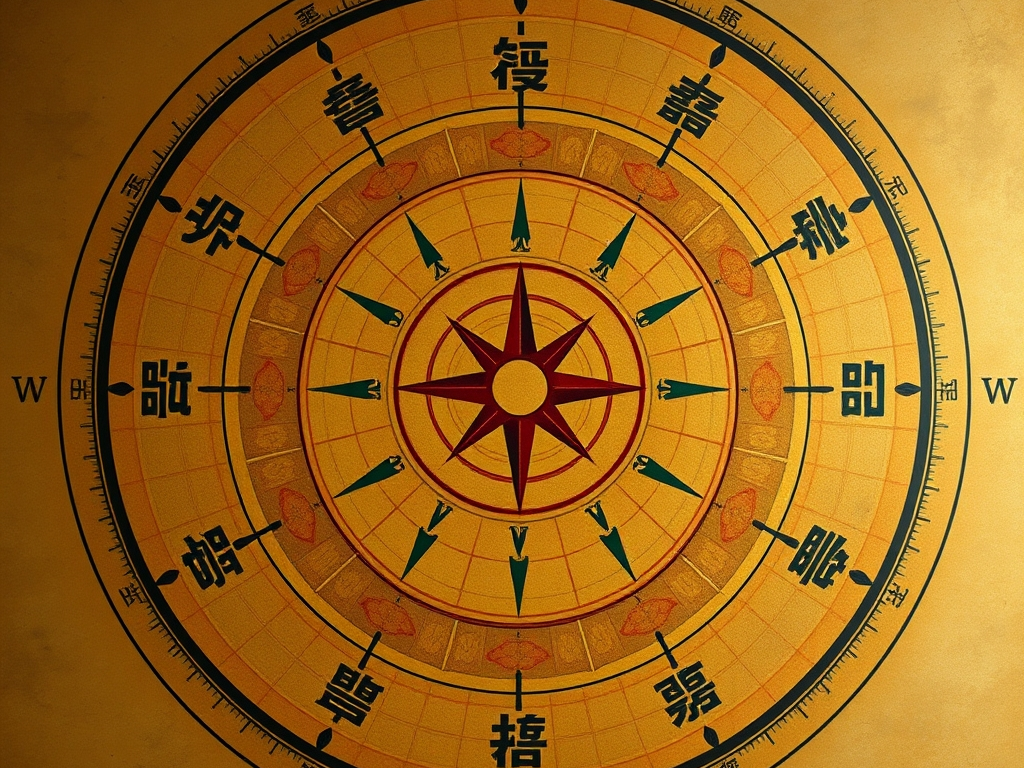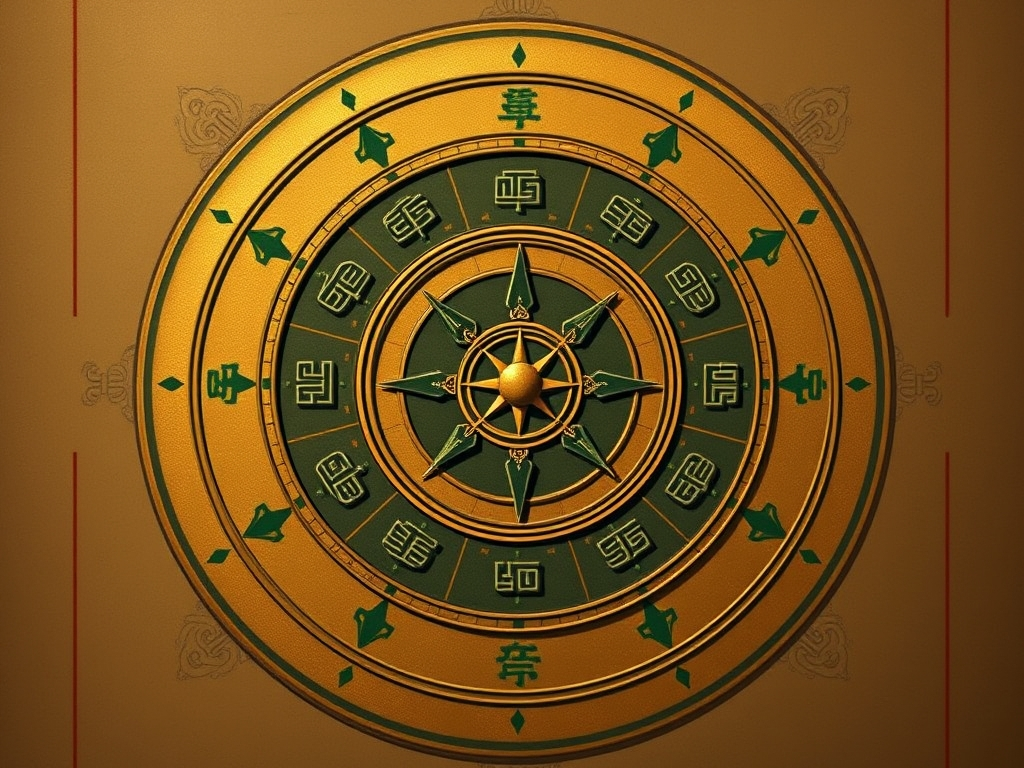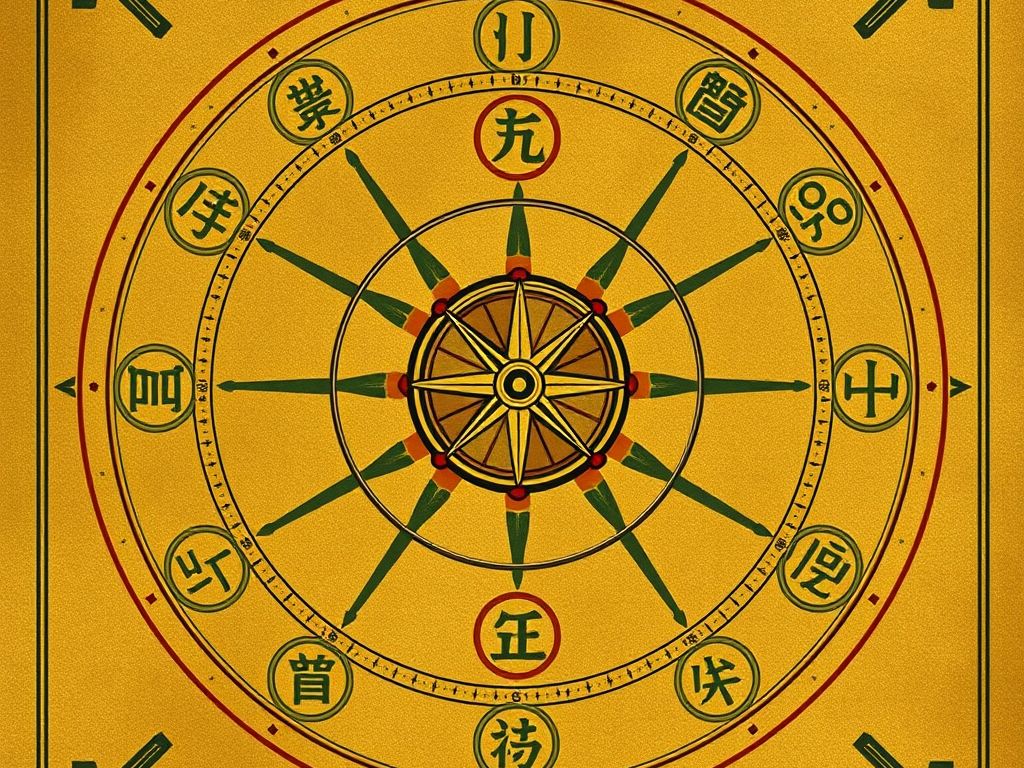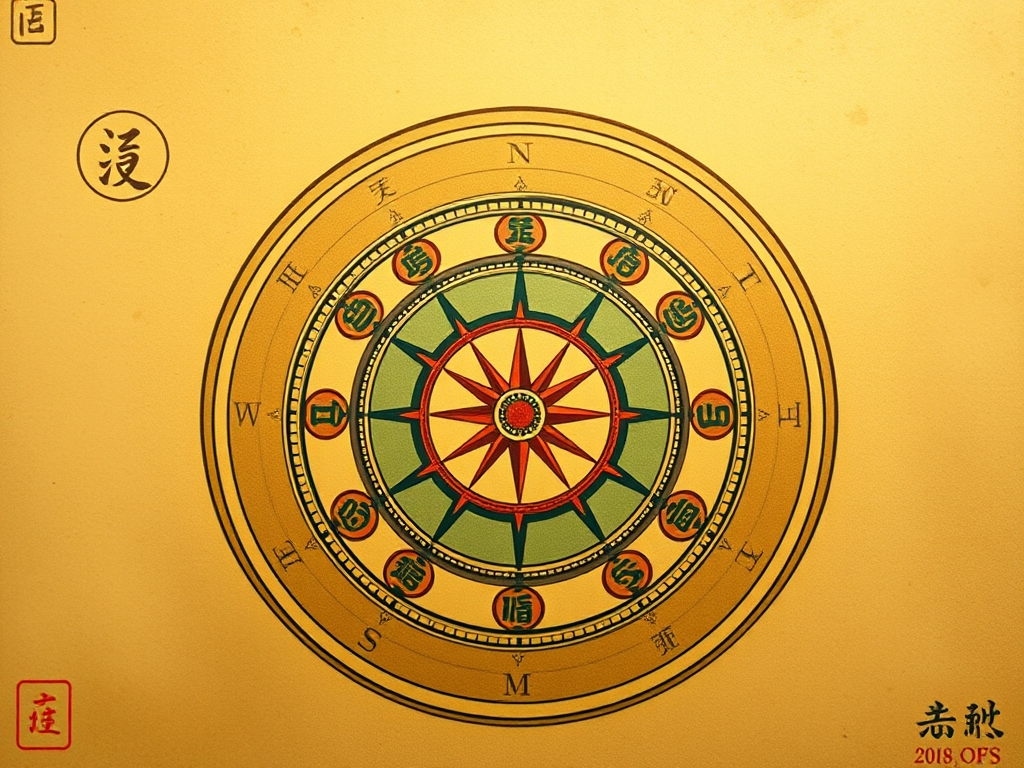
Most Qimen charts are drawn as a three-by-three grid of nine palaces, and beginners usually read the eight outer palaces while treating the center as an empty box. In the classical layout, however, the center palace is the pivot of the whole chart. It holds the Earth element and the time pillar that anchor the reading, and its position determines how the eight palaces are arranged around it.
Understanding the center changes how you see the chart. Instead of a flat grid, you begin to see a wheel with a hub, and the hub gives every other palace its place. That orientation is the difference between memorizing a layout and actually reading one.
What the Center Holds
In the standard school of Qimen, the center palace carries the Earth element, which is considered the balance point of the annual and daily cycles. It also holds the time pillar associated with the center, and some schools treat it as the place where the current moment concentrates before distributing energy to the surrounding palaces.
Because the center is the hub, the doors, stars, and gods of the outer palaces are arranged relative to it. A door that sits due east in the chart is east of the center, and that orientation carries directional meaning when the chart is applied to a question about movement or placement. For the layout basics, read The Nine Palaces in Qimen Explained and How a Qimen Chart Works.
Why the Center Is Easy to Skip
Most online charts display the center with little more than a time label, which makes it look decorative. The center rarely contains a door or star in the standard layout, so beginners naturally focus on the outer palaces where the action appears. The problem is that skipping the center means skipping the reference point, and without the reference point, directions and relationships between palaces become arbitrary.
The center also matters when a reading asks about balance. A question about a team, a household, or a partnership often returns to the hub, because the center represents the shared middle ground where the parties meet. Reading it carefully turns a grid into a situation with a center of gravity. For related questions about structure, see Qimen for Everyday Decision-Making.
How to Read the Center in Practice
Use the center as an orientation step rather than a mystery to decode:
- Locate the center and note its time pillar and Earth element.
- Check which direction each relevant palace sits relative to the center.
- Ask whether the question concerns the whole system or one palace.
- For group questions, read the center as the shared middle ground.
- Compare the center with the strongest palace to see the tension of the chart.
This process takes two minutes and makes the rest of the reading clearer. When you practice, keep notes and compare them over time with How to Keep a Qimen Study Journal.
Common Mistakes with the Center
The most common mistake is ignoring the center entirely and treating the chart as eight unrelated boxes. The second is assuming the center always represents the querent; it represents the hub of the chart, which may or may not correspond to the person depending on the question and the school. The third mistake is inventing doors or stars in the center where the layout places none; the center is read through the time pillar and the balance of the surrounding palaces, not through symbols that are not there.
A related error is treating the center as neutral. The hub is never neutral in effect; it is the anchor that makes every direction meaningful. Recognizing the anchor lets you see why two charts with similar outer symbols can orient differently. For more on how the layers fit together, read What Is Qimen Dunjia? and browse the Qimen library.
A Worked Orientation Example
Consider a question about choosing a direction for a move. The chart places the strongest support in the southwest palace, and the center anchors that palace as southwest of the hub. The reading says the southwest direction carries the most supportive emphasis for the question at this moment, so the practical step is to evaluate southwest options with that emphasis in mind, while still checking commute, cost, and other facts.
The center never appears in the advice itself, yet without it the southwest label would be meaningless. That is the quiet work of the hub: it organizes the chart so that every other symbol can be located and applied. For more on applying directions, read Favorable Directions in Qimen.
A Practical Center Exercise
To make the center tangible, draw any nine-palace chart on paper and label the center first. Before reading the outer palaces, write one sentence about the current time pillar and the Earth element it carries. Then ask how the strongest palace relates to the center: is it close, far, aligned with the question, or opposed? That single question changes how you see the whole grid, because it connects every outer symbol to a shared reference point.
Repeat the exercise on three charts with different questions. Most learners find that the center stops being an empty box once they use it as the pivot for orientation. The habit takes five minutes per chart, and it is one of the cheapest ways to deepen a reading.
FAQ
Does the center palace ever contain a door or star?
In the standard layout it usually does not; it anchors the chart through the time pillar and the balance of the surrounding palaces.
Is the center the same as the querent?
Not automatically. It is the hub of the chart; how it maps to the person depends on the question and the school.
Why does the center matter if it has no symbols?
Because it provides orientation. Directions and relationships between palaces only make sense relative to the hub.
Should beginners study the center first?
Learn the outer palaces first, then add the center as the reference point once the layout feels familiar.