Qimen Dunjia is a traditional Chinese system for examining timing, direction, circumstances, and possible courses of action. A chart does not hand you a guaranteed future. It gives you a structured symbolic map that can help you ask better questions: What has momentum? Where is the resistance? Which option fits the moment? What practical preparation is still missing? For a beginner, the most useful approach is to treat Qimen as a framework for strategic reflection rather than as a substitute for evidence or personal judgment.
What the Name Points To
The name Qimen Dunjia is written with Chinese characters that carry layers of meaning, so English translations vary. Qimen is often explained through ideas such as "mysterious gates," "special doors," or unusual strategic openings. Dunjia is commonly associated with concealing or protecting Jia, the first of the Ten Heavenly Stems used in the traditional calendar. These explanations are helpful orientation, but no short English phrase captures every technical and cultural association.
What matters at the beginning is the practical idea behind the name: important factors may be visible, hidden, open, blocked, supported, or poorly placed at a particular time. A Qimen chart organizes those factors so a reader can compare them. The name should not be taken as proof that the method reveals secret facts with supernatural certainty. It points to a symbolic language that developed around strategy, timing, and divinatory inquiry.
The Basic Shape of a Qimen Chart
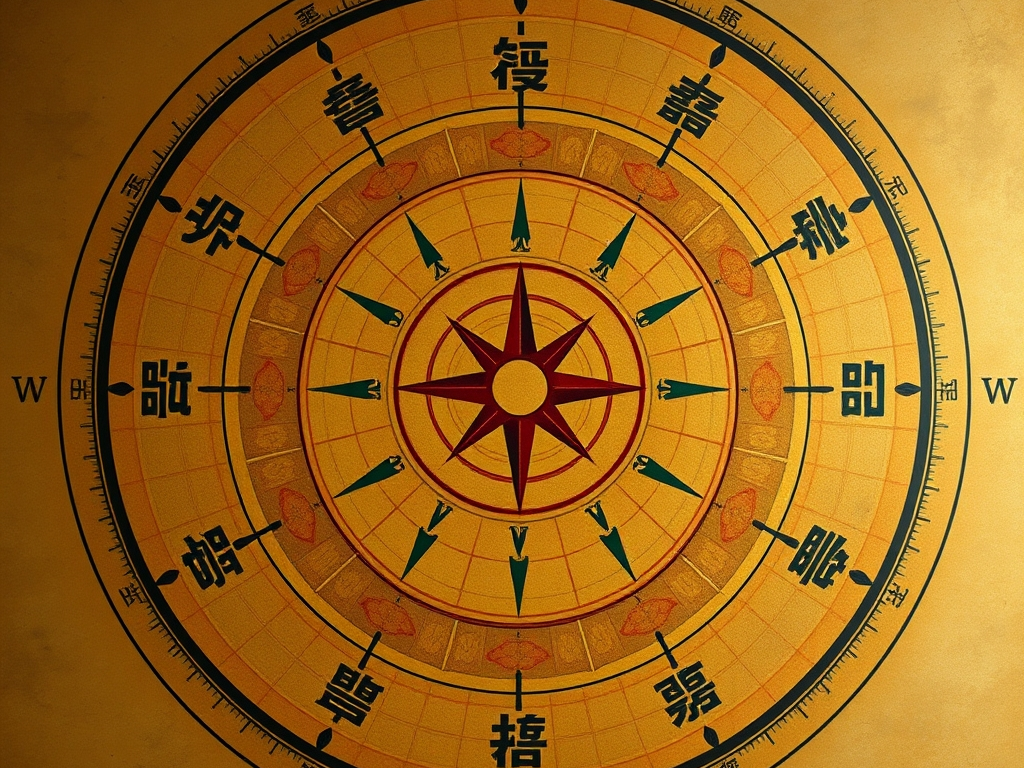
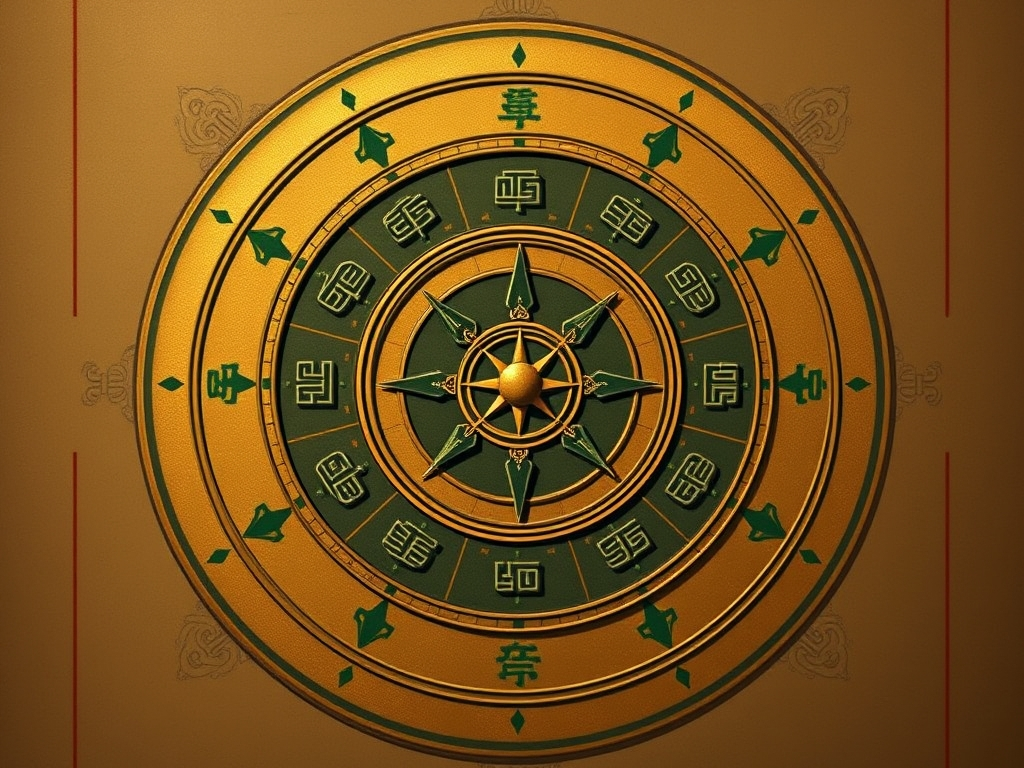
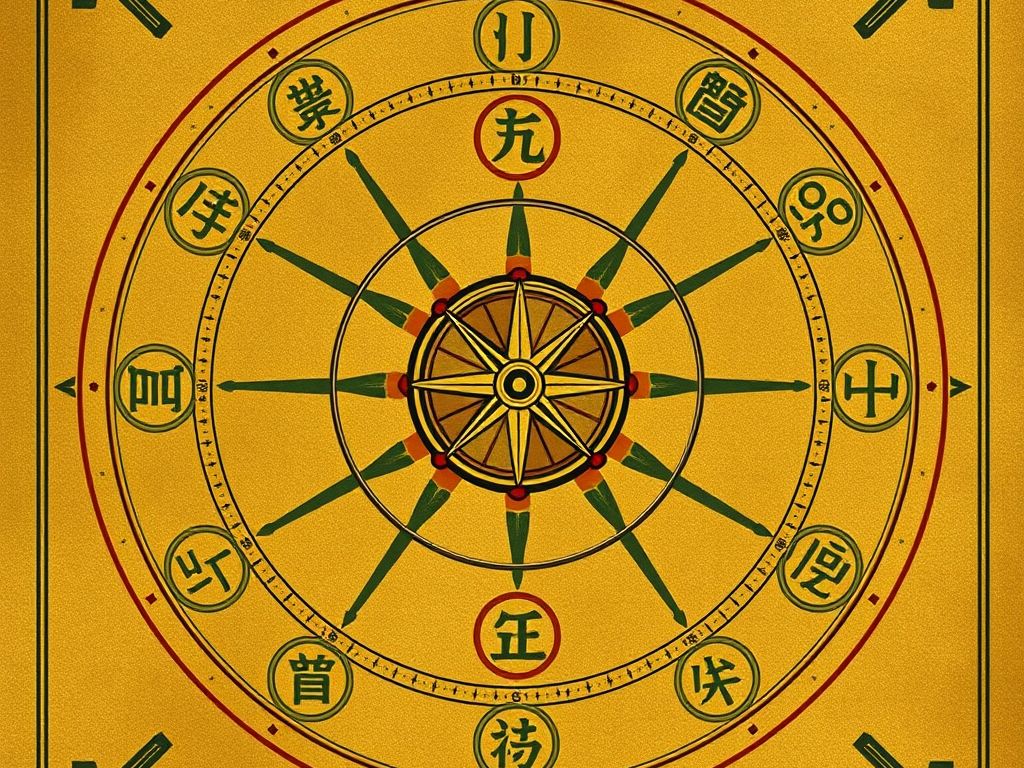
A chart is a symbolic map calculated for a specific date and time. Most chart layouts use a three-by-three grid called the Nine Palaces. Eight outer palaces correspond to directions, while the center palace occupies the middle. Each palace acts like a container where several symbolic layers meet.
Among the most visible layers are the Doors, Stars, and Deities. Doors describe modes of access, activity, response, or process. Stars add qualities associated with capability, conditions, or patterns of expression. Deities are another symbolic layer, often used to describe the tone, atmosphere, or manner in which a situation unfolds. The chart also includes calendar-related markers and stems. Different teaching traditions may emphasize or arrange details somewhat differently.
No single symbol should be treated as a verdict. A door with an intimidating English name does not automatically predict harm, and a pleasant-sounding symbol does not guarantee success. A reader considers which palace contains a symbol, what question is being asked, how the layers relate, and whether the interpretation makes sense in the real situation.
Timing and Direction in Plain English
Qimen assumes that a situation can look different at different moments. A conversation attempted when everyone is rushed may have a different quality from the same conversation held after preparation and rest. The chart belongs to the chosen moment, so timing is not an optional decoration. It establishes the symbolic conditions being interpreted.
Direction adds a spatial dimension. A palace may represent north, south, east, west, or an intermediate direction. In some uses, a direction is connected with movement or travel. In others, it helps locate people, options, actions, or relationships inside the chart. This does not mean a person should blindly walk or drive in a direction because one symbol looked favorable. Distance, safety, cost, purpose, and feasibility remain ordinary requirements.
The Nine Palaces, Doors, Stars, Deities, timing markers, and directional positions work as a system. Beginners often become confused when they memorize a list of keywords but do not learn how the layers qualify one another. A chart is closer to a sentence than a collection of isolated words: placement and relationship create meaning.
A Grounded Beginner Example
Imagine that Maya is deciding whether to ask for a project review today or wait until next week. She already knows the factual situation: her draft is mostly complete, her manager has limited availability, and two data points still need confirmation. A Qimen reading might be used to compare the symbolic picture for speaking now with the picture for waiting.
If the current chart suggests quick access but weak preparation, Maya could use that as a prompt rather than a command. She might ask for a short scheduling conversation now while reserving the full review for after the data is checked. If a later moment appears calmer but less direct, she might prepare a concise written summary so the opportunity is not lost. The chart has not predicted her manager's decision. It has helped her notice the difference between access, readiness, and timing.
This is a responsible use because the symbolic reading stays connected to observable facts. Maya still checks the data, respects her manager's schedule, and owns the decision. The chart expands her questions; it does not remove her agency.
What Qimen Can and Cannot Do
Qimen can offer a disciplined way to compare options, identify assumptions, and consider timing or direction that you might otherwise ignore. It can support journaling, planning, conversation preparation, and scenario thinking. Studied carefully, it can also introduce a rich traditional vocabulary for understanding change and strategy.
It cannot guarantee an outcome, prove what another person secretly thinks, or eliminate uncertainty. It cannot replace medical care, legal advice, financial analysis, safety planning, contracts, market research, or direct communication. A chart is not permission to disregard consent, ethics, or evidence. When a decision has serious consequences, qualified professional advice and reliable information come first.
Beginners should also expect a learning curve. Translation choices differ, calculation methods can be complex, and schools may apply rules in different orders. It is reasonable to start with the overall structure before trying to master every technical detail. Record the question, chart time, initial interpretation, decision, and later result. That practice makes it easier to distinguish useful reflection from hindsight or confirmation bias.
FAQ
Is Qimen Dunjia a religion?
Qimen Dunjia is generally studied as a traditional metaphysical, calendrical, divinatory, and strategic system rather than as a religion. People may place it within different personal philosophies, but learning a chart does not require adopting a religious belief.
Do I need to read Chinese to begin?
No. Clear English materials can teach the chart structure and core vocabulary. Learning the Chinese names later can add nuance and help you compare translations, but it is not a prerequisite for understanding the basic method.
Can one good symbol answer my whole question?
No. Symbols are interpreted in context, alongside the palace, other layers, the specific question, and real-world conditions. Isolated-symbol reading is one of the most common beginner errors.
How accurate is a Qimen reading?
There is no responsible basis for promising a fixed accuracy rate or guaranteed prediction. The quality of a reading depends on the question, calculation, interpretive method, and the reader's discipline. It is better evaluated as structured decision support than as certainty.
Where to Go Next
Begin by learning the chart as a whole before memorizing long keyword lists. The next useful step is How a Qimen Dunjia Chart Works, which explains how the layers are read together. You can also visit the Qimen Dunjia overview or browse the complete Qimen article collection. Keep one modest question in view, compare symbolism with facts, and let careful observation build your understanding over time.