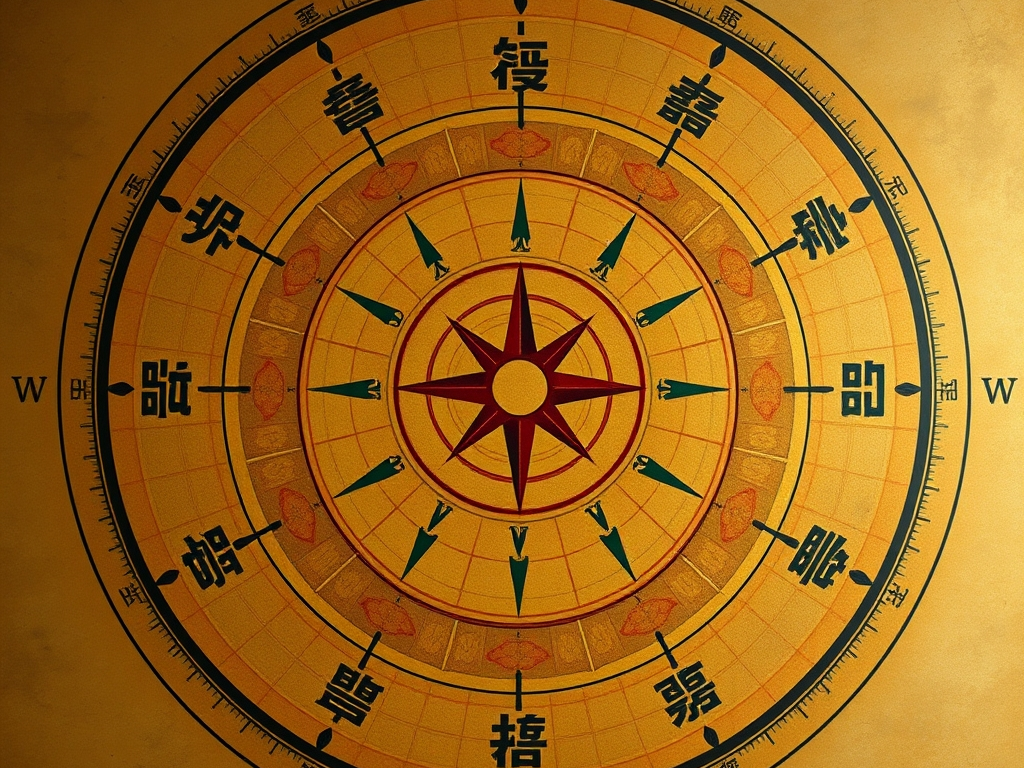
In Qimen Dunjia, the hour is not a detail; it is the engine of the chart. While the day provides the overall framework, the hour determines which symbols appear, where they sit, and how they interact. Two charts drawn on the same day at different hours can describe completely different conditions, which is why serious Qimen questions always carry a specific moment.
This hour-dependence is what makes Qimen a timing system rather than a static map. The practitioner reads the situation as it stands in this hour, not as it stands in general. That precision is both the strength of the method and the source of its discipline: if the question is vague about time, the answer will be vague about everything else.
How the Hour Builds the Chart
The construction starts with the year, month, day, and hour pillars, and the hour pillar is used to determine the chart's overall arrangement. The hour's position decides which palace is the starting point, and from that point the doors, stars, and deities are distributed across the nine palaces. Change the hour, and the whole distribution changes.
Readers therefore treat the hour pillar as the first thing to verify. If the birth or question time is uncertain by even one double-hour, the chart may need to be rebuilt. For the mechanics of the construction, read How a Qimen Chart Is Calculated and the overview in The Nine Palaces in Qimen.
The Hour as a Description of Now
Because the hour changes every two hours, a Qimen chart is a snapshot of the present. A question about a meeting at 3 p.m. is read from the chart of that hour, not the chart of the morning. This is why practitioners ask not only what you want to know but exactly when the matter is happening or when you intend to act. The answer is calibrated to that moment.
The hour also colors the tone of the reading. Some hours produce charts where movement is favored; others produce charts where waiting is wiser. The same question asked at a different hour can receive a different emphasis, and that is the system working as designed. For the meaning of those differences, read Qimen Time and Direction.
A Checklist for Choosing a Question Hour
If you are preparing a Qimen question, use this checklist to pin down the time:
- State the real moment of the matter: when the meeting, launch, or decision happens.
- If the action is still being planned, name the candidate hours you are considering.
- Convert the local clock time to the correct double-hour before building the chart.
- Avoid "sometime this week" questions; they have no hour to anchor the grid.
- Record the hour with the question so the reading can be checked later.
The last point matters for learning: a chart with a recorded hour can be compared against what actually happened. For practice methods, read Qimen Time and Direction.
Common Misconceptions About the Hour
The first misconception is that the hour of your birth determines everything in a Qimen reading. Birth data matters for personal charts, but for a situational question the relevant hour is the hour of the matter itself. The second misconception is that one hour is universally lucky or unlucky. The same hour supports some charts and presses on others, depending on the question and the arrangement.
The third misconception is that the hour predicts the outcome. It describes the condition of the moment, including which doors are open and which are closed. Acting on that description is still your choice. For the ethical boundaries of the method, read Qimen and Ethical Decision-Making.
Hour Readings in Practice
In daily life, the hour reading appears in small decisions as much as large ones. A person may ask whether this afternoon is better than tomorrow morning for an important conversation, and the two hour charts will describe different conditions. One may show a door that favors open communication, while the other shows a quieter arrangement that favors listening. The reading helps schedule the conversation, not script it.
This scheduling function is the most practical gift of the hour. It turns timing from a vague feeling into something you can check and plan around. For more on using charts in everyday choices, read Qimen for Daily Decision-Making and Qimen for Choosing Between Job Offers.
A Worked Example
A person plans to ask for a raise and considers two times: Thursday at 10 a.m. and Friday at 3 p.m. The Thursday chart places a door of open communication in the palace of the request, while Friday's chart places a quieter door there. The reading suggests Thursday favors clear, direct discussion, while Friday might turn into a listening session. The person schedules the conversation for Thursday, with Friday as a fallback if the manager is unavailable.
The example shows the hour at work: it did not promise a raise, it described which moment better matched the kind of conversation needed. For more articles on reading the grid, browse the Qimen library or start with What Is Qimen Dunjia?.
Recording the Hour With the Question
A small habit improves every hour reading: write the double-hour down next to the question and the answer. The record makes the reading testable later, because you can return to the chart after the event and compare what the symbols suggested with what actually happened. Without the record, the chart becomes an impression; with it, the chart becomes evidence.
The record also builds a personal library of hour readings, and that library is the fastest way to learn the system. After a dozen recorded questions, most people notice which kinds of hours produced charts that matched reality and which produced noise. That calibration is worth more than any textbook explanation of the hour pillar.
FAQ
Why does the hour matter more in Qimen than in BaZi?
Because the hour drives the arrangement of the Qimen grid, while in BaZi the hour is one of four pillars.
Can I ask a Qimen question without a specific time?
You can, but the chart will lack its anchor, and the reading will be correspondingly less precise.
How long does an hour chart stay valid?
Each double-hour chart stands for that two-hour window; after that, a new chart applies.
Does the hour guarantee the outcome of a meeting?
No. It describes the conditions of the moment; preparation and skill still determine the result.