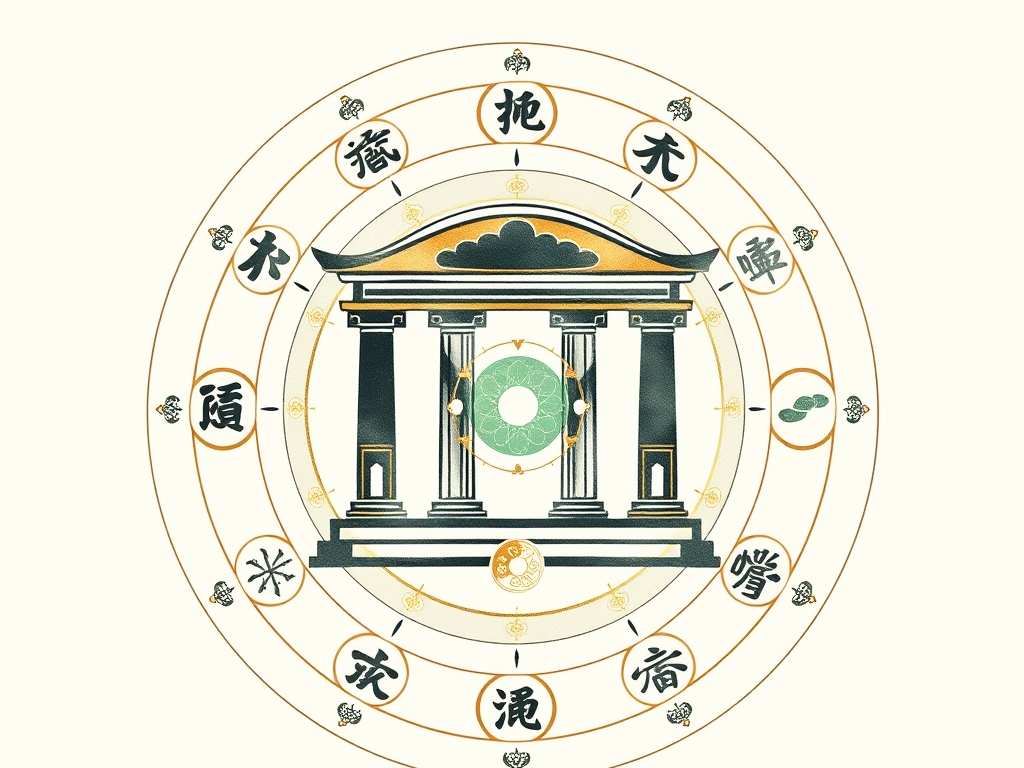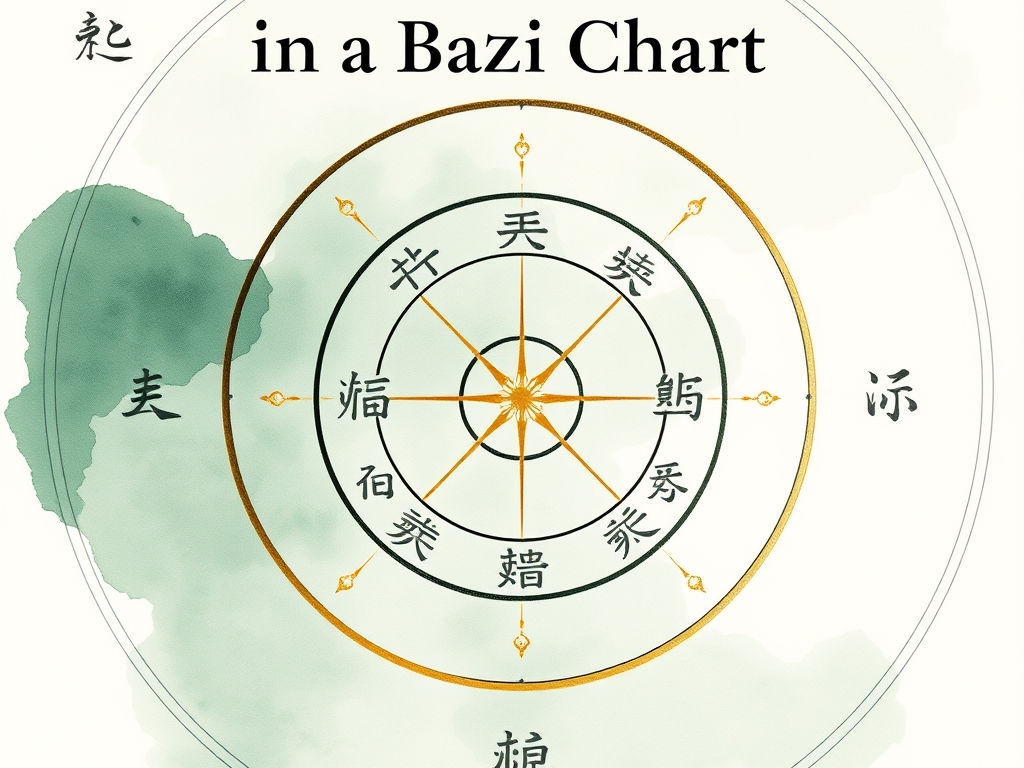
The five elements appear twice in a BaZi practice. They appear inside the chart, as the wood, fire, earth, metal, and water carried by the stems and branches of your birth pillars. They also appear outside the chart, in the rooms you occupy, the seasons you move through, and the work you do. Beginners often treat these two appearances as unrelated, but the tradition connects them: the chart describes your baseline conditions, and the environment is where those conditions meet daily life. For the core framework, start with The Five Elements Explained for Beginners.
This article explains how to read the elements in a chart, how to notice them in an environment, and how to work with both layers in a calm, practical way.
The Elements as Shown in the Chart
Every BaZi chart contains eight characters: two for each pillar of year, month, day, and hour. Each character carries an element, and the branches may hide additional stems inside them. The first thing to count, therefore, is simply how many times each element appears. A chart with strong fire and little water tells a different story from one where water is everywhere. These counts are facts of the chart, not judgments about you.
The month pillar matters most for the season. Someone born in summer has a chart shaped by fire and its needs, while a winter birth is shaped by water. The day master, the stem of the day pillar, is the reference point for everything else: each other element is read as support, output, wealth, authority, or companionship relative to it. If you have never labeled your own chart, generate one with the BaZi calculator and then read Understanding Your Day Master Element.
The Elements as Shown in the Environment
Outside the chart, the same five elements show up in plain view. Wood appears as plants, shelves, and vertical shapes; fire as light, color, and activity; earth as heavy furniture and stillness; metal as tools, frames, and precise objects; water as movement, sound, and open space. The tradition reads these as qualities, not as magical substances. A room with hard edges and bright light carries a different feel from a room with soft fabric and low lamps, and the difference is describable in element language.
You do not need to redecorate to use this layer. The first step is observation: walk through a room and name what is dominant, what is missing, and what feels excessive. Most people can do this in a few minutes once they know the five categories. For the home-focused side of the same vocabulary, see The Five Elements in Feng Shui Placement.
How the Two Layers Interact
The chart and the environment interact through support and strain. If your chart is heavy in fire and your work environment is hot, fast, and visually intense, the two layers reinforce each other. That can be energizing for a while and exhausting over a longer stretch. If your chart lacks water and your home has almost no movement or quiet, the missing element is absent in both layers at once. The practical move is to notice where the environment adds to the chart's pressure and where it offers relief.
This is the part of BaZi that is genuinely testable. Change one thing for a month, such as adding a calmer corner with soft light or removing a source of constant noise, and observe your energy honestly. The elements are hypotheses about conditions, and your life is the experiment. For the relationship cycles that explain why one element supports another, read The Cycle of Creation and Control.
A Checklist for Working with Both Layers
Try this sequence when you want to connect your chart to your surroundings:
- List the element counts in your chart and name your day master.
- Identify the element the chart most needs for balance, if any.
- Walk through your home or workspace and name the dominant element in each room.
- Note one place where the environment adds strain to the chart's pressure.
- Choose one small, reversible change and test it for a month.
- Record what changed in your energy, sleep, or focus, and keep or remove the change.
The checklist works because it keeps the practice observational. You are not installing a remedy because a reader commanded it; you are testing a condition you can actually feel. For more on tracking patterns over time, read Using BaZi for Life Planning Without Superstition.
Common Mistakes to Avoid
Three mistakes appear constantly. The first is treating element counts as a verdict: a missing element is a gap in the toolkit, not a defect in the person. The second is assuming the environment should mirror the chart, when the more useful goal is usually to balance it. The third is chasing endless remedies, buying objects and colors until the practice becomes shopping. A small set of tested changes beats a crowded altar of unverified ones.
Keep the language humble. When you say "this room is very fire," you are describing brightness, heat, and activity, not casting a spell. The tradition is richest when it stays close to what can be observed. For the honest limits of element language, read What a BaZi Chart Can and Cannot Tell You.
A Simple Way to Start
If the full method feels like too much, begin with the smallest version that still counts as practice. Generate your chart and write the element counts on one line. Walk through the room where you spend the most waking hours and write the dominant element on the next line. Then choose one change that addresses the gap between the two, such as adding a source of calm to a room that is all activity. Test it for a month, and keep or remove it by how you feel. That single loop is the whole method in miniature, and it is enough to build on.
FAQ
Do I need to change my home to match my chart?
No. Balance is a useful guide, not a rule, and small reversible changes are enough to test any claim.
What if my environment is fixed, like a rented room?
You can still adjust light, sound, arrangement, and your own routines, which often matter more than objects.
How do I know which element my chart needs?
Read the chart's counts and season, then look for the element that is weakest or most absent; a careful reader or beginner guide can confirm the method.
Can environment changes really affect a chart?
The chart stays fixed; the environment changes the conditions the chart describes. That is why the practical layer is worth testing.