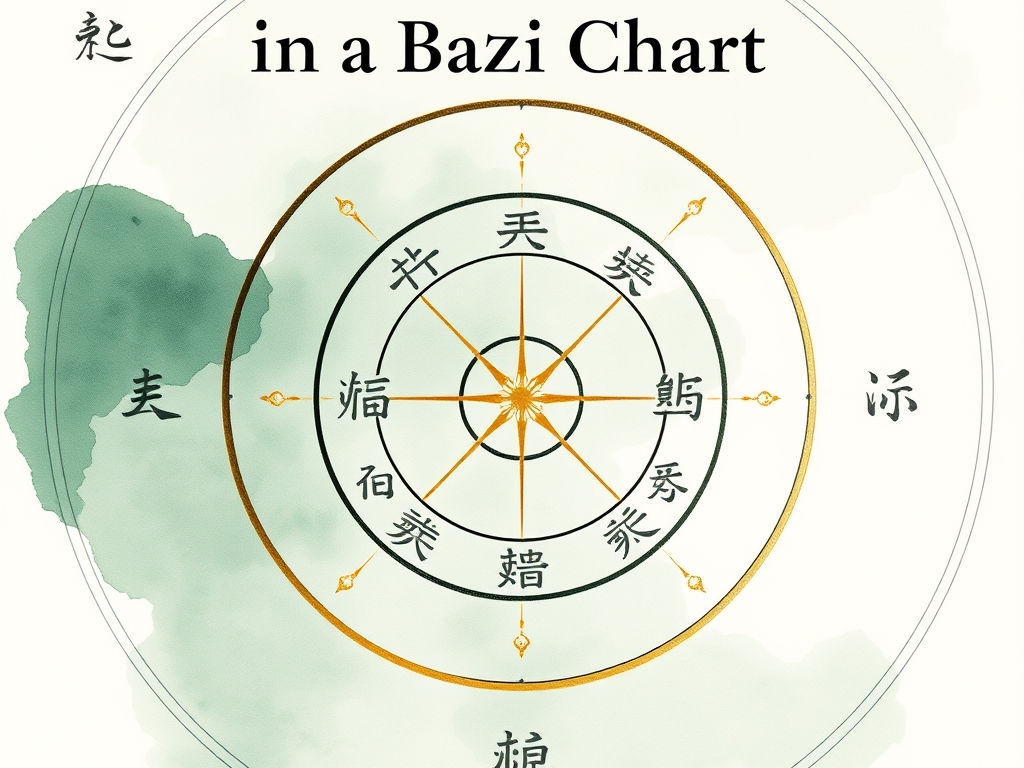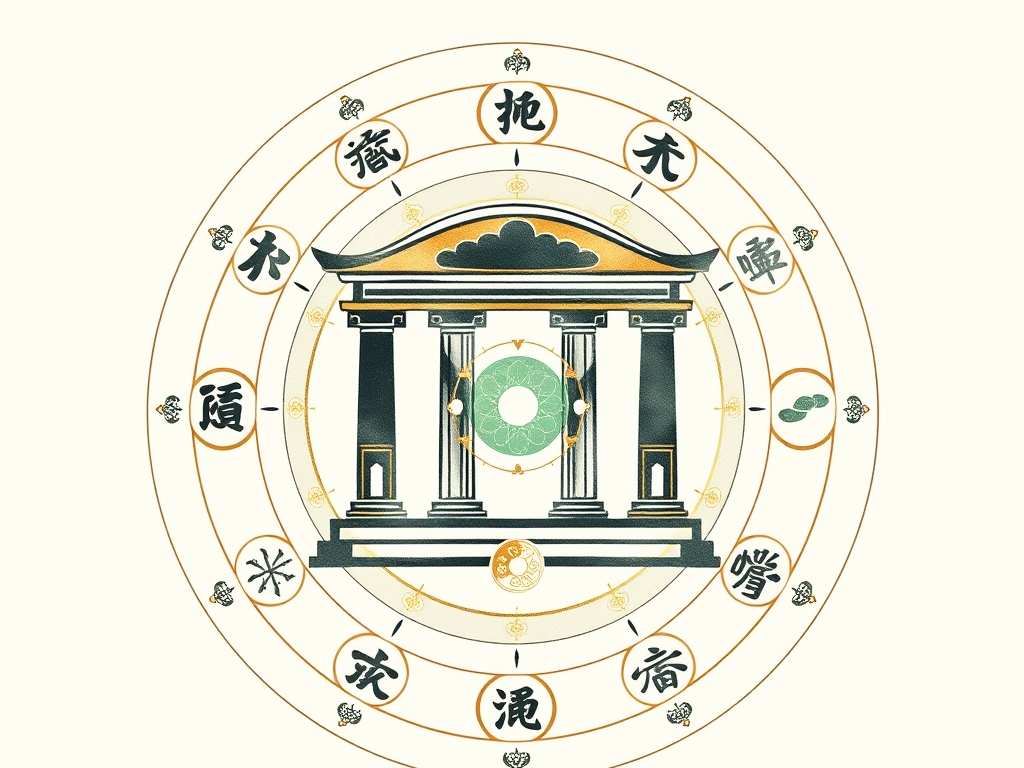
BaZi readers sometimes speak of an element as if it has a biography. It is born, grows, matures, prospers, weakens, and eventually stores itself away, only to begin again. This cycle of twelve life stages, traditionally called the twelve growth stages, describes how a stem moves through the branches of a chart, and it gives readers a language for timing that the five elements alone do not provide. A day master in its prosperous stage behaves differently from one in its storage stage, even when the element is the same. If you are still building the basics, start with Understanding Your Day Master Element.
This article explains what the twelve stages are, why readers use them as a rhythm rather than a verdict, and how you can apply the idea to planning without turning it into fortune-telling.
The Twelve Stages in Brief
The traditional cycle names twelve positions: birth, bathing, wearing, prosperity, decline, sickness, death, storage, embryo, nurture, and growth, with slight naming differences between schools. Each element travels through the branches in its own order, so a Wood stem does not peak in the same branch as a Metal stem. The stages describe how much of the element's nature is available: young and developing, fully expressed, or gathered and waiting.
Readers rarely memorise the table to predict events. They use it to answer a quieter question: is this element in season, out of season, building, or resting? For the broader balance of elements in a chart, read Five Elements Balance in a Birth Chart.
Prosperity Is a Position, Not a Prize
When a day master sits in its prosperous stage, it has plenty of the element's energy available. That sounds like an advantage, and in some ways it is: such people often have strong stamina for the qualities of their element. But a day master at full strength can also be rigid, hard to redirect, and slow to ask for help, because it rarely feels the need. Readers therefore read prosperity as a resource and a management task, not as a score.
The same logic applies to weaker stages. A day master in a storage or embryo position may have less visible drive, but it often excels at listening, planning, and waiting for the right moment. For how the day master is identified and read, see Understanding Your Day Master Element, and keep the comparison descriptive rather than judgemental.
How to Find the Stage of Your Day Master
You can begin with the BaZi calculator, which shows your stems and branches. The full twelve-stage reading requires a reference table that maps each stem to the twelve branches, because the cycle is element-specific. You do not need to calculate it by hand on the first pass; you need to understand what the table is describing.
- Look at the branch beneath your day stem, where the self-stage is strongest.
- Check the month branch, which acts as the season that supports or weakens the element.
- Notice whether the branch holds a stage of growth, prosperity, or storage.
- Ask how the rest of the chart feeds or drains that position.
- Compare the stage with your real energy: are you building, expressing, or consolidating?
The list turns an obscure table into a practical self-check. For the role of the month in setting the season, read The Day Master and the Month in Dialogue.
The Rhythm as a Planning Tool
Think of the twelve stages as a project curve rather than a life sentence. Early stages suit learning, experimentation, and small commitments. Prosperity suits visible action, launch, and leadership. Decline and storage suit review, editing, and rest. If you treat your current stage as a season, you can schedule accordingly: build quietly when building is natural, act visibly when expression is natural, and refuse to feel guilty about the seasons in between.
This is where the twelve stages become genuinely useful. They give permission for rest and preparation, because they describe them as part of the cycle rather than as failure. For how traditional systems view change and growth, read How BaZi Views Change and Growth.
Common Mistakes With the Twelve Stages
The most common mistake is using the stage table to predict single events, such as declaring a specific year disastrous because a stem sits in its storage position. The table describes the availability of an element, and many other factors, including other stems, combinations, and the real situation, determine what happens. The second mistake is reading a prosperous stage as permanent; seasons change, and charts interact with passing years. The third is ignoring the branch contents that soften or sharpen the stage.
A related error is treating weaker stages as bad news. Some of the most careful planners and best listeners carry charts that spend much of their time in quieter positions. For how a difficult-looking structure can still be workable, read How to Interpret a Difficult Chart.
Bringing the Cycle Into Your Year
The twelve stages work best when combined with your luck cycles, because the luck cycle tells you which longer season you are in and the stages refine the texture of each year. If your luck cycle favours building and this year's branch supports your day master, the stage language simply confirms what careful observation already shows: now is a season for steady growth, not for forcing everything at once.
You do not need the whole table to benefit from the idea. Notice the shape of your own energy over a year: when it rises, when it plateaus, and when it asks for rest. That curve is the twelve stages in ordinary language. For the framework that connects timing to effort, read BaZi and Timing: Why Some Years Matter More.
A Simple Way to Track Your Own Stage
Keep a short note once a month for a year. On the first day of each month, write one line about your dominant energy: building, expressing, consolidating, or resting. Do not judge the answer; simply record it. After twelve months, read the note as a whole. Most people discover a curve, with visible seasons of action and quieter seasons of preparation, and the curve usually repeats in some form each year.
That personal record is worth more than any table, because it trains the skill the stages are meant to teach: recognising where you are in a cycle instead of demanding that every month behave like every other. When the chart and your record agree, the reading is probably accurate. When they disagree, the chart is a starting point for curiosity, not a reason to override your own observation.
FAQ
Are the twelve life stages the same as the ten-year luck cycle?
No. The luck cycle describes long phases driven by the month pillar, while the twelve stages describe how a single element moves through the branches at a given time.
Is a day master in its prosperous stage always stronger?
Usually it has more available energy, but strength also depends on the season, supporting elements, and the rest of the chart, so prosperity alone is not a conclusion.
Can the twelve stages predict good and bad years?
They describe the availability and maturity of an element, not the outcome of events, so they are best used for planning and self-observation rather than prediction.
Do I need to memorise the stage table to study BaZi?
No. You can understand the rhythm first and consult reference tables when you need precision, which is how most readers build the skill over time.