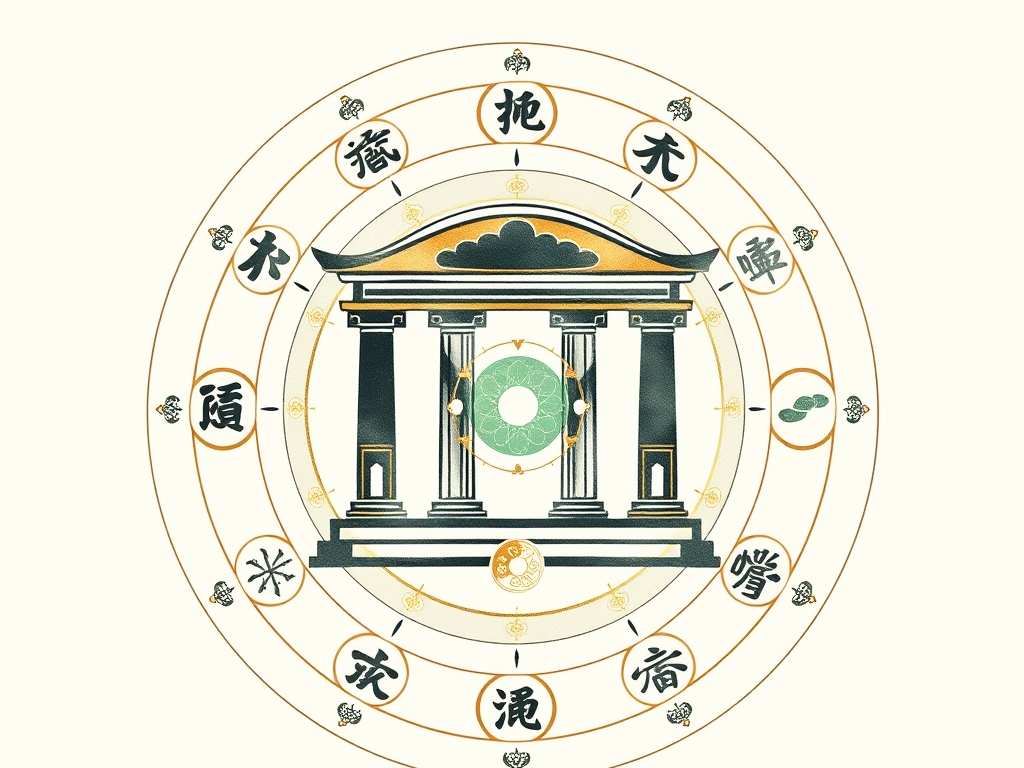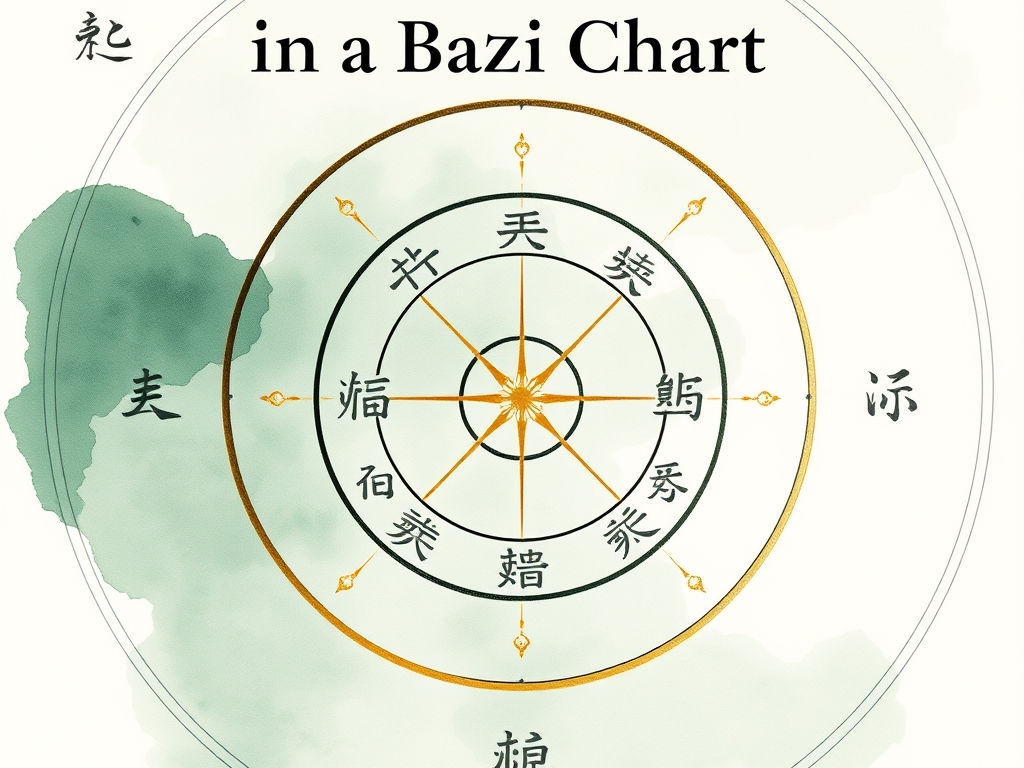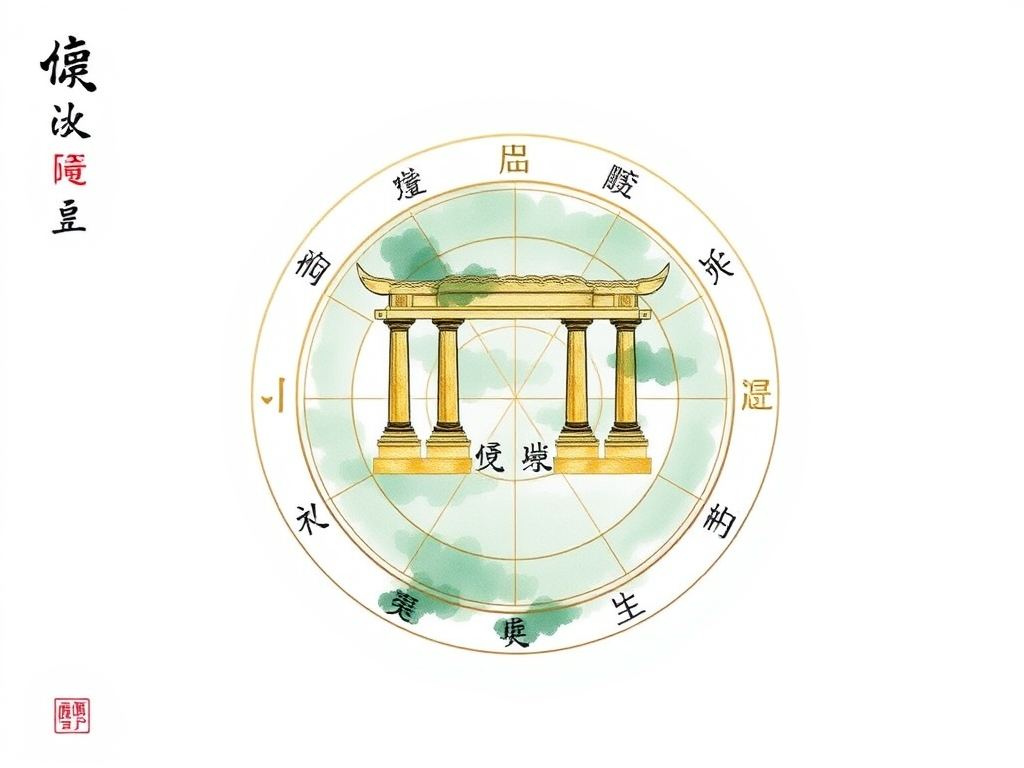
The Ten Gods are the names BaZi gives to the relationships between the Day Master and every other element in the chart. They describe roles such as support, expression, resource, control, and output. Learning them is like learning the grammar of a chart: once the relationships are clear, the symbols stop being a random list and start forming a story.
Many beginners find the Ten Gods intimidating because there are ten names to remember. In practice, they fall into a small number of families, and each family has a clear meaning. Once you understand the families, the individual names become easy to place.
The Relationship Families
The Ten Gods divide into five families, each with a strong and a weak form. The Resource family supports you and is associated with learning, care, and information. The Output family expresses your energy and is linked with creativity, speech, and visible results. The Wealth family relates to what you value and manage, including practical resources and priorities. The Officer family represents structure, responsibility, and rules. The Companion family stands beside you and is associated with equals, siblings, and peers.
Each family appears in two forms, which is where the number ten comes from. The strong and weak forms are read differently: a direct form tends to be more visible and forceful, while an indirect form is often subtler and more nuanced. Beginners do not need to master both forms immediately; the families are the foundation.
For the foundation of the whole system, read What Is BaZi? and browse the BaZi library.
Why the Ten Gods Matter
The Ten Gods matter because they turn elements into relationships. A Wealth star is not a promise of money; it is a description of how you relate to resources and values. An Authority star is not a prediction of power; it is a description of how you relate to structure and responsibility. The names are functional labels, and their meaning depends entirely on the context of the chart.
This is why the same god can look like opportunity in one chart and pressure in another. A Wealth star beside a strong Day Master may describe confident management of resources, while the same star beside a weak Day Master may describe the burden of obligations. The relationship, not the name, carries the meaning.
How to Read the Gods in Context
When you look at a chart, start with the Day Master and then ask which families are present and how strong they are. Count the appearances, check the seasonal strength, and note the current luck cycle. Then build a plain-language sentence: this chart shows strong resource support, active output, and a wealth star that needs careful management in the current cycle.
- Identify the Day Master first.
- List which god families appear in the stems and branches.
- Compare each god with the seasonal strength.
- Check the current luck cycle for the gods that are active now.
- Translate the pattern into tendencies, not predictions.
You can see the terms in action by studying Heavenly Stems and Earthly Branches and testing your chart with the BaZi calculator.
Common Mistakes to Avoid
The most common mistake is treating a god name as a fortune. A Wealth star does not mean you will be rich, and an Authority star does not mean you will be powerful. These are labels for relationships, and they only make sense inside the full chart.
A second mistake is memorizing definitions without context. The same god behaves differently in different seasons, with different day masters, and under different luck cycles. Definition lists are useful references, but they are not readings.
A third mistake is ignoring the current timing. A god that is barely visible in the birth chart may become active during a luck cycle, and a prominent god may fade. The Ten Gods are most useful when they are read dynamically rather than statically.
How the Gods Fit Into a Full Reading
The Ten Gods sit between the raw elements and the personal interpretation. They give the elements names that describe human experience: support, expression, resources, structure, and companionship. A complete reading combines the gods with the seasonal strength and the luck cycle to produce a practical picture of tendencies and timing.
For more on how these layers work together, see How a BaZi Chart Works and the overview at the BaZi section.
A Worked Example of the God Families
Consider a chart where the Resource family appears several times and the Output family is quiet. A plain-language reading might say: this person absorbs information easily and benefits from study and support, but may need encouragement to express what they know publicly. That sentence is far more useful than a list of god names. It connects the chart to behavior and suggests practical steps, such as creating regular opportunities to share work or speak in groups.
Now imagine the same person entering a luck cycle that strengthens the Output family. The reading would change: the timing now supports expression, and the practical advice would be to use that window for publishing, presenting, or launching projects. This dynamic view is why serious BaZi readers always check the current cycle before giving advice. The birth chart describes the baseline; the luck cycle describes what is active now. Practicing this two-layer reading, baseline plus timing, is one of the fastest ways to improve your interpretation skills.
One practical use of the Ten Gods is preparing better questions before a reading. Instead of asking whether a job will work out, you can ask how the Resource and Output families support the decision, or how the Officer family frames the responsibility. Framing questions in the language of the god families keeps the session grounded and gives the reader concrete material to work with. Over time, this habit turns the Ten Gods from an academic list into a working vocabulary for describing real situations.
FAQ
Do I need to memorize all Ten Gods?
No. Learn the families first, then add detail gradually as you practice.
Are the Ten Gods predictions?
They are descriptive labels for relationships in a chart, not guarantees about events.
What if a god is missing from my chart?
A missing god simply means that theme is expressed differently; timing cycles can bring it into focus later.
Which god matters most?
There is no single answer. The most relevant god depends on the question and the current timing cycle.