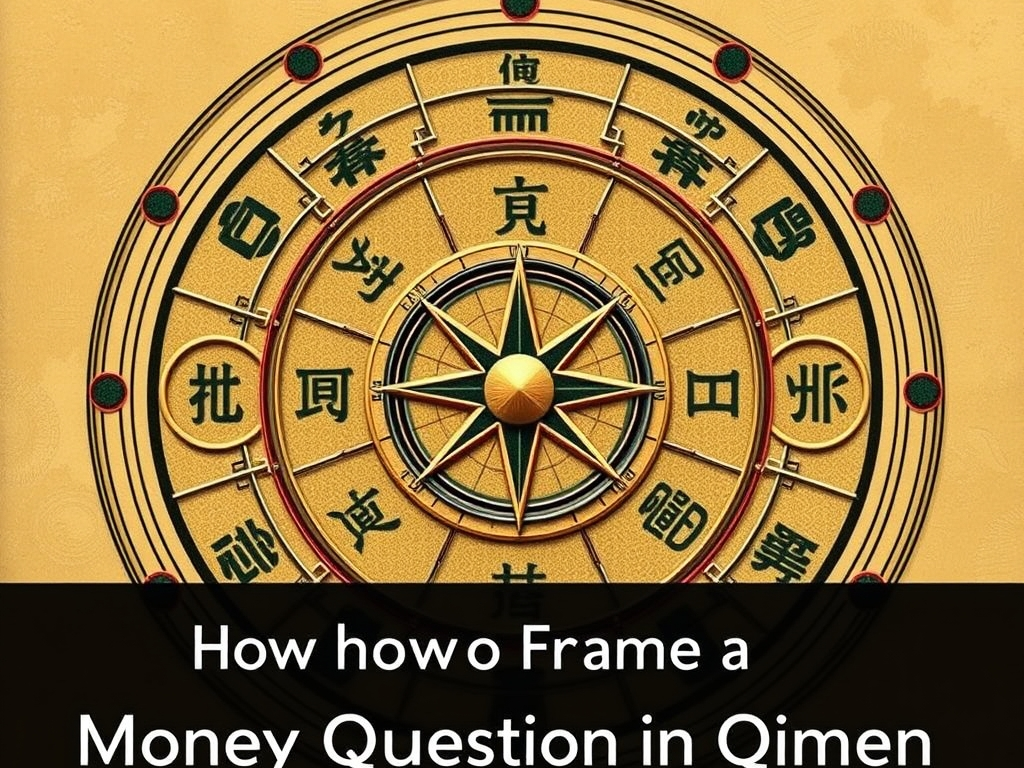
Money questions are among the most common reasons people consult qimen, and among the easiest to ask badly. Will this investment work? Should I ask for a raise? Is this client reliable? Those questions sound clear, but they are too wide for a chart, which answers best when it has a specific decision, a specific time, and a specific comparison in front of it. If you are learning how to ask useful questions, start with How to Ask a Useful Qimen Question.
This article explains how to frame a money question so the chart can actually help, what to leave out, and how to read the answer without turning it into a gambling tip.
Why Money Questions Need Sharpening
A chart describes the energy of a moment and a direction of movement. It cannot calculate a return or price a risk. So the useful money question is never what will happen, but which option to examine, what conditions to check, and when to move. Those are questions qimen can speak to, because they are questions about timing and fit.
For example, instead of asking whether a business will succeed, ask how the next three months compare for launching, partnering, or waiting. Instead of asking whether to ask for a raise, ask how to frame the conversation this week. For the difference between a question and a demand, read The Question Behind the Qimen Question.
What to Include in a Money Question
A well-framed money question has three parts: the decision, the timeframe, and the comparison. The decision names what you are choosing; the timeframe names the window the chart should describe; the comparison names the options you are weighing. Include all three and the chart has something concrete to work with.
- Decision: whether to sign the lease for the new office.
- Timeframe: the next two months, not the next decade.
- Comparison: signing now versus waiting for the spring quarter.
Writing the question in this shape takes five minutes and changes the whole reading. For the role of the hour in the answer, see The Role of the Hour in Qimen Reading.
What to Leave Out
Leave out guarantees, exact numbers, and blame. Do not ask whether an investment will double; ask what conditions would make the move more sound. Do not ask who is at fault in a money dispute; ask how to approach the negotiation. And do not ask the chart to make a decision you should make with the facts you already have.
The discipline of exclusion matters because a chart answers the question you actually ask. A vague question returns a vague chart, and a greedy question invites a reading that sounds reassuring without being useful. For the ethical side of these consultations, see Qimen and Ethical Decision-Making.
Reading the Answer Practically
When the chart comes back, look for direction and conditions, not verdicts. A strong door with a supportive star in the relevant palace suggests the moment leans toward movement. A weak door suggests more preparation. The answer becomes practical when you translate it into a next step.
- If the chart favours action, define the smallest first step.
- If it favours waiting, set a date to review, not an open delay.
- If the direction is unclear, compare the question against your own numbers.
- If the chart contradicts your facts, trust the facts and re-examine the question.
The list keeps the reading tied to reality. For a structured way to compare options, read Using Qimen to Compare Two Options.
The Responsibility of the Reader
Anyone reading a money question should hold the same line: the chart is decision support, not financial advice. It can name timing and tone, but it cannot know your budget, your risk tolerance, or the law of your situation. A responsible reading always points back to those facts instead of replacing them.
If a reading ever claims to know exactly how much money a decision will make, that is a red flag, not a promise. For how to evaluate the quality of any consultation, read How to Evaluate the Quality of a Reading.
Keeping the Frame Humble
Money questions are emotionally loaded, which is exactly why the frame must stay small. One decision, one timeframe, one comparison. Use the chart to organise preparation, not to escape it. The best qimen money question is the one that leaves you with a clearer to-do list, not a prediction to lean on.
Keep a simple record of each money question and the decision you actually made. After several rounds, compare the notes and let your own experience teach you where timing helped. For the journal habit, see How to Keep a Qimen Study Journal.
Three Example Questions, Sharpened
Consider how the same situation produces three different levels of question. Vague: is my business going to work? Better: which of the next three months supports a launch, and which supports preparation? Clear: should I launch this service in September, or spend September building the client list and launch in October? The third question gives the chart something concrete: a decision, a window, and a comparison. The first question asks the chart to be a fortune teller, which it cannot honestly be.
A second example: vague, should I ask for a raise? Better: how should I frame the conversation this week, given my chart and the current month? A third: vague, is this client trustworthy? Better: what conditions should I check before signing, and what timing serves the negotiation? In all three cases the sharpened question keeps the reader's job to timing and tone, and leaves the numbers, the facts, and the final call with you, which is where they belong.
FAQ
Can qimen predict investment returns?
No. It can describe the timing and conditions around a decision, but returns depend on real markets, facts, and risk that no chart can calculate.
What is the best money question to ask?
A specific one with a timeframe and a comparison, such as whether to negotiate now or wait until next month.
Should I use qimen instead of financial planning?
No. Qimen can support a decision process, but budgets, projections, and professional advice still carry the weight.
How do I know if a reading is responsible?
A responsible reading names conditions and next steps; it never promises amounts, outcomes, or certainty.