People often ask whether BaZi and Western astrology are the same system wearing different clothes. The answer is no, and the differences are not cosmetic. The two systems start from different calendars, organize different layers of data, and answer different kinds of questions. Understanding those differences helps you know what to expect from each system and prevents you from translating one into the other too quickly.
This article compares the two frameworks fairly, without declaring one superior, because each has strengths in its own context. For the fundamentals of the Chinese side, start with What Is Chinese Metaphysics?.
Different Calendars, Different Reference Points
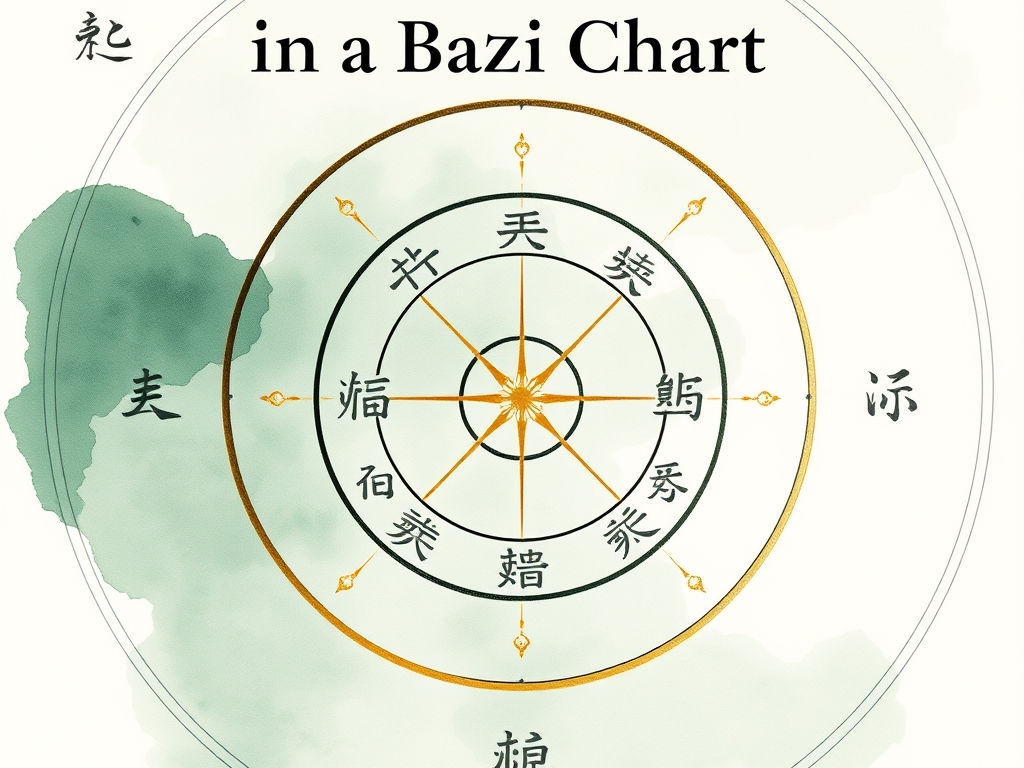
Western astrology is built around the tropical zodiac, which is tied to the seasons and the Sun's apparent path through the sky. BaZi is built around the solar terms and the positions of the Heavenly Stems and Earthly Branches. The two calendars are not parallel, so a person's Sun sign and their Day Master often tell very different stories. This is not a contradiction; it is a difference of measurement.
The month boundary is a good example. In Western astrology, the Sun enters a new sign on roughly the same date every year. In BaZi, the month pillar changes at solar terms, which can fall on different dates from year to year and can shift by a day. That is why two people born on the same date can share a Western chart feature but sit in different BaZi months. For the calendar mechanics, see How a BaZi Chart Works.
Structure: Planets Versus Eight Characters
Western astrology reads the positions of the Sun, Moon, and planets through houses and aspects, producing a picture of personality and transits over time. BaZi reads eight fixed characters, derived from the year, month, day, and hour of birth, and interprets their elements and relationships. The two structures are not interchangeable: one describes a sky at a moment, the other describes a pattern of elemental interactions.
BaZi's emphasis on the hour pillar is also distinctive. In Western astrology, the exact birth time affects the rising sign and houses; in BaZi, it provides the entire hour pillar, which represents later years and private expression. Without a reliable birth time, BaZi still has three pillars, but the hour pillar is missing, which limits the reading. More on that in The Importance of an Accurate Birth Time.
A Comparison Checklist
When you are deciding which system to explore, this checklist helps:
- Ask what calendar each system uses and what event anchors it.
- Ask what data each system needs, including whether birth time is optional.
- Ask what layer each system emphasizes, such as planetary transits versus luck cycles.
- Ask what kind of question each system frames best, such as personality versus timing.
- Ask what each system claims to describe versus what it cannot promise.
The answers will usually show that the systems complement each other rather than compete. Many people keep a Western chart for psychological language and a BaZi chart for timing and seasonal rhythm. For the timing side, read Why Timing Matters in Chinese Metaphysics.
Common Misconceptions in Comparison
The first misconception is that both systems are the same divination tradition. They developed in different regions, from different observational practices, and they encode different assumptions about time. The second is that one system is simply more accurate than the other. Accuracy is not a useful measure here; usefulness depends on the question and the skill of the reader.
The third misconception is that you must choose one. A thoughtful practitioner can hold both without contradiction, as long as each is allowed to speak in its own terms. The habit of translating every BaZi concept into a Western equivalent usually produces confusion, because the categories do not map cleanly. For the broader family of systems, see How the Major Systems Fit Together.
How the Systems Frame a Life Question
Consider a career question. A Western astrologer might look at the Midheaven, the Tenth House, and current transits to describe public role and timing. A BaZi reader might look at the Day Master, the Ten Gods, and the current luck pillar to describe which activities are emphasized and whether the decade supports visible action or preparation. Both can be useful; they are answering with different vocabularies.
The practical lesson is to let each system do what it does well. If you want language about emotional patterns and relational dynamics, the Western chart has a rich tradition. If you want seasonal timing and decade-long emphasis, BaZi and its luck cycles are hard to beat. For an introduction to the Chinese timing layer, read Luck Pillars in BaZi and Why Timing Matters.
Reading the Same Person in Both Systems
The clearest way to see the difference between the two systems is to read one person in both. Take the same birth data, write the Western chart summary and the BaZi summary, and set them side by side. The Western chart tends to describe emotional weather, relational patterns, and transits; the BaZi chart tends to describe elemental emphasis, seasonal strength, and decade-long cycles. Both can feel true, which is exactly the point: they are different maps of the same territory.
The exercise also reveals the translation trap. If you try to force the Day Master to match the Sun sign, one of them will distort. The Sun sign describes a solar placement; the Day Master is the reference point of a stem and branch code. They are not equivalents, and the comparison is more useful when the differences are allowed to stand on their own.
A practical rule follows: when a reading from either system feels wrong, do not rush to the other system to confirm or deny it. Sit with the mismatch, check the birth data, and let each system speak in its own vocabulary before comparing them again.
FAQ
Are BaZi and Western astrology compatible?
Yes, when each is used in its own terms; they describe different layers of the same person.
Which system needs exact birth time?
Both benefit from it, but BaZi loses an entire pillar without it, so the hour is more structurally important there.
Do the two systems ever contradict each other?
They can appear to, because they use different calendars and categories, but that is usually a translation problem.
Which one is better for timing questions?
BaZi is designed around seasonal and decade-level timing; Western astrology has its own transit system for shorter rhythms.