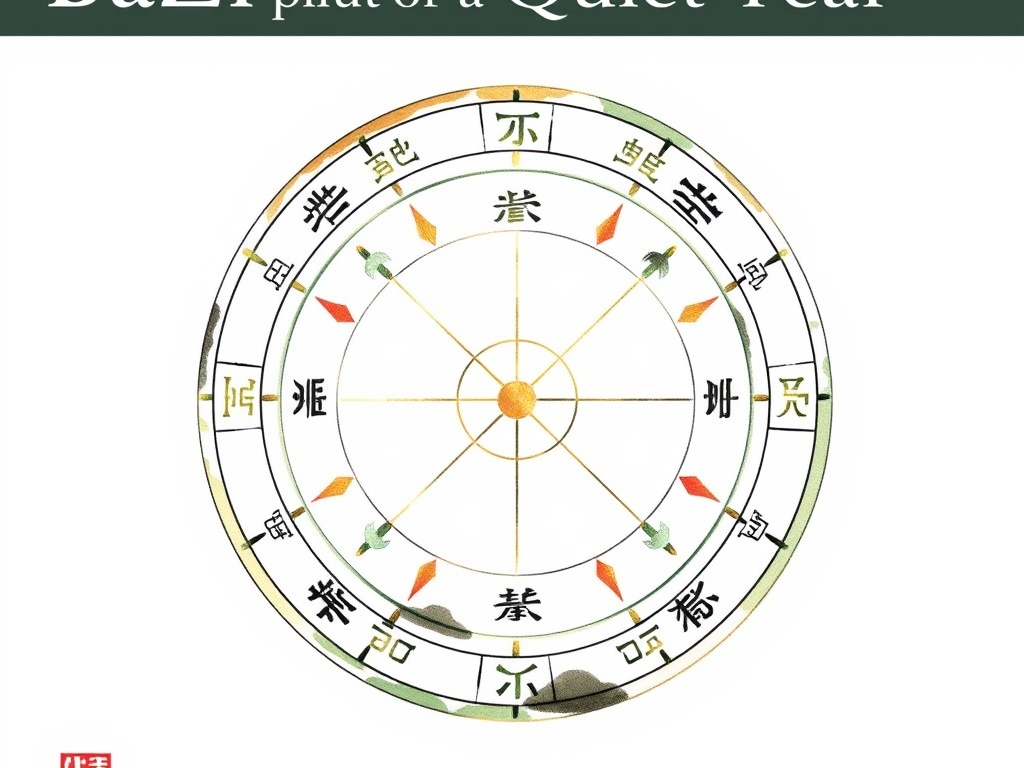
Not every year is meant to be loud. Some years in a BaZi chart read as expansion: new projects, new people, visible movement. Others read as consolidation: repair, review, quiet preparation. The quiet years are easy to undervalue, especially in a culture that equates activity with progress. But a chart that suggests a quiet season is not a chart that suggests failure. It is often the chart suggesting that the ground needs attention before the next growth. For the basic framework of annual timing, start with BaZi and the Concept of Personal Year.
This article explains what a quiet year looks like in a chart, how to recognise one, and how to use it so that the next active season has something solid to build on.
What a Quiet Year Looks Like in a Chart
A quiet year shows up in several ways. The year element may drain the day master, so output costs more than usual. The year branch may form no strong combination, leaving the chart without a clear invitation to act. Or the year element may simply match the chart's existing balance, creating continuity instead of change. In all three cases, the calendar is not signalling catastrophe; it is signalling a low-energy season where effort should go to maintenance rather than expansion.
Readers sometimes call this a year of gathering. It is the year when you fix the roof, settle the accounts, restore the relationships that matter, and prepare the ground. For how the pace of years is described in the chart, see How BaZi Describes the Pace of Your Year.
The Difference Between Quiet and Empty
A quiet year is not an empty year. Empty suggests nothing is happening; quiet suggests that the important work is happening at a different speed. In a quiet year, the visible scoreboard barely moves, while the invisible systems are being repaired: health, habits, savings, skills, trust. These are the things that make later expansion possible, and they rarely announce themselves in public.
The distinction changes how you plan. If you treat a quiet year as empty, you may force expansion and feel confused when it stalls. If you treat it as quiet, you can plan maintenance and feel satisfied when the systems stabilise. The chart helps you choose the right job description for the season. For the wider idea of seasons in a life, read The Concept of Season in a Life.
How to Recognise a Quiet Year
- The year element drains your day master, so action costs more energy.
- Repeated plans feel heavy even when nothing is wrong.
- Old unresolved items keep returning to your attention.
- Your body or your schedule insists on slower pacing.
- Reviewing and repairing feels more natural than launching.
The list is a tendency, not a sentence. Two or three items across several months are enough to start planning for maintenance rather than growth. To compare the year with your longer rhythm, read How to Read Your Luck Cycle Years.
Using the Year for Maintenance
The practical work of a quiet year is repair and preparation. Choose three areas to consolidate: one for your body, one for your work, and one for your relationships. In each area, define what "settled" looks like by the end of the year, and spend the year moving toward it without announcing it publicly. Maintenance does not need an audience.
This is also the year to clear small debts of attention: the course you never finished, the room you never organised, the conversation you keep postponing. Each cleared item adds capacity to the next active season. For the planning frame that supports this, see Using BaZi for Life Planning Without Superstition.
The Social Pressure to Stay Busy
The hardest part of a quiet year is often other people. Workplaces, social feeds, and well-meaning friends reward visible motion, and a year of consolidation can look like falling behind. The chart gives you a private justification: not every season is for producing in public. You can lower your visibility, protect your schedule, and let the year do its quiet work without apologising for the pace.
It helps to have one clear explanation for yourself and one for others. To yourself: this is a repair year, and the measure of success is stability, not volume. To others: you are focusing on fewer things this year, which is true. For a wider view of how the tradition frames such seasons, read How Chinese Metaphysics Handles Uncertainty.
What to Review at Year's End
A quiet year should end with an honest review. Write down what you repaired, what you cleared, and what still needs attention. Compare that list with the year's starting state, and you will see that the year was anything but empty. Then set the opening conditions for the next season: what to resume, what to begin, and what to leave behind. The review turns the quiet year into a bridge rather than a gap.
Keep the notes where you can find them next year. The record of a quiet season is the evidence that pace and progress are not the same thing. For the habit of keeping such records, read How to Track Recurring Patterns in Your Life.
A quiet year also deserves a quiet measure of success. If the year's goal was stability, then a year with no crises, no forced moves, and a settled account is a successful year, even though the scoreboard shows nothing dramatic. Write that measure down at the start of the year, so the end-of-year review has a fair standard. The temptation is to judge a quiet year by the standards of an active one, and the chart's language is a reminder that seasons are not comparable that way. Preparation is progress, and repair is work.
FAQ
Is a quiet year a sign of decline?
No. It is a season of consolidation; many charts alternate naturally between active and quiet years.
Should I force projects in a quiet year?
Force them smaller, not louder. Launch what fits the energy, and use the rest of the year for maintenance.
How do I know my year is quiet rather than difficult?
Difficult years bring pressure and conflict; quiet years bring low energy and a pull toward repair. The chart language helps you tell them apart.
Can I make a quiet year productive?
Yes, by redefining productive as repaired, cleared, and prepared, rather than launched and announced.