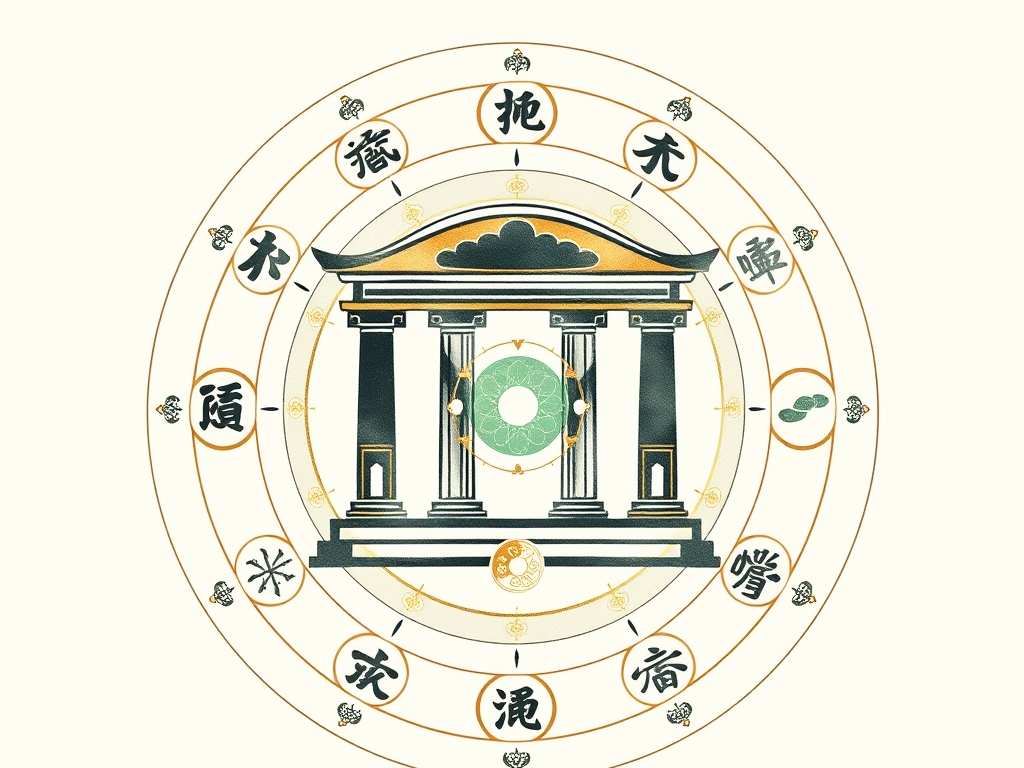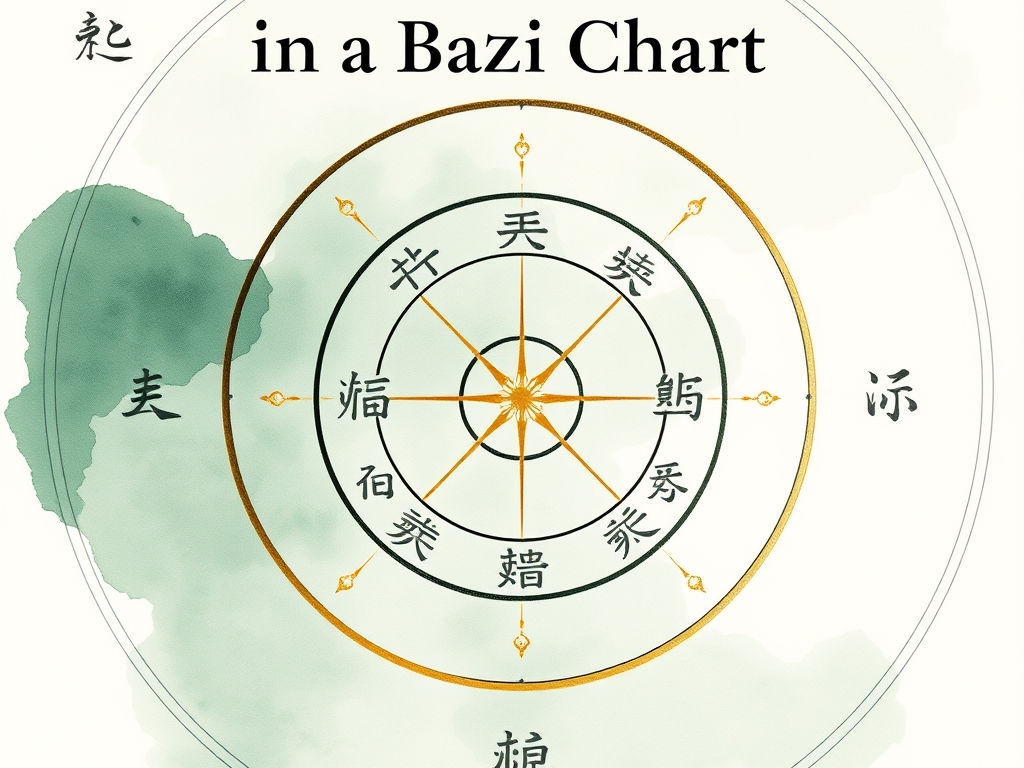
In BaZi, every chart is born into a season, and that season is set by the month pillar. The month pillar is often called the strongest pillar in the chart because it describes the environment the day master arrives in, the same way a seed arrives into spring or autumn. Understanding your BaZi season is therefore one of the fastest ways to move from memorizing symbols to actually reading a chart. This article explains what the season means, how to find it, and how to use it without overcomplicating the system, building on How a BaZi Chart Works.
What a BaZi Season Is
A BaZi season is the seasonal quality carried by the month pillar of a birth chart. The twelve months map onto the twelve earthly branches, and each branch belongs to a season: Wood rules spring, Fire rules summer, Metal rules autumn, and Water rules winter, with Earth appearing in the transitions. Because the month pillar always carries its season's energy, two people with the same day master can have very different charts simply because they were born in different months.
The season acts like weather for the chart. It does not determine what happens, but it shapes how the day master's qualities express themselves. A Fire day master born in summer is in its own season and tends to express Fire strongly, while the same Fire day master born in winter faces a more demanding environment. The seasonal dimension of strength is covered in Seasonal Strength in the Four Pillars.
The Month Pillar as Season
The month pillar is determined by the solar calendar, not the lunar month, which surprises many beginners. Each month begins at a solar term, so a person born in early February may still belong to the previous year's month branch if the term has not yet arrived. This is why exact birth dates and the solar calendar matter in BaZi, and it is also why two people born days apart can have different month pillars. The practical details of this timing are explained in The Month Pillar and Your Inner Nature.
Because the month carries the strongest seasonal energy, it also sets the baseline for strength: a day master in its own season is said to be in season or strong, while a day master facing its controlling season is more challenged. The word "strong" here is descriptive, not evaluative. A strong day master is not a better person; it simply describes how easily the element expresses itself in that environment.
Finding Your Season: A Checklist
To identify your BaZi season and what it means, follow these steps:
- Find the month branch of your chart, which comes from the solar month of your birth.
- Map that branch to its season: spring branches are Tiger, Rabbit, and Dragon; summer are Snake, Horse, and Goat; autumn are Monkey, Rooster, and Dog; winter are Pig, Rat, and Ox.
- Identify the element of the season and compare it with your day master element.
- Decide whether the season supports your day master, pressures it, or produces it.
- Write one sentence describing your chart's seasonal situation.
- Test that sentence against your own energy patterns across the year.
The last step keeps the framework practical. If your chart says you are strong in summer, notice whether your energy and mood actually shift with the seasons; the comparison turns a symbolic description into a personal observation. For the element cycle behind these relationships, see The Cycle of Creation and Control.
Common Misconceptions About the Season
The first misconception is that your season predicts your personality completely. The month pillar is one of four pillars, and the day master, hour pillar, and year pillar all contribute to the reading. The season sets the stage, but the rest of the chart fills it in. The second misconception is that a day master out of season is weak in a negative sense. Out-of-season elements often develop through discipline and adaptation, and many traditional readings treat a challenged element as one that learns resilience.
The third misconception is that your BaZi season must match your favorite season of the year. The chart describes an internal emphasis, while personal preference is shaped by many factors including climate and memory. The two can differ without contradiction. For a broader view of how the chart and the person interact, read How the Four Pillars Shape Personality and The Concept of Season in a Life.
Using Your Season in Planning
Once you know your season, you can use it as a planning language. If your day master is in its own season, the environment supports direct expression, which may suit starting visible projects and acting on ideas. If your day master is out of season, the environment asks for adaptation, which may suit preparation, study, and timing your efforts carefully. Neither approach is better, and most people shift between the two as luck cycles change.
The goal is not to schedule your life around the chart, but to give yourself a vocabulary for noticing patterns. When a period feels difficult, the season can explain why the environment is demanding; when a period feels easy, it can explain what is being supported. The connection between such timing and ordinary effort is explored in The Relationship Between Timing and Effort.
A useful exercise is to write the season of your month branch on a card and keep it in your study area for a month. Each time you read the card, add one observation from your own experience that fits or challenges the seasonal description. By the end of the month, you will have a small personal record that shows how the chart's season appears in your work, rest, and energy. That record matters more than any textbook description, because it connects the symbol to your own calendar and makes the season a tool rather than a label.
FAQ
Is the month pillar really the strongest pillar?
Yes, most schools treat it as the most influential pillar because it sets the seasonal environment of the chart.
Does the lunar month matter for BaZi?
The solar month matters for the month pillar, which is why solar terms define the month boundaries.
Can my season change?
The birth chart's season is fixed, but luck cycles bring new seasonal qualities that shift the emphasis over time.
Do I need to memorize all twelve branches to find my season?
No. You can start with the season of your month branch and add the others gradually as you study.