When people first hear about clashes in a BaZi chart, they often expect something dramatic: a fight, a loss, a sudden change. In practice, an earthly branch clash is simpler and more interesting. It is a relationship between two opposite branches, such as the Rat and the Horse, the Ox and the Goat, or the Tiger and the Monkey, that creates friction between what they represent. That friction can show up as a tense conversation, a broken routine, a move, or simply a season when two parts of your life pull against each other. If the structure of stems and branches is new to you, begin with How to Read Heavenly Stems and Earthly Branches.
This article explains what a clash means, how it tends to appear in ordinary experience, and how to read it without turning a chart detail into a prediction.
What a Branch Clash Is
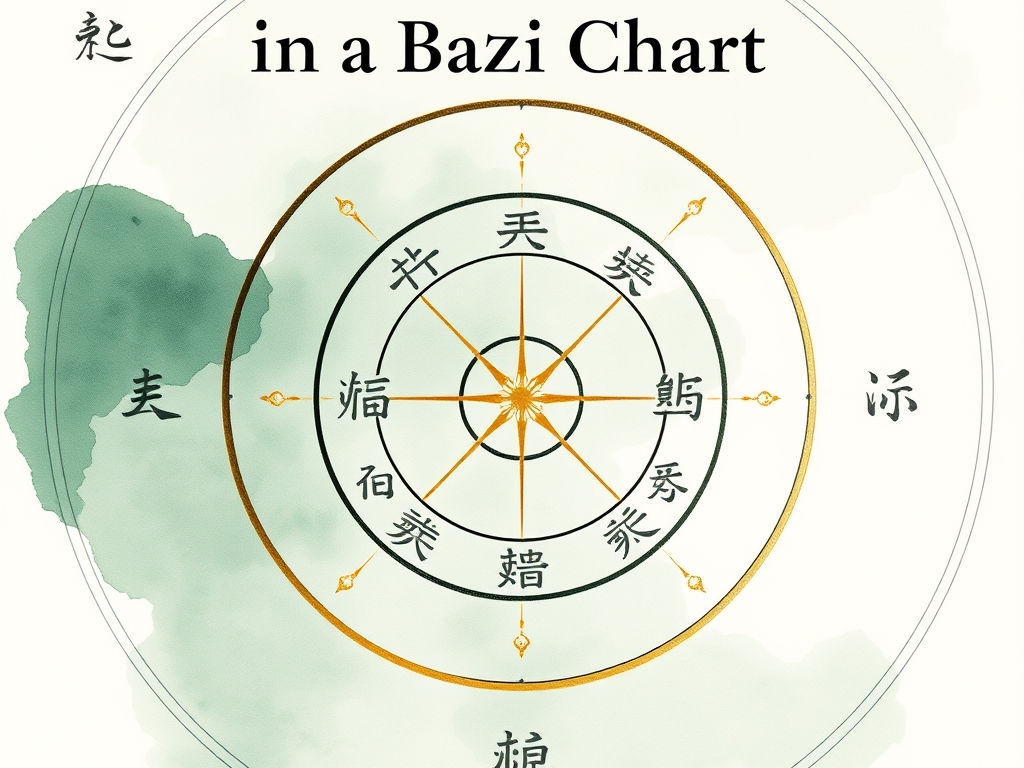
In the twelve earthly branches, each branch sits opposite another one on the symbolic wheel. Rat faces Horse, Ox faces Goat, Tiger faces Monkey, Rabbit faces Rooster, Dragon faces Dog, and Snake faces Pig. When opposite branches meet in a chart, or when a passing year brings a branch that opposes one of your own, readers call that a clash. The two branches carry very different temperatures: one is water and the other fire, or one is about storage and the other about movement. Put together, they do not blend quietly.
A clash is not a verdict that something bad will happen. It is a structural description of two energies that pull in different directions, like two teammates with opposite instincts working on the same task. For the vocabulary readers use around these characters, see BaZi Terms Explained: Stems, Branches, Gods.
How Clashes Show Up as Friction
In life, a clash often appears as friction rather than catastrophe. It can look like a disagreement that keeps circling, a home move during a busy season, a role change that happens faster than you expected, or a period when your energy feels divided between two loyalties. The key word is friction: things do not simply stop working; they work with resistance.
Because people experience the same clash differently, readers look at where the clash sits. A clash in the year pillar touches context and early environment; a clash in the month pillar touches work and routine; a clash around the day pillar touches the self and close relationships. The location changes the flavour of the friction, not its moral value. For how the pillars divide a life into layers, read How the Four Pillars Shape Personality.
A Checklist for Noticing Clash Patterns
Before you check your chart, it helps to describe the friction in plain language. Use the BaZi calculator to find your four branches, then ask whether the checklist below matches a repeating pattern in your life.
- Do certain kinds of conversations consistently turn into standoffs?
- Do your energy levels swing between high speed and sudden stillness?
- Do changes arrive when you are least prepared, then settle quickly?
- Do two areas of your life, such as work and home, alternate pulling your attention?
- Do you feel clearer after a decision is made than during the choosing?
- Do external events, such as travel or a move, tend to coincide with a shift in your mood?
The list is a mirror, not a test. If several items match, a clash pattern may be doing real work in your chart. For the limits of what a chart can say about events, see What a BaZi Chart Can and Cannot Tell You.
Reading the Location of the Clash
Once you know which branches oppose each other, look at which pillar carries the clash. A year-level clash often describes friction with background conditions: expectations from your family or society, or a long cycle of change in your outer world. A month-level clash tends to describe the arena of daily work and habits, where routine meets interruption. A day-level clash, especially involving the branch under your day stem, speaks to the relationship between your nature and your immediate environment.
Hidden stems matter here too, because a branch is not a single note; it contains smaller elements that can soften or sharpen a clash. A full reading weighs the branch's inner contents before naming the effect. For that layer, read The Hidden Stems in a BaZi Chart.
Common Mistakes When Reading Clashes
The first mistake is treating a clash as doom. Most charts contain at least one clash somewhere, and many people live with their clashes for decades without drama. The second is expecting a clash to express the same way every time, when its expression depends on season, strength, and the other branches around it. The third is ignoring the timing: a clash with a passing year matters more when the year touches a pillar that is already under stress.
The mature approach is observational. Name the friction, notice where it lives, and then decide what the situation actually needs, rather than treating the clash as an instruction to fear something. For how agency fits with chart structure, read How BaZi Handles Free Will and Fate.
Using the Observation in a Real Decision
A clash becomes useful when it changes how you prepare. If you know that a particular year opposes your month branch, you can expect more interruptions in routine and plan buffers around them. If a relationship pairing shows opposing branches, you can design clearer agreements instead of hoping friction disappears. The chart does not remove the difficulty; it tells you which kind of difficulty to expect, and that alone reduces surprise.
You can also compare your branches with the branches of people you live or work with closely. Oppositions between two charts are common in long-term relationships and say nothing about whether the bond is good. They describe the maintenance it needs. For more on this, see BaZi and Relationship Compatibility Basics.
Two Examples of a Clash in Daily Experience
Imagine a chart where the month branch is the Horse, the branch of speed and forward motion, while the day branch is the Rat, the branch of depth and caution. The two oppose each other, and in life this often shows up as a person who wants to move quickly at work but pulls back in private decisions. Projects may start at full speed and then stall when caution takes over. The useful reading is not that the person is indecisive, but that they have two legitimate speeds, and the skill is choosing which one each situation needs.
In another chart, suppose the year branch is the Dragon and the month branch is the Dog. Dragon energy likes to build and expand; Dog energy guards and questions. The clash can appear as friction between family expectations and personal standards, or between a public role and a private sense of rightness. Once named, the pattern stops feeling like bad luck and becomes a design question: where to expand, where to guard, and who decides which season is which.
FAQ
Does a branch clash mean something bad will happen?
No. It describes friction between two energies, and friction can produce movement, repair, or change as easily as difficulty.
How often do clashes appear in normal charts?
Very often. Most charts contain at least one opposition somewhere, so a clash is a normal feature to study rather than a warning sign by itself.
Can a clash be softened by other branches?
Yes. Nearby branches, hidden stems, and seasonal strength all change how two opposing branches interact, which is why readers never judge a clash in isolation.
Should I plan my year around my clashes?
You can plan around expected friction, such as adding buffers to busy seasons, but you do not need to treat a clash as a command to avoid normal life.