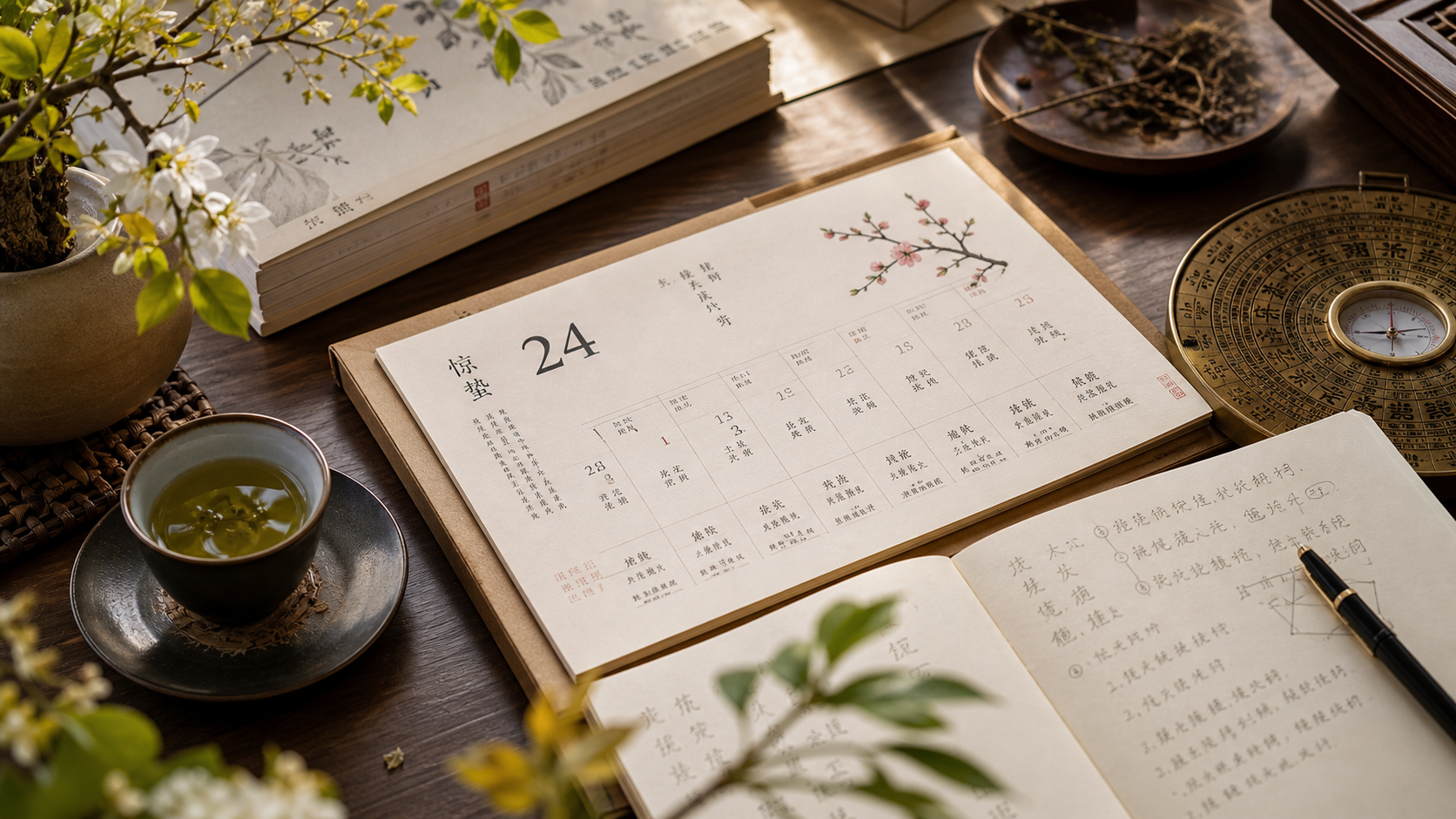
Daily guidance in Chinese metaphysics is not about predicting every small event in a mystical way. At its most practical level, it is a way of reading rhythm. It asks how time feels, what kind of action a moment supports, and how a person can move with a day instead of constantly fighting against it. In that sense, daily guidance is closer to timing awareness than superstition. It gives language to patterns that many people already feel but have not yet named.
When people first hear the term, they often imagine something dramatic: lucky colors, forbidden tasks, or absolute yes-or-no instructions. That version exists in some popular media, but it is not the most useful starting point. A grounded understanding begins with observing cycles. Chinese metaphysics pays close attention to change over time: the changing season, the atmosphere of a month, the momentum of a week, and the quality of a day. Daily guidance belongs to that larger view. It helps translate broad rhythm into small, workable choices.
Daily Guidance Is a Timing Practice
Think about the difference between pushing and planning. There are days when beginning something feels natural and days when refining, reviewing, or pausing feels more intelligent. Daily guidance tries to notice that difference. Rather than assuming every day is equally suited for every task, it asks what kind of movement is supported now. That does not mean a person loses free will. It means timing becomes part of decision-making.
This is one reason daily guidance appeals to modern readers. People already organize life around time quality without calling it metaphysics. They know some mornings are clearer for strategy, some afternoons are better for conversation, and some periods are more useful for cleanup than launch. Chinese timing frameworks formalize this instinct and connect it to larger natural cycles.
Why Chinese Metaphysics Cares About Rhythm
Chinese metaphysical systems are deeply interested in relationship rather than isolation. A day is not treated as a blank square on a calendar. It exists inside a month, inside a season, inside a larger flow of climate, movement, and change. This is why daily guidance often overlaps with solar terms, lunar timing, and practical observation. A day feels different when it arrives in the middle of a rising spring pattern than when it lands at the end of an exhausted seasonal phase.
For a beginner, the most important lesson is simple: timing is contextual. Good guidance does not come from one detached label. It comes from reading the day inside the larger rhythm around it. That is also why daily guidance becomes more useful when it is combined with seasonal literacy, which you can explore in How the 24 Solar Terms Shape Work and Life Rhythm.
How Daily Guidance Helps in Modern Life
The value of daily guidance today is not that it removes uncertainty. Its value is that it improves pacing. If you are constantly starting at the wrong time, pushing through tired periods, or making social decisions in low-clarity moments, your life begins to feel louder and harder than it needs to. Daily guidance introduces a gentler question: what kind of action fits today?
Sometimes the answer is outward action. Sometimes it is sorting, finishing, clarifying, reconnecting, or waiting one more day before a major conversation. Even when a person does not follow every traditional rule, this habit of matching action to timing can reduce strain. It turns the day from an enemy into an environment.
What Daily Guidance Is Not
Daily guidance is not a substitute for judgment, evidence, or responsibility. It should not replace medical care, legal advice, financial planning, or serious life evaluation. It also should not be used to create fear. If a timing framework makes a person feel trapped, anxious, or unable to act, something has gone wrong in the way it is being used.
A healthy approach leaves room for adaptation. A difficult-timing day may still require important work. A favorable-timing day may still contain stress. Guidance does not erase reality. It helps a person choose tone, pace, and order more wisely inside reality. That is a much more durable use of metaphysical thinking.
FAQ
Does daily guidance tell the future?
Not in a simple fortune-cookie sense. It is better understood as a timing framework that helps you notice what kind of actions are better supported in a given moment.
Do I need to believe in astrology to use it?
No. Many readers use daily guidance as a reflective timing practice tied to rhythm, season, and observation, without turning it into rigid belief.
Can daily guidance help with work life?
Yes. It is especially useful for pacing tasks, choosing between planning and execution, and noticing when social or strategic decisions need better timing.
What should I read next?
Start with rhythm. A good next article is Why Some Days Feel Better for Planning Than Pushing.
Where to Go Next
If you want a stronger foundation, continue with How the 24 Solar Terms Shape Work and Life Rhythm and How to Read Seasonal Energy Without Turning It Into Superstition. You can also return to the Daily Guidance overview or browse all Daily Guidance articles.