One of the first things a BaZi reader looks for is whether the day master has root. The phrase sounds technical, but it describes something simple: the day master is the element of your birth day stem, and a root is a place in the earthly branches where that element sits firmly, like a tree with soil under it. A rooted day master behaves differently from a floating one. It is steadier, more able to take pressure, and less easily moved by the elements that pass through the chart each year and month. If you are new to the pillars, start with BaZi for Beginners: A Step-by-Step Start.
This article walks through what root means, how to find it in a chart, and why the distinction matters for practical questions about energy, decisions, and change.
What Root Means in BaZi
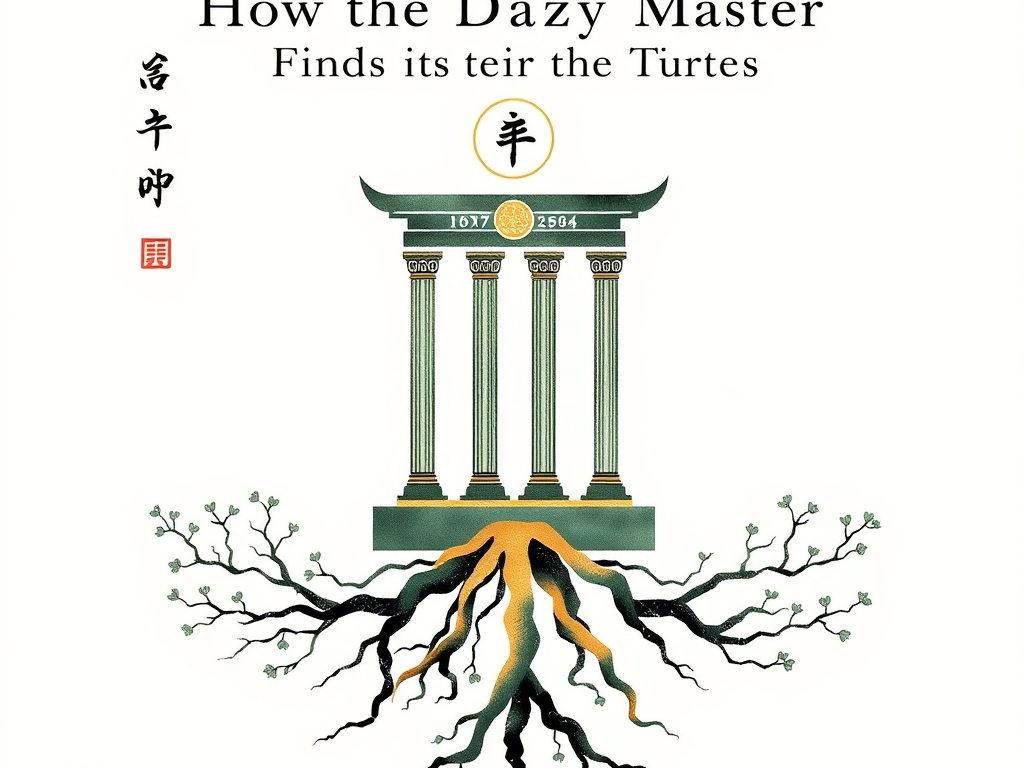
In BaZi, every pillar has a stem on top and a branch underneath. The branches are not simple elements; they contain hidden stems, the quieter energies that give each branch its full character. When a branch holds a stem of the same element as your day master, your day master is said to have root there. The branch acts like soil, giving the element something to stand on. A chart can have one root, several roots, or no root at all, and each situation reads differently.
The image of the tree is not decorative. A rooted day master can carry more workload, weather more clashes, and recover more quickly from difficult years. A floating day master may be brilliant and adaptable, but it is also more exposed, more sensitive to the annual elements, and more dependent on the season. For the mechanics of stems and branches, read How to Read Heavenly Stems and Earthly Branches.
The Branch That Holds the Same Element
To find the root, look at each earthly branch and ask what it contains. A branch of the same element as your day master is an obvious root, but many roots are hidden. For example, a day master of wood finds root in branches that contain wood hidden stems, even when the branch itself carries a different main element. This is why two charts with the same day master can have very different strength: the hidden stems change the story.
The hidden stems are the reason beginners often miss roots. If you only read the visible element of each branch, you will underestimate how much support the day master has. For a close look at this layer, see The Hidden Stems in a BaZi Chart.
Rooted vs Floating Day Masters
A rooted day master tends to show up in life as steadiness. The person may be slower to change direction, but once committed, they carry through. A floating day master tends to show up as flexibility. The person adapts quickly, notices shifts early, and may change course more often. Neither is better; they are different ways of standing in the world, and each suits different seasons of life.
The distinction becomes important when you read a year that clashes with a branch. If the day master has root elsewhere, the clash may feel like pressure but not crisis. If the day master is floating, the same clash can feel like the ground moving. The reading is not a verdict on your character; it is a description of how much buffer the chart has. For the balance of strength in a chart, read Five Elements Balance in a Birth Chart.
A Step-by-Step Way to Look for the Root
- Identify your day master from the day pillar stem.
- List the four earthly branches of your chart.
- Note the main element of each branch and its hidden stems.
- Mark every branch that contains a stem of your day master's element.
- Count the roots, then note whether they sit in the year, month, hour, or day branch.
The position matters. A root in the month branch is often described as the strongest, because the month carries the season. A root in the hour branch supports the later years. A root only in the year branch may be more distant support. For a complete walkthrough, generate your chart with the BaZi calculator and compare the branches by hand.
Common Mistakes When Reading Roots
The most common mistake is counting visible elements only. Another is treating one root as identical to another, when a root's value depends on position and season. A third is forgetting that the month branch changes with the season, so a root that feels strong in winter may feel thinner in summer. These details are not academic; they change how the annual elements land on the chart.
Beginners also overstate the conclusion. A day master without root is not a bad chart; many capable people have one. It simply means the person operates with more adaptation and less buffer, which can be an advantage in fast-changing environments. For a sober view of what a chart does and does not say, read What a BaZi Chart Can and Cannot Tell You.
Why Root Reading Matters for Practical Questions
Root reading matters because it changes how you interpret timing. If you know your day master has a strong root, you can plan longer commitments with more confidence, because the chart suggests you can carry sustained pressure. If your day master floats, you may plan in shorter cycles, review more often, and protect your energy during heavy years. The same calendar, read against different roots, produces different practical advice.
That is the point of the distinction: not to label people, but to match plans to capacity. For the timing layer that works with this, see BaZi and Timing: Why Some Years Matter More, and keep the reading observational rather than predictive.
FAQ
What exactly is a root in BaZi?
A root is an earthly branch that contains a hidden stem of the same element as your day master, giving that element a place to stand.
How many roots should a chart have?
There is no required number. Strength depends on position, season, and hidden stems, not just quantity.
Is a floating day master a bad sign?
No. A floating day master is more adaptable and sensitive to timing, which suits some lives better than steadiness.
Where is the strongest place for a root?
Traditionally the month branch is considered the strongest root because it carries the seasonal climate of the chart.